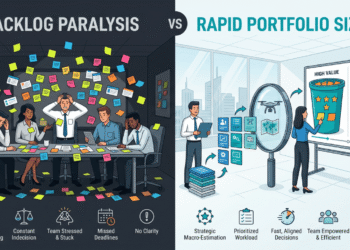
Why Enterprise Velocity Dies in the Gaps Between Effort and Wait Time
1. The Silent Saboteur of Corporate Delivery
It is Tuesday morning at 9:00 AM, and the executive leadership team of a global logistics enterprise is staring at a stark, red line graph. A high-profile, multi-million dollar business application rollout is officially six months behind schedule. The project baseline was meticulously planned, requirements were verified, and the engineering team has been logging maximum capacity weeks.
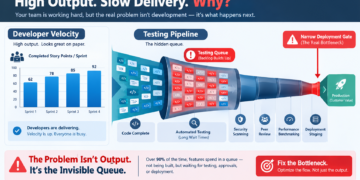
Inside the software delivery silos, developers are working furiously. Individual task metrics indicate peak performance, and yet, the macro timeline continues to slip. The product owner points to engineering dependencies, engineering blames procurement delays, operations points to a backup in user acceptance environments, and the delivery manager is left writing passive recovery status reports.
This scenario exposes a costly corporate myth: Maximizing localized worker activity and extending work hours automatically accelerates macro delivery timelines.
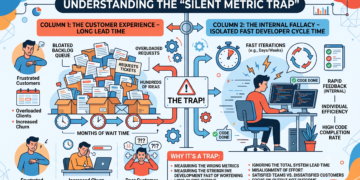
In reality, technical debt and timeline delays do not pile up because your staff is underperforming. They build up in the silent, undocumented spaces between execution steps. When an enterprise evaluates performance solely through micro task statuses, it becomes completely blind to systemic wait times.
Elite project leaders know that true operational order demands a holistic perspective. To stop bleeding contract margins and discover the hidden delays in your workflows, you must look past individual performance reports and deploy the strict operational mechanics of Value Stream Mapping (VSM) Foundations.
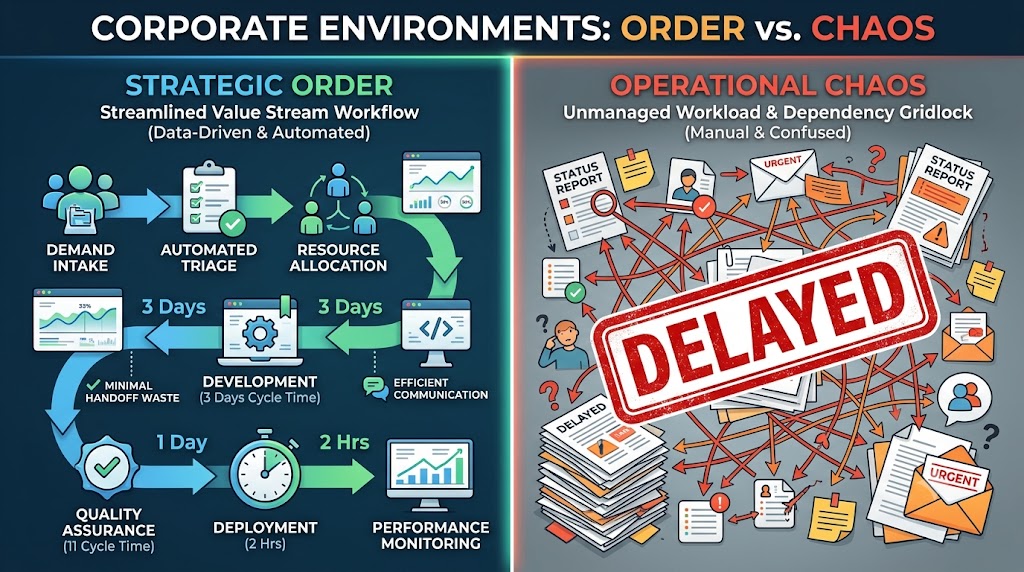
2. Deconstructing the Foundations of Value Stream Mapping
To move an underperforming project delivery track from reactive chaos to predictable execution, project managers must learn to graph process flows objectively. Value Stream Mapping is not a basic flowchart exercise: it is a structured, cross-functional engineering methodology designed to analyze operational pipelines end-to-end. Originally developed within physical automotive manufacturing systems, this visual management practice translates process mechanics into hard, quantifiable time metrics.
The Mechanics of Flow Modeling: As-Is Processes vs. Value Chains
Value Stream Mapping forces an organization to trace its entire operational flow, step by step, across departmental boundaries. The core strategy requires compiling a granular timeline that documents every handoff, approval loop, and system layer required to deliver an increment of value.
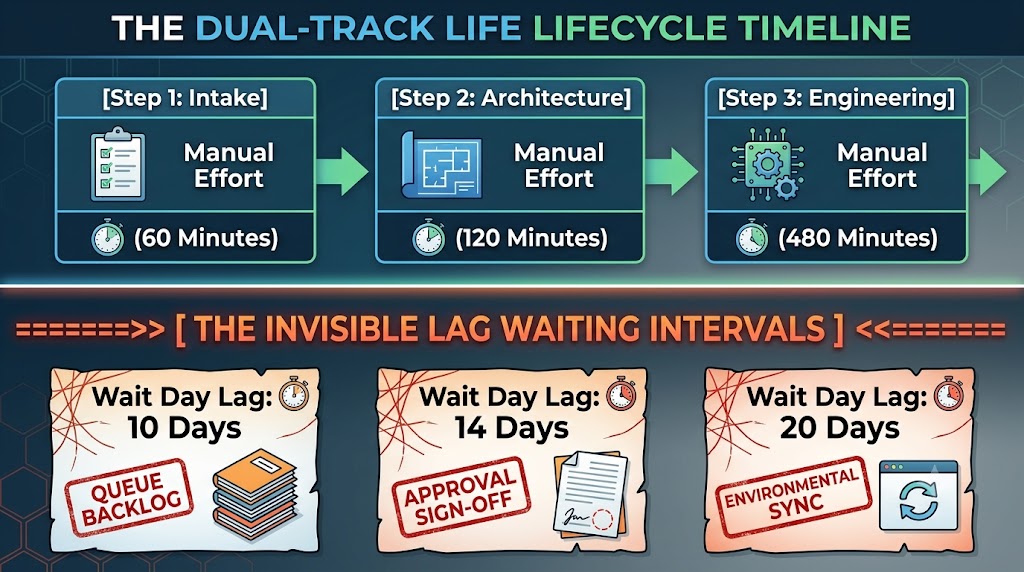
When building an operational process map, project professionals distinguish between two vital states of time:
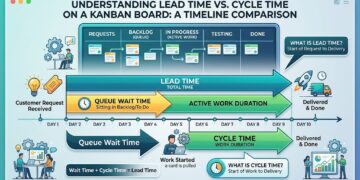
Manual Effort (Touch Time): The actual duration of time an engineer, specialist, or manager spends actively manipulating data, generating code, or building infrastructure to complete a task.
Lag Wait Time (Lead Time): The invisible duration of time a task sits static in an item queue, awaiting approval sign-off, server deployments, or cross-functional team handoffs.
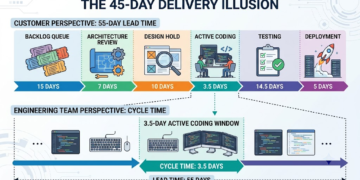
By separating manual effort metrics from lag waiting intervals, the enterprise can quickly expose process bottlenecks. A value stream analysis often surfaces a staggering reality: a engineering task that takes only 60 minutes of active human effort can easily consume 10 calendar days in lag wait time, trapped in cross-departmental queues.
The Value-Add vs. Non-Value-Add Metric Compilations
o optimize workflows, the complied metrics must be classified based on their direct benefit to the end customer:
Value-Add (VA) Activities: Core processing steps that transform requirements directly into functional software features that the customer values. Examples include code generation, test design, and automated feature compilation.
Non-Value-Add (NVA) Waste: Work elements that consume valuable company time, resource capacity, and focus but create zero equity for the end product. Examples include waiting for database synchronization, manual status tracking emails, and rework required by ambiguous entry criteria.
The Step-by-Step Value Stream Optimization Blueprint
For project professionals managing disjointed delivery cycles, this comprehensive execution framework can be integrated directly into your operations to establish immediate predictability.
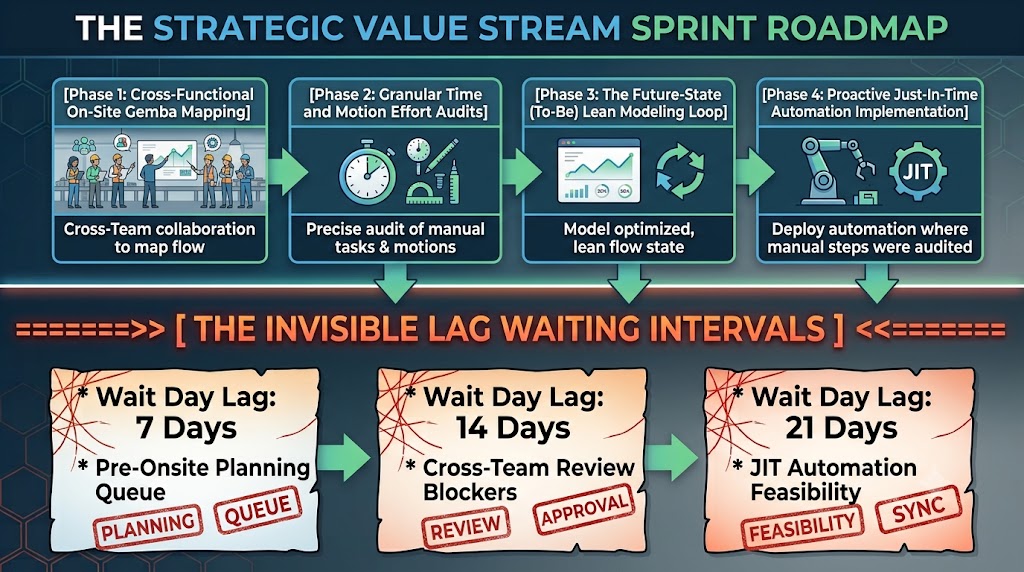
Step 1: Execute Cross-Functional On-Site Gemba Mapping
Value stream engineering cannot occur inside a project management office. The project manager must break down corporate silos by assembling representatives from every department that touches the deliverable: engineering, procurement, compliance, testing, and operations.
The group conducts direct observation sessions, tracking the actual journey of a task across team rooms and systems. This cross-functional visibility ensures that the resulting process model reflects true operational realities, preventing the creation of inaccurate maps based on outdated corporate documentation.
Step 2: Compile Time and Motion Effort Audits
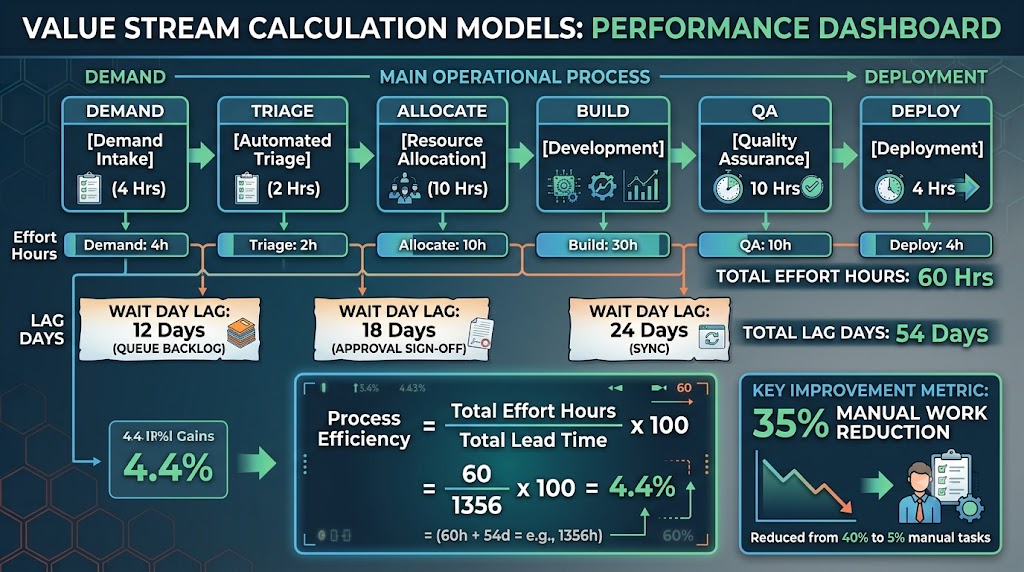
With the operational process workflow model established, map hard time metrics to every processing block. The project manager must record documented data points for every single step:
Active Processing Effort: The average duration in minutes or hours spent completing active manual tasks.
Handoff Waiting Delays: The historical wait times in days where tasks remain idle in a queue before downstream team absorption occurs.
Calculate your total operational cycle metrics by dividing total manual touch time by total lead time. This calculation produces your process efficiency percentage, highlighting exactly how much resource capacity is actively building product value versus rotting in queue intervals.
Step 3: Architect the Future-State (To-Be) Lean Workflow
Once the active operational process map is complete, challenge every non-value-add activity relentlessly. The project manager and system architect systematically evaluate every queue, approval layer, and system check, asking core lean questions: Is this step essential to prevent system failure, or can it be eliminated entirely through process realignment?
The team removes unnecessary governance layers and drafts a optimized future-state blueprint designed to maximize value throughput.
Lorem ipsum dolor sit amet, consectetur adipiscing elit. Ut elit tellus, luctus nec ullamcorper mattis, pulvinar dapibus leo.
Step 4: Deploy Just-in-Time Automation Enablers
To bridge the gap between your current bottlenecks and your streamlined future-state targets, deploy automated technology safeguards. Replace manual handoff steps and check-in notices with automated system updates. For instance, rather than requiring an administrative resource to compile new hire orientation lists, build automated database triggers that instantly notify training facilitators the moment compliance validation clears.
Targeted automation can compress manual administration workflows, slashing active effort from hours to minutes.
Step 5: Enforce Standardized Work and Visual Management Boards
Establish strict visual tracking mechanisms across the newly optimized value stream. Deploy centralized workflow dashboards that display active lead times, work-in-progress limits, and queue volumes in real time. Enforcing these transparent data boundaries ensures that the delivery engine maintains an unshakeable operational rhythm, allowing teams to identify and clear emerging blockages before they impact project deadlines.
3. Shifting to Predictive Velocity and Enterprise Scale
When an organization successfully transitions from localized activity metrics to systematic value stream mapping foundations, the operational benefits are immediate. The frustrating reality of uncoordinated handoffs, unpredictable timelines, and employee burnout is replaced by a high-velocity delivery engine. Project leaders shift away from chasing random task statuses and establish total operational visibility over their cross-departmental pipelines.
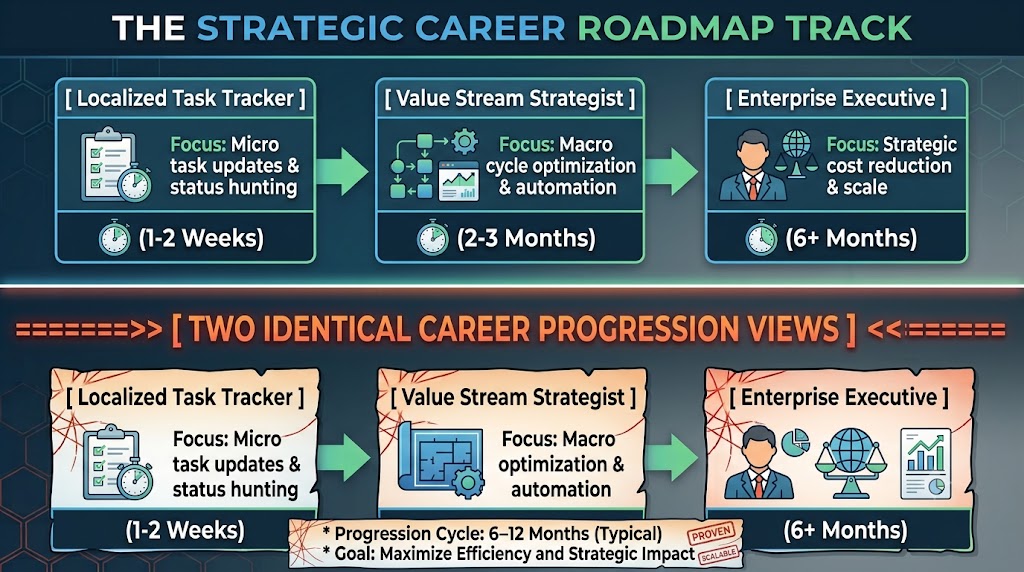
For the ambitious project manager, mastering these macro flow metrics completely changes your career path. By learning how to design and automate process flows, you stop functioning as a basic task coordinator. Project professionals who possess documented expertise in reducing corporate overhead costs and driving operational efficiency are highly sought after by senior executives. You position yourself as a crucial cross-functional leader, clearing a direct path to senior director and corporate operational officer roles.
4. The Skillsetify Excellence Framework
Deploying the core foundations of Value Stream Mapping is not a minor workflow adjustment: it is a high-value process upgrade that protects your project margins, optimizes human capacity, and removes systemic waste across your entire corporate architecture. By embedding granular time analytics and automated workflow checkpoints directly within your delivery strategy, you build a lean execution engine capable of delivering enterprise value predictably and at scale.
If you are ready to stop guessing, move up the corporate ladder, and learn project management the right way, reach out to Skillsetify. We do not just teach abstract theoretical frameworks: we show you your exact career growth trajectory. Transform your delivery pipelines into streamlined value streams of predictive velocity today.