How Just-In-Time Procurement and Rigid Scope Baselines Annihilate Gold Plating Chaos
It is 2:00 AM on the final Friday of Q4, and the operations floor of a major enterprise software hardware manufacturer is engulfed in quiet desperation. The warehouse is physically overflowing with millions of dollars in highly sophisticated server chassis components, taking up massive square footage and accruing exorbitant daily holding fees. Yet, the entire production line is completely paralyzed. Why? Because a single critical micro component is missing due to a poorly calculated logistical lead time.
Simultaneously, the development team has spent the last three weeks writing an elegant, highly advanced diagnostic monitoring module into the firmware. The problem is that the client never requested this module, it was completely outside the project parameters, and it just triggered a fatal software regression that corrupted the core operating system.
This is the ultimate corporate nightmare: a lethal combination of bloated inventory overhead and undisciplined product development. It represents a fundamental breakdown of operational line efficiency, a catastrophe born from a lack of control over execution timing and project boundaries.
For decades, an incredibly stubborn corporate myth has persisted across executive boardrooms: the belief that maintaining massive inventory safety cushions protects against market volatility, and that packing unrequested features into a product delivery delights the enterprise client. This is a highly dangerous delusion. In reality, maintaining excessive component buffers serves only to tie up massive sums of working capital, inflate overhead costs, and expose the enterprise to rapid obsolescence.
Concurrently, introducing unauthorized enhancements, commonly known as gold plating, introduces unneeded defects, expands the attack surface for system vulnerabilities, and destroys development throughput. True production line excellence requires an unyielding commitment to lean operational precision. Enterprises must minimize inventory burdens through hyper precise execution timing while binding the development lifecycle strictly within predefined scope parameters.
Demystifying the Production Line Efficiency Triumvirate
To transition an organization away from structural waste, project leaders must first master the core mechanics of three deeply connected operational disciplines: Just-In-Time (JIT) procurement, absolute scope baselines, and rigorous gold plating cures.
Just-In-Time Procurement: Precision Timing Mechanics
Just-In-Time procurement is a highly strategic operational philosophy focused on synchronizing resource arrival perfectly with the exact moment of production demand. Originating within elite automotive manufacturing ecosystems, this architecture dictating that components should only exist on the factory floor when they are actively being processed. By shifting away from a speculative push based supply chain model to a highly responsive pull based system, enterprises can practically eliminate the massive financial strain of warehousing excessive raw stock.
Consider the modern technological paradigm: hardware and software components undergo rapid generational changes. Organizations that build months of speculative inventory frequently suffer catastrophic financial write downs when newer, faster, or more efficient components enter the market.
A premier historical example of this model is the custom direct to consumer assembly framework popularized by top tier PC manufacturers in the early 2000s. By keeping components with their vendors until an actual customer order was confirmed and customized on the web interface, assembly operations cut down months of depreciating warehouse stock into a highly agile five to seven day turnaround window. This dramatic structural shift eliminated capital stagnation, mitigated technology degradation risks, and translated directly into massive cost efficiencies.
The Scope Baseline: The Inflexible Constitutional Core
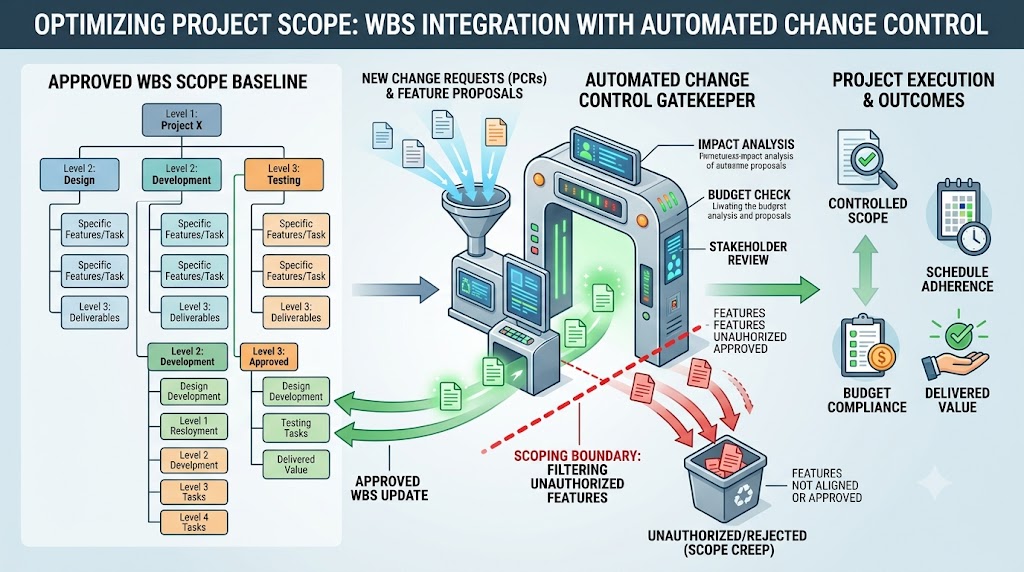
The scope baseline represents the foundational agreement of the project lifecycle. It is the definitive operational yardstick comprised of three vital artifacts: the formal Project Scope Statement, the Work Breakdown Structure (WBS), and the highly granular WBS Dictionary.
Together, these documents map out the absolute boundaries of execution. If an activity, a feature, or a requirement is not explicitly encoded within the WBS dictionary, it does not exist to the project team. The baseline acts as a mechanical shield against structural drift, forcing the enterprise to preserve an immutable equilibrium between allocated financial capital, human resources, and calendar time.
Gold Plating Cures: The Logic of Explicit Constraints
Gold plating is defined as the unauthorized insertion of features, refinements, or quality characteristics into a product bundle without formal approval, change requests, or commercial renegotiations. While well meaning engineers frequently engage in gold plating out of a misguided desire to impress corporate stakeholders, it represents a strict failure of management control.
Gold plating consumes critical engineering capacity, skews production line throughput metrics, and introduces unvalidated source code that complicates long term software maintenance. The only definitive cure for gold plating is an organizational culture that views unrequested work not as a bonus, but as an operational defect. Project managers must enforce an unyielding discipline: the product must strictly match the validated scope baseline, no more and no less.
The Strategic Framework for Operational Precision
Implementing a lean production line architecture requires moving past superficial framework adoptions. Project managers must deploy structured, quantifiable workflows that deeply audit operational steps, eradicate non value added bottlenecks, and protect project perimeters.
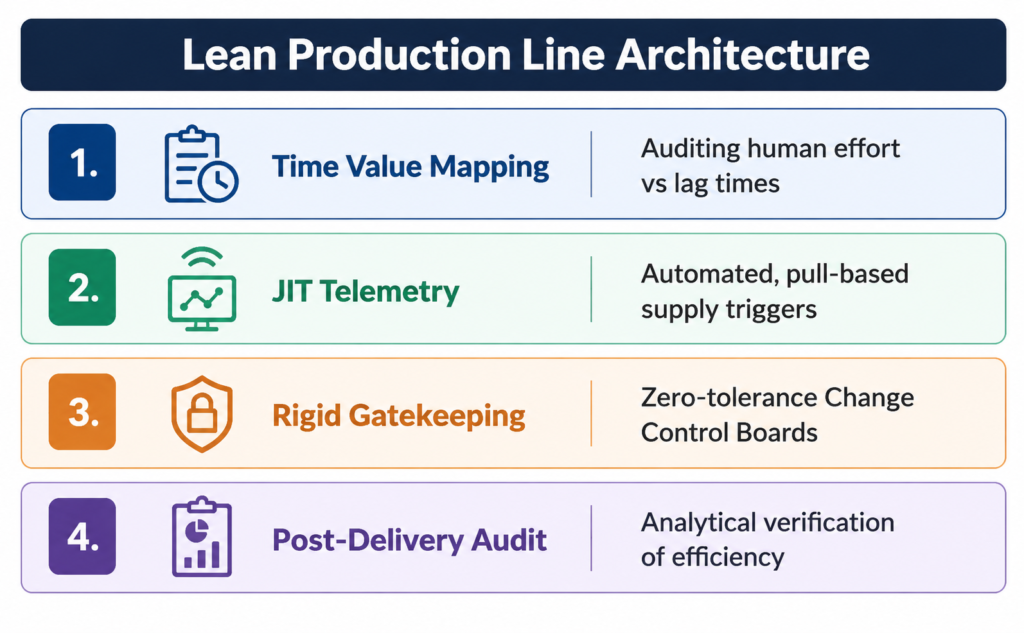
Step 1: Baseline Architecture and Time Value Mapping
Before a single purchase order is drafted or a line of code is produced, the project leadership team must establish an ironclad WBS dictionary alongside a thorough value stream map. Every discrete step across the production and engineering pipeline must be explicitly captured and classified.
Human Effort Auditing: Measure the precise number of minutes or hours of active human touch required to complete a specific task or build a component.
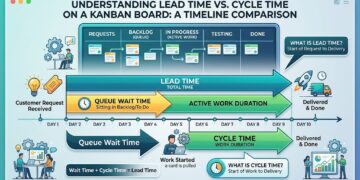
Operational Lag Calculation: Track the precise wait time, transit period, or queue latency that occurs between distinct steps.
Waste Elimination: Cross reference these activities to identify non value added tasks, such as repetitive manual updates or excessive email notifications. By isolating automated processes from manual human drag, project leaders can radically streamline processing times and optimize team utilization metrics.
Step 2: Designing the Just-In-Time Procurement Pipeline
To eliminate capital intensive warehousing, the procurement infrastructure must connect directly with active supplier telemetry systems.
Pull Based Logic Configuration: Program the enterprise resource planning (ERP) environment to monitor real time consumption patterns on the line. Component orders should trigger automatically based on active throughput rates rather than static quarterly forecasts.
Supplier SLA Optimization: Bind parts suppliers and external vendors to hyper strict delivery windows. Contracts must mandate that raw resources arrive in a highly predictable window, keeping standard on site inventory capped at a lean, rolling inventory buffer of only a few days.
Risk Mitigation Structuring: Establish backup arrangements with regional suppliers. While international vendors might offer slightly lower unit costs, regional logistics loops reduce overall transport latency, protecting the JIT model against sudden global supply shocks.
Step 3: Enforcing Strict Gold Plating Gatekeepers
Protecting the scope baseline requires setting up automated, systematic boundaries that stop unauthorized enhancements before they ever enter the production pipeline.
Establish a Zero Tolerance Change Control Board (CCB): Every single modification to the product blueprint, regardless of perceived simplicity, must pass through a formal change request process. If an engineering enhancement does not possess an explicit corporate sponsor, a clear business justification, and a approved budget expansion, it is immediately rejected.
Automated Validation Testing: Embed automated validation constraints into the quality assurance environment. Testing suites must validate deliverables strictly against the parameters laid out in the approved acceptance documentation. Any feature built that does not map directly back to an authorized requirement will fail validation, forcing the development team to strip out the excess code immediately.
Pull Based Resource Management: Utilize clear visual tracking systems, such as tightly managed Kanban boards, to govern operational workflows. By implementing strict Work In Progress (WIP) limits across every column of the tracking system, the team is mechanically restricted from starting new, unauthorized tasks. They are forced to focus exclusively on moving pre approved, high priority baseline items through to full completion.
Step 4: Post Execution Analytical Audits
Continuous refinement requires regular retrospective evaluations to verify performance metrics and identify structural deviations.
Throughput Variance Analysis: Compare planned operational lead times directly against actual completion dates to pinpoint structural friction.
Root Cause Investigations: When production targets fall short or inventory overages occur, deploy deep root cause analysis protocols, such as fishbone charting or iterative probing methods, to trace the variance back to its foundational process flaw.
Continuous Blueprint Tuning: Update the core process documentation immediately based on audited retrospective insights, ensuring that the entire organization constantly captures operational lessons.
The Shift to Elite Project Delivery
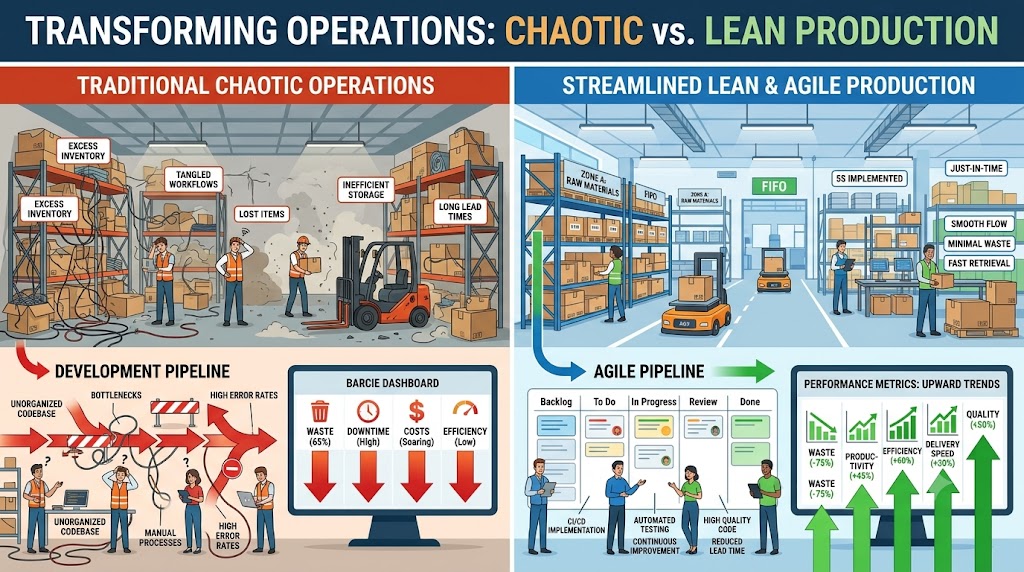
When an enterprise moves away from chaotic tracking systems and embraces hyper precise project execution, the cultural transformation is swift and profound. The chronic corporate cycle of perpetual firefighting, last minute panic, margin erosion, and severe team burnout is replaced by a state of absolute operational predictability.
Imagine leading an organization where the production ecosystem operates like a highly calibrated machine. Raw components arrive precisely when the assembly bays open, eliminating the waste of stagnant capital. Engineering sprints target approved product features with surgical precision, completely eliminating the costly technical regressions caused by unauthorized gold plating. Deliveries match the client blueprint perfectly, budgets are respected to the single penny, and project lead times are minimized.
| Before: Chaotic Project Environment | After: Elite Delivery Environment |
|---|---|
| Excess inventory increases costs and reduces flexibility. | Lean inventory minimizes capital lock-up and improves cash flow. |
| Uncontrolled scope changes lead to defects and rework. | Strong governance ensures consistent, high-quality delivery. |
| Teams experience burnout while budgets continue to rise. | Optimized workflows enable predictable, scalable ROI. |
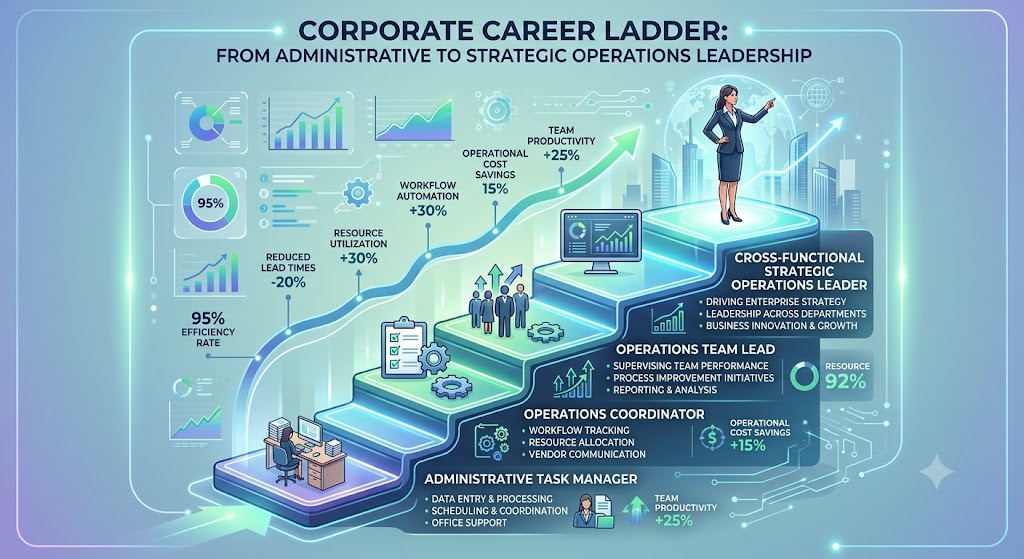
For the ambitious corporate professional, mastering this level of operational control is a major career accelerant. True project leadership is not about managing basic status meetings or filling out passive templates: it is about engineering highly efficient operational workflows.
When you demonstrate the ability to step into a fragmented enterprise landscape, systematically isolate systemic waste, map out cross functional dependencies, and build resilient, pull based delivery pipelines, you transform your professional value proposition. You transition from an administrative project tracker into a highly strategic enterprise leader. Executives notice when managers slash lead times, protect profit margins, and eliminate systemic risk. This is the definitive path to achieving major corporate influence and accelerating your upward career trajectory.
Securing Your Enterprise Edge
Operating with high efficiency metrics requires a sophisticated blend of strict project boundaries and flawless execution timing. By balancing Just-In-Time procurement schedules with rigid scope baselines, enterprise project leaders can build an unyielding fortress against waste, capital stagnation, and gold plating anomalies. The step by step roadmap is completely clear: map out the precise timing of your production dependencies, optimize your resource supply chains around real time pulls, and ruthlessly reject any modification that sits outside the validated blueprint.
True competitive dominance belongs exclusively to the organizations that can deliver top tier value with predictable, mathematical precision. If you are ready to stop guessing, move up the corporate ladder, and learn project management the right way, reach out to Skillsetify. We do not just teach frameworks: we show you your exact career growth trajectory.
Key Operational Takeaways
| Metric Focus | Core Objective | Primary Tool | Business Impact |
| Procurement Timing | Eliminate component holding overhead | Just-In-Time Pull Triggers | Optimizes active working capital |
| Boundary Control | Eradicate unauthorized feature drift | WBS Dictionary Validation | Eliminates code regressions |
| Process Velocity | Minimize manual human touch lag | Time Value Stream Auditing | Amplifies line throughput |