The Strategic Power of Cross-Functional Optimization Deployment
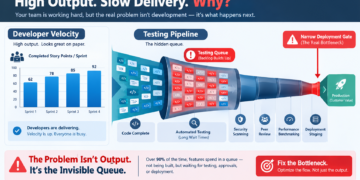
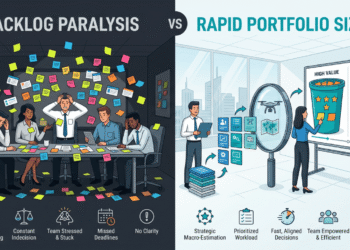
The corporate world is hiding a multi-million dollar secret that nobody wants to admit. Thousands of organizations are burning cash, draining employee energy, and missing delivery deadlines not because their teams lack talent, but because their departments are operating as disconnected corporate entities.
Imagine this scenario. A global software platform prepares for a major enterprise release. The engineering team builds premium features ahead of schedule. The testing team runs its protocols flawlessly. Yet, the product launch stalls for weeks. Why? Because the operations department was never loop into the deployment timeline, and the finance team is stuck in a manual process trying to reconcile vendor account numbers.
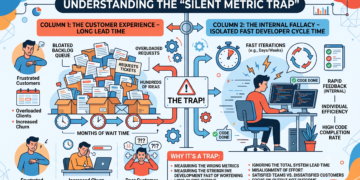
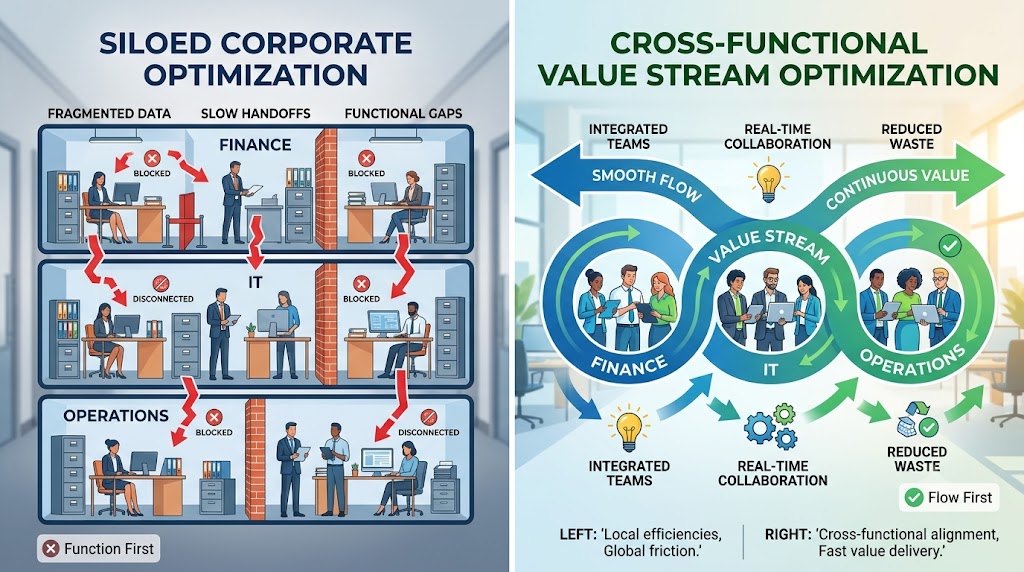
This is the classic corporate illusion. Executives assume that optimizing individual departments will naturally create an efficient organization. In reality, optimizing individual departments in isolation creates massive friction at the handoffs. True business value does not live inside a single team: it flows across them. To achieve elite performance, modern enterprises must pivot from localized improvements to Strategic Value Stream Scaling, guided by specialized leaders known as Lean Coaches.
The Core Mechanics of Value Stream Mapping (VSM)
To dismantle these structural walls, we must first change how we look at enterprise operations. Value Stream Mapping is a core lean management methodology designed to analyze and optimize the flow of information, materials, and value required to bring a product or service to an end customer.
Rather than focusing on what a single developer or a single marketer does, VSM examines the entire timeline from the initial trigger to final delivery. The methodology categorizes all corporate activities into two distinct groups:
Value-Add Activities (VA): Operations that directly transform a product or service into something the customer explicitly wants and is willing to pay for.
Non-Value-Add Activities (NVA): Steps that consume time, capital, or resources without increasing the worth of the final deliverable. These are classic operational wastes.
Understanding Effort vs. Lead Time
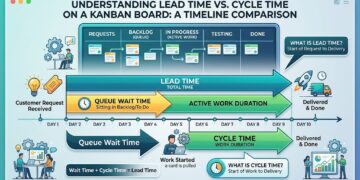
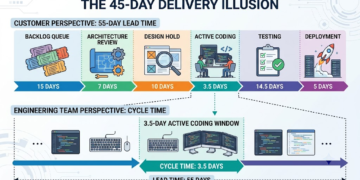
A common trap for project managers is confusing human effort with lead time. A team member might only spend 60 minutes actively processing an item, yet that specific item might sit in a queue for 10 days waiting for a secondary approval.

Value Stream Mapping exposes this massive gap. By calculating the total active minutes against the raw calendar days, organizations can calculate their process efficiency profile. In most unoptimized corporate structures, active human effort accounts for less than 10 percent of the total lead time. The remaining 90 percent is pure wait time, process lag, and systemic delay.
The Cross-Functional Scaling Framework: A Step-by-Step Guide
Deploying a cross-functional optimization model across disconnected corporate units requires a structured approach. Project managers can deploy the following execution framework to capture, analyze, and transform their workflows immediately.
Step 1: Establish the Cross-Functional Team
A value stream cannot be mapped in isolation. You must build a cross-functional optimization group that cuts directly through organizational structures. The team should include representatives from every department the process touches, such as IT, operations, finance, and human resources.
Step 2: Document the Current "As-Is" State
Document the baseline process exactly as it functions in reality, not how the corporate manual says it should work. Gather your cross-functional team and map every single handoff, tracking:
The exact steps performed by each department.
The active human effort required for each task (measured in minutes).
The real-world process lag or wait time between steps (measured in days).
Step 3: Conduct the Value-Add Assessment
Analyze every logged task relentlessly. Ask the fundamental question: If we eliminate this step, does the value of the final deliverable to the customer drop? If the answer is no, you have identified a non-value-add activity.
| Process Step | Department Owner | Active Effort (Min) | Wait Time (Days) | Classification | Optimization Action |
| Data Request Intake | Operations | 60 | 10 | Non-Value-Add | Deploy automated system trigger |
| System Architecture Review | IT Support | 120 | 5 | Value-Add | Retain: Optimize scheduling |
| Manual Account Reconciliation | Finance | 480 | 14 | Non-Value-Add | Implement RPA technology tool |
Step 4: Propose the Future "To-Be" State
Design an optimized value stream by removing unnecessary steps, balancing handoffs, and integrating digital tools. Replace manual tasks with automated triggers and systemic loops to compress the time an item sits idle in a queue.
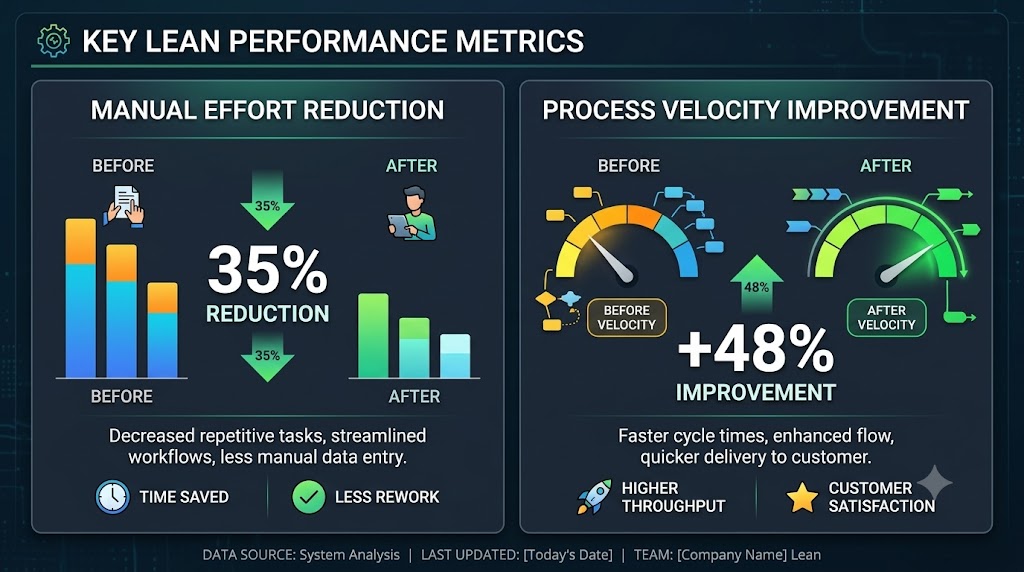
Step 5: Quantify the Strategic Efficiency Gain
Before implementing changes, calculate your projected efficiency metrics. Compare the current state against the proposed model to present clear data to executive leadership:
Effort Reduction % = Current Effort − Proposed Effort Current Effort × 100
Lead Time Compression % = Current Lead Time − Proposed Lead Time Current Lead Time × 100
Operational Excellence Tools for Lean Execution
Once the value stream mapping framework highlights the core bottlenecks, the organization must utilize specific lean project management tools to stabilize and improve the new process.
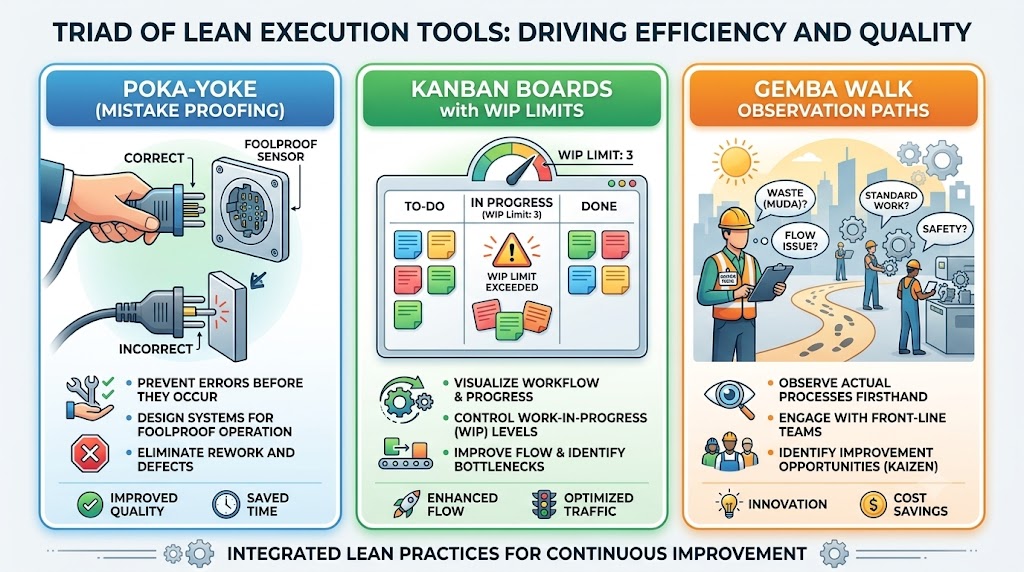
Mistake Proofing (Poka-Yoke)
Poka-Yoke is a lean approach focused on preventing errors before they ever happen. Instead of inspecting a deliverable for defects at the end of a long loop, mistake-proofing builds digital safeguards directly into the operational infrastructure.
A classic corporate example is automated leave validation logic. In legacy systems, managers frequently forget to approve time-off requests, creating manual payroll errors at the end of the month. A mistake-proofed process alters the workflow completely: if an employee submits a request and the team footprint remains safe, the system auto-approves the transaction and alerts the manager, completely eliminating downstream payroll disputes.
Visual Management
Information must be clear at a glance. Visual management tools replace dense spreadsheets with highly scannable status dashboards. Teams can leverage kanban tools to display tasks across three core columns: To-Do, Work-In-Progress (WIP), and Done.
To keep processes moving efficiently, teams must establish strict Work-In-Progress limits. Restricting the number of active items prevents team burnout, highlights bottlenecks instantly, and ensures the cross-functional group finishes open items before starting new ones.
The Gemba Walk
True leadership cannot happen from an isolated office or by simply skimming status summaries. The Gemba Walk is the practice of moving to the actual spot where the real day-to-day work occurs.
For an elite project manager, this means joining a developer’s screen-share session, sitting directly with a finance clerk, or observing an operations specialist handle a customer intake request. Observing processes firsthand exposes technical system bugs, hidden operational workarounds, and communication gaps that standard project status reports completely miss.
Shifting from Chaos to Elite Delivery
When you implement cross-functional optimization deployment correctly, the structural transformation inside the enterprise is profound. The organization moves away from unpredictable schedules, sudden delivery delays, and chronic team burnout toward a highly predictable, repeatable operational cadence.
For project management professionals, mastering this systemic approach completely changes your career trajectory. You cease to be a coordinator who simply checks boxes and updates schedules. Instead, you become a strategic business driver: a high-value asset capable of entering any corporate environment, aligning disconnected teams, compressing project lead times, and driving major efficiency gains. This executive mindset is exactly what distinguishes standard team leads from corporate leaders.
Elevate Your Project Management Career with Skillsetify
Navigating complex enterprise architectures, implementing lean frameworks, and scaling value across multi-layered organizations requires specialized expertise. Rote memorization of basic project frameworks is no longer enough to win in today’s corporate landscape.
If you are ready to stop guessing, move up the corporate ladder, and learn project management the right way, reach out to Skillsetify. We do not just teach frameworks: we show you your exact career growth trajectory. Partner with Skillsetify today and transform your operational expertise into a powerful leadership asset.