Uncovering Downstream Realities via Gemba Walks
The enterprise dashboard was a beautiful, unbroken wall of emerald green. Every Service Level Agreement metric sat comfortably within its designated threshold. The project management tool tracked task completions at an flawless ninety eight percent velocity. Yet, inside the regional fulfillment office, the atmosphere was pure chaos. Handwritten sticky notes covered the edges of high-definition monitors. Panicked emails flew across departments as manual adjustments were made to salvage late shipments. Customers were experiencing unprecedented delays, and the executive leadership team was completely blind to the breakdown.
This is the silent killer of modern B2B project delivery: the illusion of operational health created by misaligned tracking mechanisms.
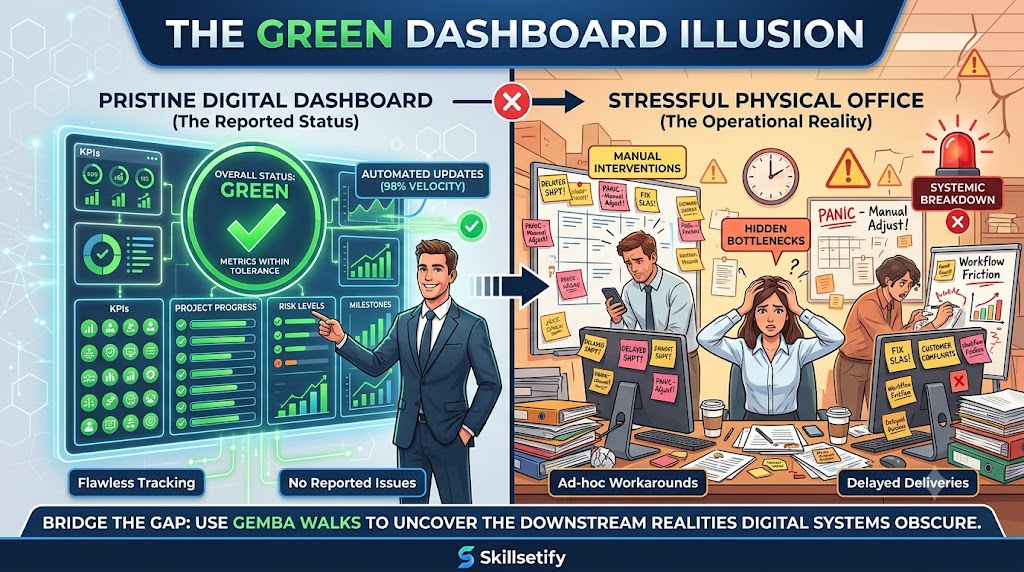
A dangerous myth persists in the upper echelons of corporate management: the belief that operational excellence can be accurately measured and managed entirely through digital tracking tools and structured status updates. Project managers frequently mistake compliance with tool entry for true operational health. When a project begins to experience systemic friction, the standard executive response is to schedule more status meetings, mandate more detailed logging, or introduce a new software layer.
These interventions fail to address the root cause. They layer additional administrative burdens onto an already fractured workflow. Digital systems show you what numbers are being reported, but they cannot show you how the work is actually being executed. To bridge the gap between reported metrics and reality, leaders must step away from their screens and embed directly within the true physical or virtual environments where daily work occurs. This diagnostic methodology is known as the Gemba Walk.
Originating from the Toyota Production System, the Japanese word “Gemba” translates to “the true place” or the location where the actual value-creating work happens. In a modern B2B project environment, the Gemba can be a physical factory floor, a customer service call center, or a virtual shared environment where software developers collaborate.
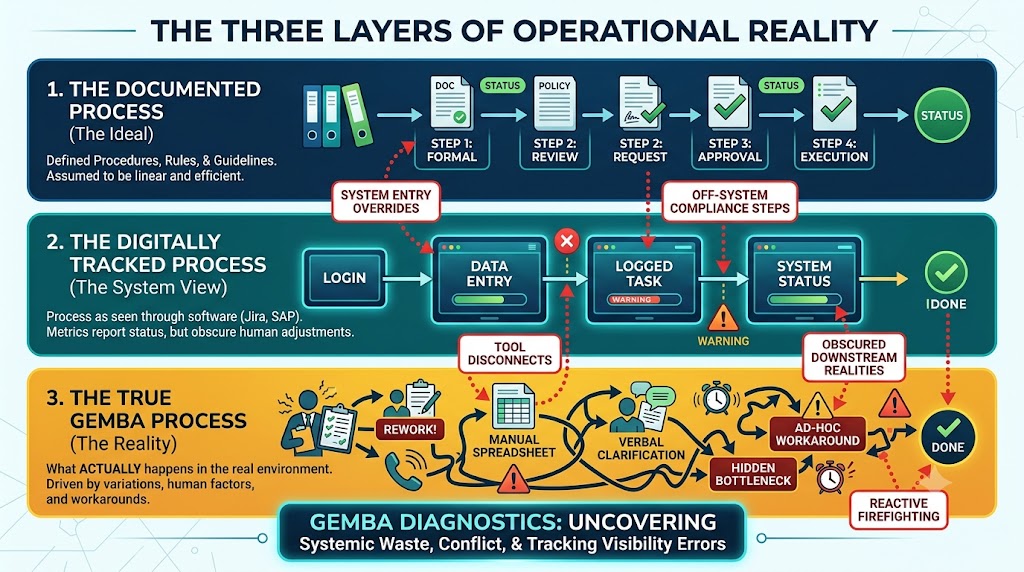
A Gemba Walk is a structured, purposeful observation technique designed to identify structural deficiencies, uncover hidden workflow friction, and resolve tracking errors. It is not an inspection or a micro-management exercise. Instead, it is a fact-finding mission focused on understanding the alignment between three distinct operational realities:
How leadership thinks the process works based on documented standard operating procedures.
How tracking software claims the process works based on digital updates.
How the process actually works in the real world.
When these three dimensions diverge, projects experience scope creep, quality degradation, and team burnout. By embedding directly in the workflow environment, project managers can observe downstream realities that reports inherently obscure.
The Core Mechanics of Operational Friction
On-site operational diagnostics typically uncover three specific categories of hidden friction:
Structural Deficiencies: Gaps in organizational design where tasks pass between disconnected platforms or silos without proper ownership, forcing teams to rely on ad-hoc workarounds.
Mismatched Internal Service Level Agreements: Siloed performance metrics that satisfy one team’s goals while actively causing bottlenecks for downstream dependencies.
Tracking Visibility Errors: Disconnects between the actual status of a deliverable and its digital representation in project management software, often caused by complex compliance steps or fear of reporting delays.
The Step-by-Step Diagnostic Framework
To transform the Gemba Walk from a casual observation into a repeatable framework for process improvement, project managers can execute the following comprehensive five stage implementation plan:
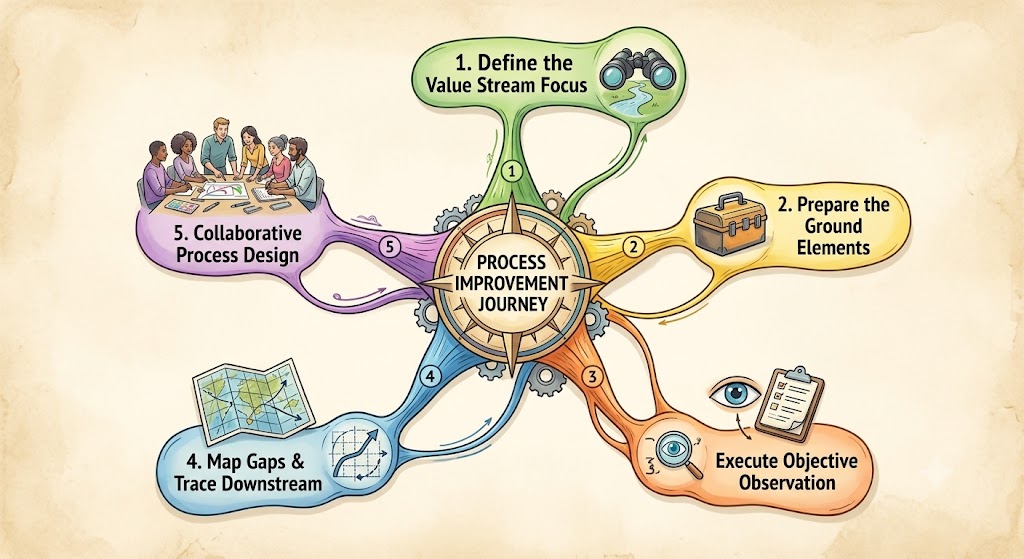
Stage 1: Define the Value Stream Focus
Do not attempt to observe the entire operation at once. Select a specific value stream or problem area that exhibits a disconnect between metrics and customer satisfaction. Identify the clear endpoints of this process, tracking how input transforms into output across departmental lines.
Stage 2: Prepare the Ground Elements
Establish clear trust with the operational team before setting foot in their space or joining their virtual sessions. Communicate explicitly that the focus of the observation is process health, not individual performance evaluation. Secure permission from team leads and set up an uninterrupted block of time where normal, everyday work will occur.
Stage 3: Execute Objective Observation
Embed directly within the work environment. Watch the workflow step by step without offering immediate corrections or intervening in the activity. Focus heavily on identifying non-value-add actions. Document instances where operators must exit the official system, use personal tracking sheets, manually transfer data between applications, or pause their workflow to wait for external approvals.
Stage 4: Map Gaps and Trace Downstream Gaps
Document every variance between the official process map and your real-world observations. Trace the consequences of these variances down the delivery line. For instance, notice if a minor field omission in an early step causes a downstream team to spend hours manually validating data. Quantify these disruptions by calculating the true labor time lost to manual interventions versus the ideal processing speed.
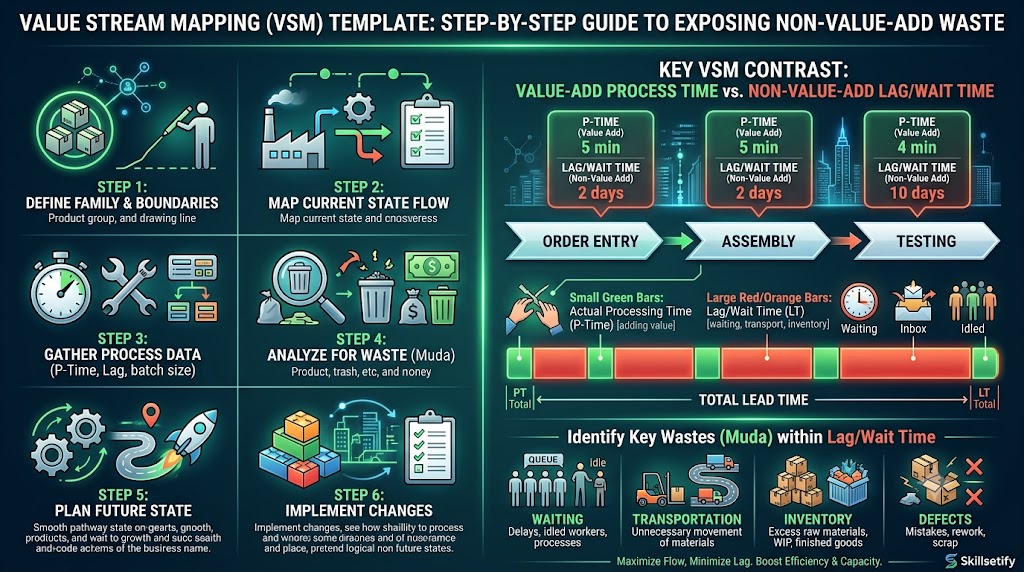
Stage 5: Collaborative Future-State Process Design
Bring the team together to review the observed gaps. Avoid top-down mandates. Instead, use collaborative techniques like the Five Whys methodology to uncover the true systemic drivers behind the workarounds. Work closely with the team to co-design process updates, automate manual administrative steps, align conflicting milestones, and adjust digital tracking tools so they match the actual day-to-day workflow.
When you master the art of on-site operational diagnostics, the dynamics of your project delivery undergo a profound transformation. The standard cycle of reactive firefighting, unexpected delivery delays, and tense executive status meetings is replaced by absolute operational predictability. You no longer lead from a position of passive speculation, relying on self-reported status updates that mask systemic underlying flaws. Instead, you develop clear visibility into the precise operational capacity of your delivery architecture.
This deep technical command changes the trajectory of an ambitious project professional’s career. Executives do not promote project managers who merely update tasks in software and repeat status bullet points. They elevate strategic leaders who possess the diagnostic capability to identify hidden operational risks, bridge organizational silos, and engineer repeatable, highly efficient delivery systems.
Mastering these on-site diagnostic frameworks enables you to consistently protect your team from burnout caused by manual workarounds. It ensures your projects hit strategic financial targets, turning operational excellence into a visible asset for your organization. This shift transforms project management from a routine administrative role into a powerful engine for cross-functional business transformation.
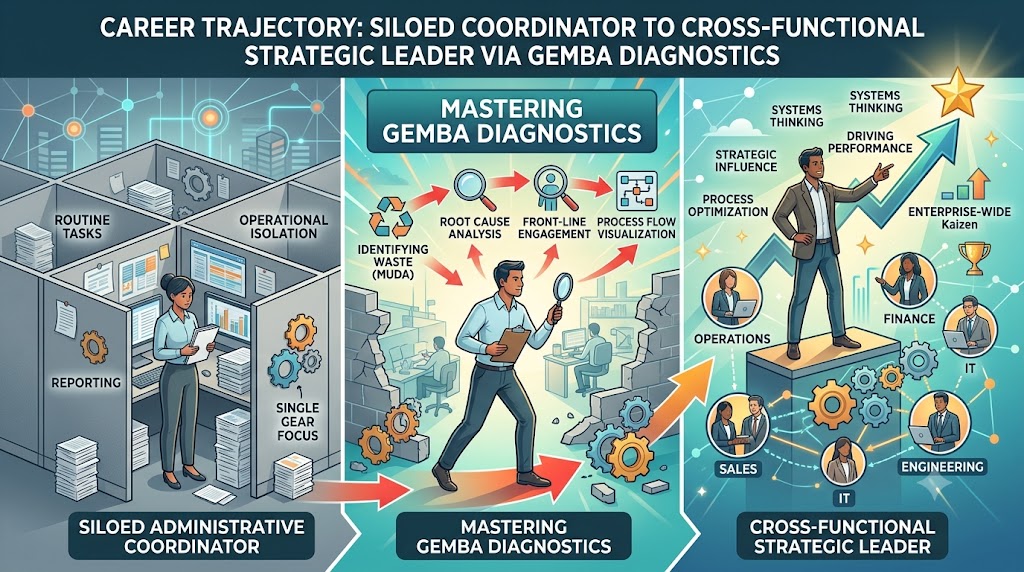
True operational diagnostics cannot be learned by memorizing surface-level terms or reviewing rigid, theoretical process templates. It requires developing a sharp strategic eye for identifying hidden waste, a deep understanding of organizational value paths, and the practical frameworks needed to lead complex, cross-functional improvements.
Skillsetify is built specifically to bridge the massive gap between basic certification knowledge and true, elite execution. We reject shallow theoretical training in favor of deep, real-world operational masterclasses. Our programs give you the rigorous diagnostic skillsets, hands-on optimization toolsets, and high-impact communication strategies needed to confidently transform struggling enterprise projects into models of predictable performance.
If you are ready to stop guessing, eliminate the blind spots in your current delivery workflows, move up the corporate ladder, and learn project management the right way, reach out to Skillsetify. We do not just teach frameworks: we show you your exact career growth trajectory. Turn your operational insights into measurable project value and position yourself as an indispensable asset for your enterprise today.