Maximizing Delivery with Extreme Programming (XP) Core Practices
1.The Cost of Technical Debt and the Myth of the Hero Developer
It is Friday afternoon at 4:15 PM. A highly visible enterprise software project is scheduled to go live at midnight. For the past six weeks, the development team has been working eighty-hour workweeks, surviving on caffeine and collective adrenaline. The original timeline was aggressive, but management assumed that throwing more hours at the project would make up for early delays.
Suddenly, during a final deployment simulation, the integration layer collapses. A cascade of unexpected regression defects overruns the testing environment. One full-stack developer frantically attempts to patch the code, but because the patchwork is highly customized and undocumented, fixing one bug breaks three others. By 8:00 PM, team fatigue has set in, typo errors multiply, and the midnight release window is officially missed. The client faces a major operational delay, costs spike, and the engineering team is completely burned out.
This common scenario exposes a costly corporate myth: Software project delivery can be accelerated by simply extending work hours and relying on individual heroics.
In reality, technical debt accumulates exponentially when engineering teams sacrifice quality control for speed. Pushing developers past sustainable human boundaries creates a downward spiral of low-quality output, hidden defects, and eventual project failure. Elite project professionals know that predictable execution demands a disciplined focus on software quality right from the start. To optimize development velocity, an enterprise must shift away from reactive troubleshooting and embrace the strict technical guardrails of Extreme Programming (XP).
2. Deconstructing the Core Engineering Mechanics of Extreme Programming
To establish true predictable delivery, project managers must understand how specific, high-quality development frameworks transform execution metrics. Extreme Programming is uniquely laser-focused on technical execution excellence. Unlike standard management approaches that evaluate progress solely through administrative status reports, XP uses built-in quality loops to eliminate bugs at the exact moment code is generated.
The Mechanics of Test-Driven Development (TDD)
Test-Driven Development completely inverts historical, linear engineering workflows. In traditional delivery structures, requirements are gathered, code is written, and a separate quality assurance team attempts to identify defects weeks later. TDD introduces a strict, automated feedback loop that forces developers to establish the validation criteria before a single line of application logic is produced.
The TDD cycle operates in three precise steps:
Write the Test First: The developer creates a targeted automated test case based entirely on explicit requirement acceptance criteria. Because the underlying feature code does not yet exist, this initial test is designed to fail.
Develop the Feature Code: The engineer writes the absolute minimum amount of code necessary to make the automated test pass. No extra features are added, preventing over-engineering and gold plating.
Refactor the Architecture: Once the test passes, the developer restructures the code to clean up dependencies, commentary, and legibility. Because the automated test is already active, any errors introduced during this refactoring process are instantly caught.
This test-first approach provides exceptional quality security. Developers begin with the exact end goal in mind, knowing precisely how their code will be verified.
The Architecture of Maker-Checker Pair Programming
Pair Programming replaces the outdated model of isolated, siloed code generation with a continuous, dual-layered peer review engine. By placing two engineers on a single development task, the framework establishes a real-time “maker-checker” dynamic that minimizes errors upfront.
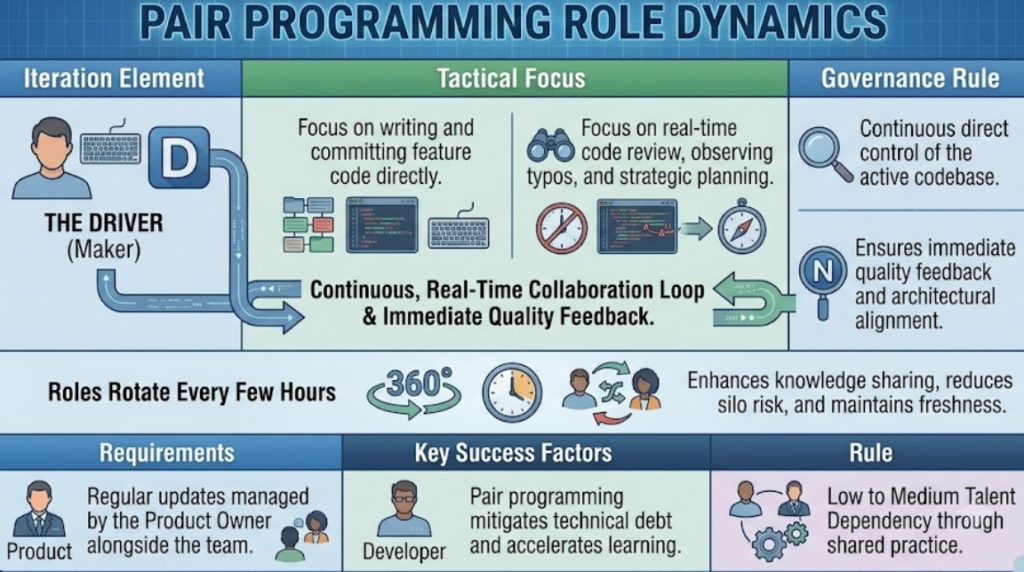
The resource distribution within this practice follows two explicit roles:
The Driver (The Maker): This engineer sits at the keyboard, focused entirely on the tactical mechanics of writing clean code that passes the immediate automated test.
The Navigator (The Checker): This engineer observes the code generation in real-time. Their focus is strategic, scanning for manual typos, architectural design gaps, missing comments, and integration risks.
While some business sponsors initially worry that dedicating two developers to a single task will double delivery costs, expert consensus confirms that the long-term trade-off is highly beneficial. Real-time code verification eliminates the need for expensive downstream regression testing, manual rework, and post-release patches, ensuring high-end software quality.
The Strategic Value of Sustainable Workweeks
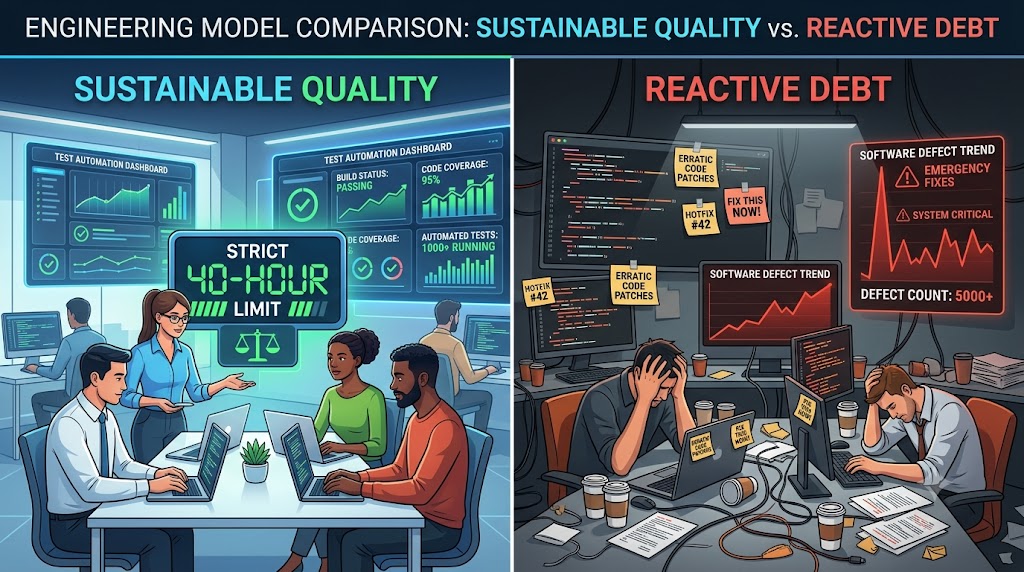
The final pillar of elite XP execution is the absolute enforcement of a sustainable, strict 40-hour workweek limit. This is not an administrative benefit: it is a high-value performance constraint based entirely on human cognitive biology.
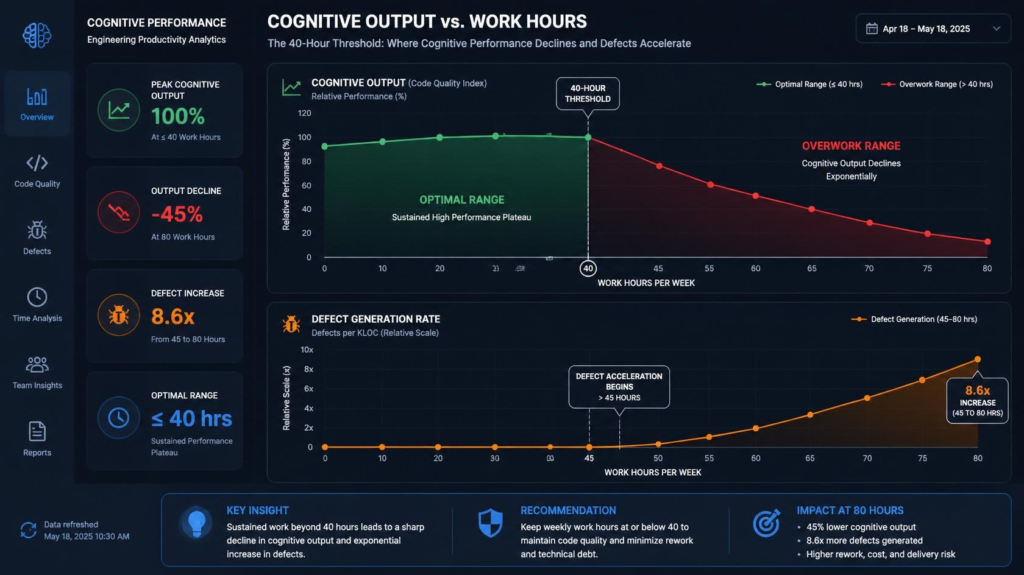
When software engineers are subjected to chronic fatigue, their error rates increase exponentially. Tired developers write complex, messy code that compromises maintainability. XP operates on a foundational rule: A team cannot deliver top-tier software if the individuals are consistently burned out. Enforcing a firm 40-hour limit protects the team’s critical cognitive focus. This strategy ensures that when developers are at their workstations, they produce precise, stable, and high-quality results
The Step-by-Step XP Practice Implementation Guide
For project professionals looking to transition their engineering tracks from reactive debugging to predictive velocity, this detailed framework can be implemented immediately.
Step 1: Secure an On-Site Customer or Dedicated Proxy
To optimize your test-driven development loop, the engineering team requires instant access to requirement definitions. XP highlights the importance of having an on-site customer or highly responsive product proxy available directly within the team room. This deployment ensures that when developers encounter complex validation questions, they receive immediate clarity, completely eliminating long requirement wait times.
Step 2: Establish Test-First Automated Infrastructure
Before launching any product development sprint, the project manager must work with the system architect to establish a continuous integration and automated testing pipeline. Enforce a firm execution rule across the team: No code may be pushed to the deployment server unless it is paired with an active, automated unit test case.
Step 3: Schedule Paired Team Rotation
Deploy pair programming tracks across all critical core application layers. To maintain shared team ownership and prevent specialized knowledge silos, rotate your developer pairs every few hours. This pattern ensures that multiple engineers understand every section of the system architecture, reducing long-term personnel dependency risks.
Step 4: Enforce Continuous Integration and Small Releases
Instead of accumulating large branches of isolated code over multiple weeks, require engineers to integrate their changes into the master deployment branch multiple times a day. This practice ensures that integration blocks are exposed immediately, making them much smaller and easier to manage.
Step 5: Institute a Rigid Cognitive Capacity Guardrail
Track actual resource hours using precise team-managed velocity tools. If team members are routinely logging overtime to hit specific release milestones, do not expand the work hours. Instead, adjust the active scope of the project backlog. Enforce the strict 40-hour workweek barrier as a firm structural boundary to protect the long-term delivery velocity of the organization.
3. Shifting from Project Chaos to Elite Enterprise Scale
When an organization successfully integrates Test-Driven Development, pair programming role dynamics, and sustainable engineering workweeks, the daily environment changes completely. The chaotic reality of missing milestone targets, late-night deployment failures, and developer fatigue transforms into a model of highly predictable, automated velocity. Project professionals move beyond reactive task tracking, establishing complete operational visibility over their product release tracks.
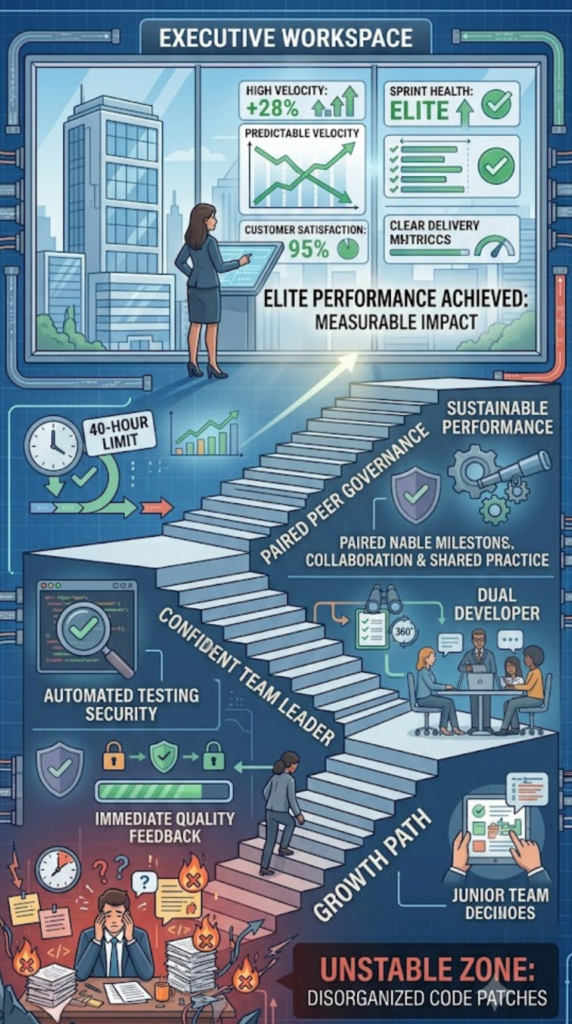
For the ambitious project professional, mastering these advanced technical execution practices shifts their career trajectory. By learning how to sync technical engineering excellence directly with structural resource optimization, you separate yourself from typical task coordinators. Project professionals who understand how to build resilient, quality-first software engines are highly sought after by enterprise leaders, clearing a straight path to high-profile technical leadership and executive operational roles.
4. The Skillsetify Strategic Advantage
Enforcing the core practices of Extreme Programming is not a minor workflow adjustments: it is a foundational upgrade that directly secures enterprise software quality, reduces manual rework costs, and protects valuable talent assets. By embedding automated testing safeguards and paired peer governance directly within a sustainable corporate architecture, you establish a resilient development engine capable of predictable delivery at scale.
If you are ready to stop guessing, move up the corporate ladder, and learn project management the right way, reach out to Skillsetify. We do not just teach high-level theoretical frameworks: we show you your exact career growth trajectory. Transform your software delivery into an automated engine of predictive velocity today.