Reclaiming Technical Quality and Direct Collaboration in the Age of XP
In the high-stakes arena of modern enterprise software development, a catastrophic scenario plays out in boardroom after boardroom. Picture this: a highly anticipated enterprise application is rolled out after eighteen months of intensive, siloed labor. The project manager proudly ticks the final box on the Gantt chart, declaring the project complete on time and within scope. Within forty-eight hours, the system crashes under real-world data loads. Worse, the end users find the interface so fundamentally detached from their daily workflows that they completely reject it. Millions of dollars in capital expenditure vanish, the engineering team faces complete burnout, and the organization is left with a legacy of technical debt.
For decades, conventional corporate wisdom has whispered a comforting myth: if you just invest enough time in upfront architectural blueprints, gather requirements behind closed doors, and manage the team with rigid governance, the output will be flawless.
This is a dangerous lie.
True project efficiency and product resilience do not emerge from rigid project controls. They are forged through a deeply disciplined engineering philosophy that fuses rigorous technical quality with radical transparency and continuous, direct collaboration with the actual users. To achieve this, elite organizations bypass superficial agility and look to the engineering core of the Extreme Programming framework.
The Architectural Anatomy of the Extreme Programming Ecosystem
Extreme Programming is a profoundly technical framework designed specifically to maximize software quality while ensuring the development team remains completely adaptable to changing requirements. While other frameworks focus heavily on project management mechanics, XP changes the way software is actually built.
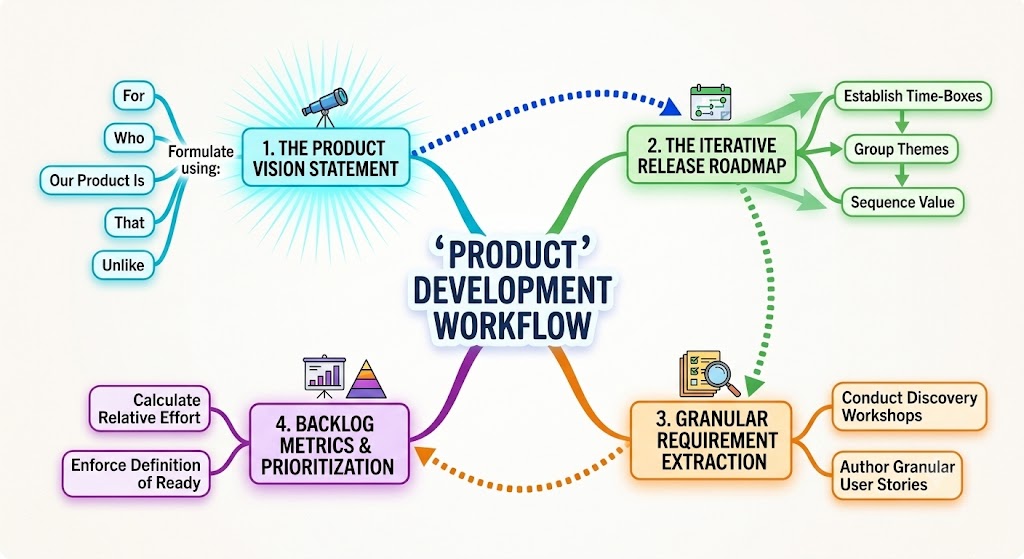
The Planning Game and Direct User Collaboration
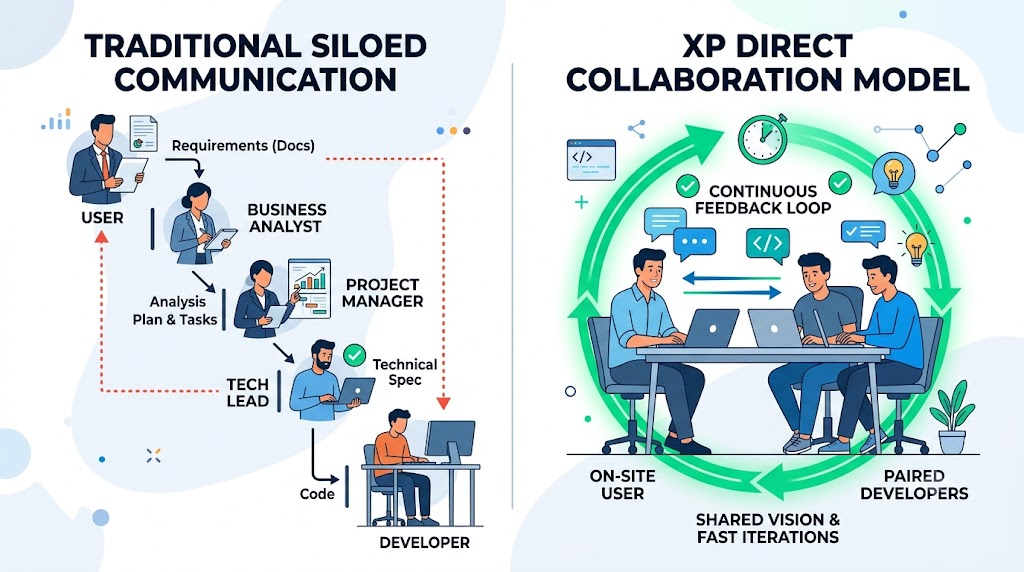
At the foundation of XP is the acknowledgment that software design is an ongoing discovery process. The traditional separation between “the business” and “the engineering team” is completely dissolved. Instead, XP establishes a highly disciplined framework where engineers and users co-create the product layout.
Continuous Discovery: XP replaces rigid upfront specifications with a continuous loop of short iterations. Instead of working from speculative documents, the engineering team uncovers the real system requirements by delivering small, functional pieces of software directly to the user.
The On-Site User Presence: XP functions best when a representative of the target user base is directly accessible to the development team. This eliminates the lengthy delay cycles caused by ticketing systems or multiple management layers. When a developer needs clarification on how an address verification loop should behave, the answer is discovered in minutes through direct conversation, not weeks through email threads.
Technical Quality Philosophy: Code Safeguards and Continuous Integration
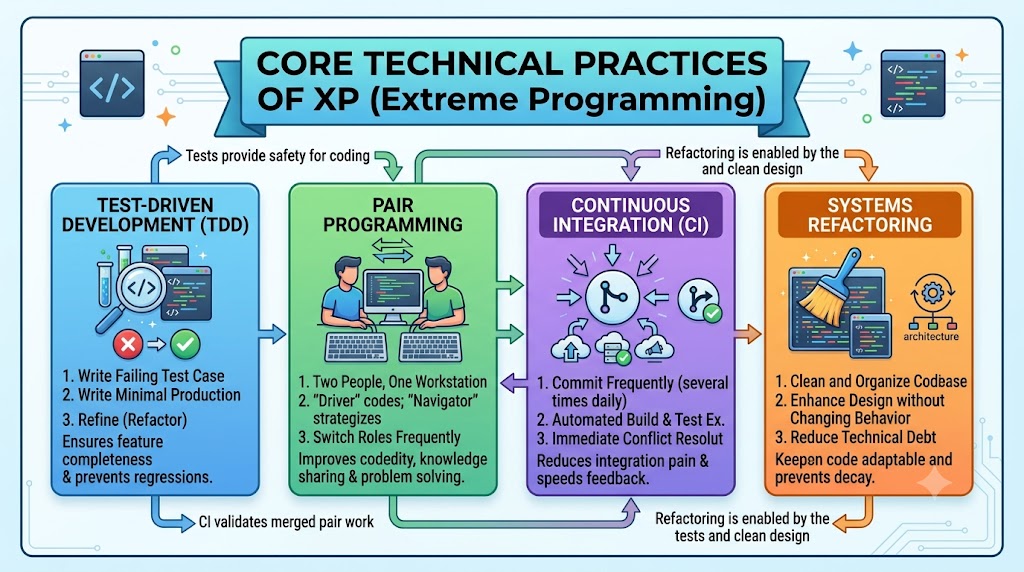
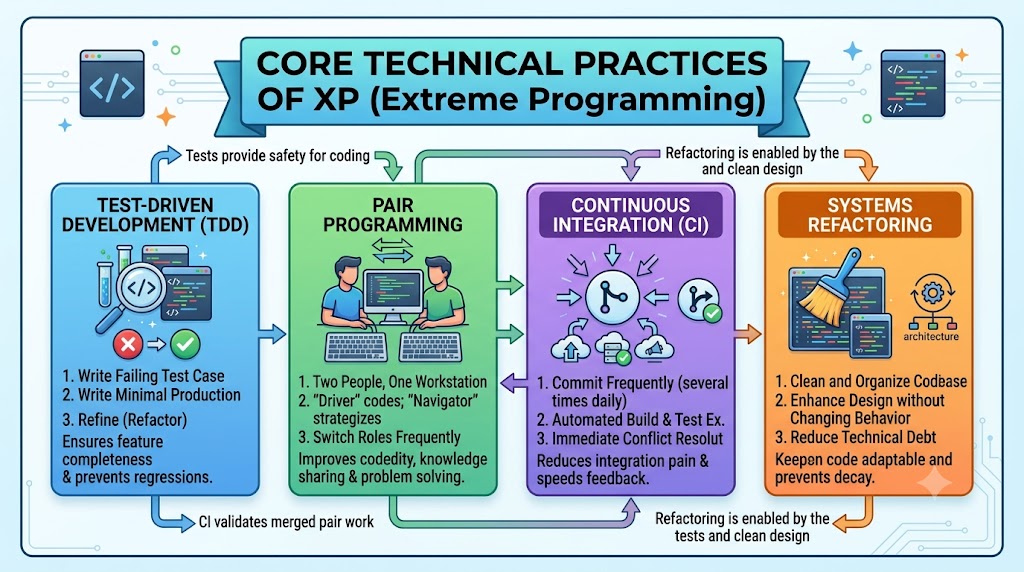
To build an ecosystem capable of handling changing user needs, the code itself must be structurally resilient. XP achieves this through a set of strict engineering practices that treat quality as a structural requirement rather than a final test phase.
Test-Driven Development (TDD)
In an elite XP environment, no production code is written until a comprehensive test case has been created and failed. This is the cornerstone of Test-Driven Development. By writing the test first, developers are forced to define exactly what success looks like before they build the system.
This approach shifts quality assurance from a reactive, backward-looking process to a proactive safeguard. The engineering team always designs with the end result clearly in mind. The test suite serves as a living, automated specification sheet that ensures new feature additions never break existing functionality.
Pair Programming and Collective Code Ownership
Pair programming is one of the most misunderstood aspects of XP, often dismissed by short-sighted managers as a waste of headcount. In practice, it is an elite mechanism for continuous code review and deep knowledge distribution.
Two developers sit at a single workstation: one acts as the “Driver,” writing the code, while the other acts as the “Navigator,” observing the overarching architecture, spotting typos, and thinking ahead to edge cases. The roles are rotated regularly throughout the day.
This dynamic pair creates a natural check-and-balance system. It dramatically cuts down on software defects at the very point of creation, completely eliminating the need for lengthy downstream inspection phases. Furthermore, because the entire team regularly rotates across the code base, the organization achieves true collective code ownership. The system is no longer vulnerable to single points of failure if a key engineer leaves the company.
Code Refactoring and Continuous Integration (CI)
A core value of the XP engineering philosophy is that code must be clean, readable, and highly maintainable. Developers constantly refactor code: systematically restructuring existing code to improve its internal design without changing its external behavior. This keeps the codebase highly adaptable over time.
These refactored updates are seamlessly coordinated through Continuous Integration. Multiple times a day, developers merge their code into a central staging environment where automated test suites immediately run. If a code merge fails a single test, the entire deployment stops until the issue is fixed. This relentless validation ensures the software remains in a stable, potentially shippable state every single hour of the day.
The Five Operational Value Systems of Extreme Programming
An engineering framework is only as good as the cultural values that guide the people using it. XP grounds its advanced technical practices in five core values that transform the workplace dynamic.
| Core Value | Operational Meaning in an Elite XP Ecosystem |
| Communication | Built upon continuous, direct conversations. Teams use clear visuals, shared coding standards, and immediate feedback loops to eliminate documentation delays. |
| Simplicity | The team focuses exclusively on building what is required for the current iteration. Developers actively avoid over-engineering and gold-plating features before they are explicitly requested. |
| Feedback | The system continuously delivers rapid feedback through automated test suites, frequent small releases, and immediate evaluations from on-site users. |
| Courage | Engineers possess the professional confidence to tell the absolute truth about project velocity, discard broken code designs, and adapt instantly to new information. |
| Respect | Every team member values the contributions of their peers. Management respects the team’s autonomy, strictly honoring a sustainable forty-hour work week to prevent burnout. |
The Crucial Intersection of Courage and Respect
Among these values, the combination of courage and respect is what creates a truly resilient project environment. Courage empowers a developer to raise their hand during a stand-up meeting and state that a specific architectural assumption has failed, or to point out that a target delivery date is unrealistic.
However, courage without respect can quickly devolve into workplace friction. In an elite XP culture, this courage is met with deep professional respect. The team avoids finger-pointing and instead rallies around the shared problem, viewing a discovered issue as a collaborative opportunity to improve the system.
The Strategic Professional Transformation
When an enterprise moves away from chaotic project management styles and embraces a disciplined XP framework, the workplace transformation is profound.
From Scope Creep to Elite Delivery
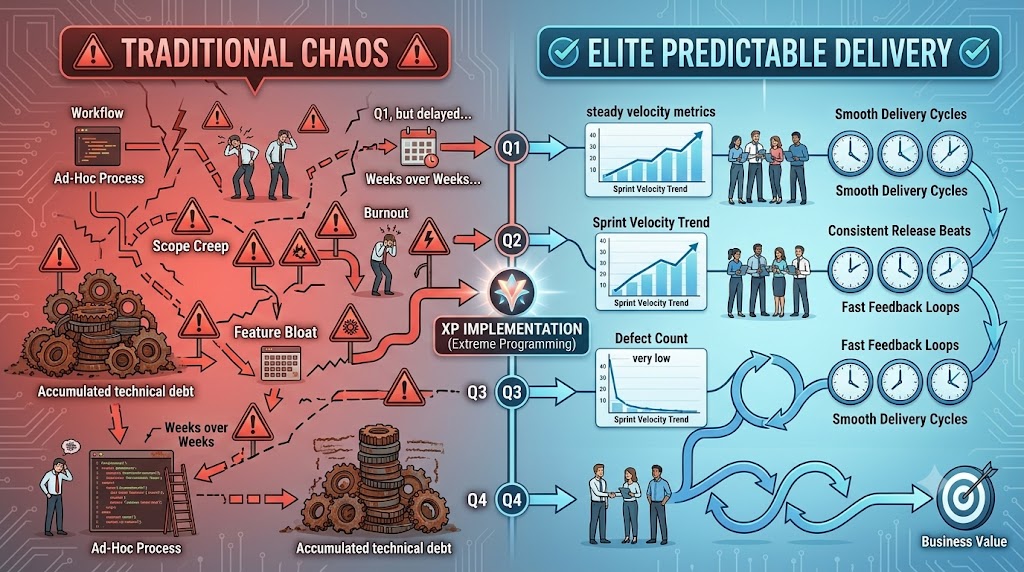
Before implementing these core engineering foundations, teams typically experience a constant state of project anxiety. Requirements constantly shift, technical debt accumulates, scope creep derails deadlines, and developers find themselves trapped in endless cycles of weekend overtime.
Once the XP ecosystem is fully established, this structural friction disappears. By introducing automated safeguards like TDD and CI, the team builds a highly stable codebase that accommodates changes gracefully rather than breaking under pressure. The project manager moves away from firefighting and micromanagement, shifting focus toward predictable, high-value delivery cycles.
Accelerating the Modern Career Trajectory
For the ambitious project manager, scrum master, or technology leader, mastering this deep technical quality philosophy is a powerful differentiator. The industry is saturated with coordinators who simply track status updates on digital charts.
By learning to evaluate technical dependencies, establish automated feedback loops, and guide cross-functional teams through complex engineering methodologies, you instantly step into a high-level leadership tier. You become the invaluable translator who bridges the gap between high-level business strategy and deep, high-quality execution.
Elevate Your Professional Trajectory with Skillsetify
The difference between basic corporate survival and elite project execution lies entirely in the depth of your training. If you are ready to stop guessing at frameworks, transcend basic status reporting, and learn project management the right way, reach out to Skillsetify.
At Skillsetify, we do not just teach boilerplate agile theories or require you to memorize outdated terminology. We introduce you to the deep, real-world realities of modern project execution, equipping you with actionable frameworks, technical quality philosophies, and practical metrics used by the top tech organizations globally. We show you your exact career growth trajectory, helping you build the technical leadership capabilities required to lead complex teams, optimize delivery speeds, and secure major promotions.
Are you ready to truly lead your organization? Connect with the enterprise training experts at Skillsetify today, and transform your professional path.
Single Relevance Follow-Up Question
Which specific element of the Extreme Programming ecosystem such as transitioning your team to Test-Driven Development or introducing an On-Site User model do you feel would be the most challenging to implement within your current corporate culture?