Navigating Technology Selection and Resource Pools Without Chaos
In the high-stakes arena of enterprise delivery, a single corporate myth continues to sabotage project margins and stall deployment timelines: the belief that technology stack selection and resource allocation are independent execution tracks. Far too many delivery organizations treat software architecture as an isolated boardroom decision and resource allocation as a standard HR fulfillment task.
Imagine a common corporate crisis: a major financial enterprise initiates a high-profile digital transformation project. The delivery team conducts workshops and relies on a legacy fulfillment model, assuming that full-stack developers can be pulled instantly from an unmonitored internal bench. Mid-way through the initial cycle, the backend engineering requirements clash with the system architect’s vision. The project stalls, the current talent pool lacks the hyper-specialized technical skills required, and team burnout skyrockets as scope creep takes hold. The delivery manager looks at the crumbling timeline, left wondering how an explicit mandate transformed into an operational bottleneck.
Elite project management demands a unified approach. True operational excellence requires engineering leadership to treat framework architecture, system architecture partnership, and resource pool dynamics as a single, deeply integrated ecosystem.
The Strategic Alignment Matrix: Framework Architecture vs. Corporate Pools
To move beyond delivery friction, a project manager must understand the structural mechanics of modern delivery methodologies. Architecture selection cannot happen in a silo: it directly governs the velocity and structural requirements of your engineering talent pools.
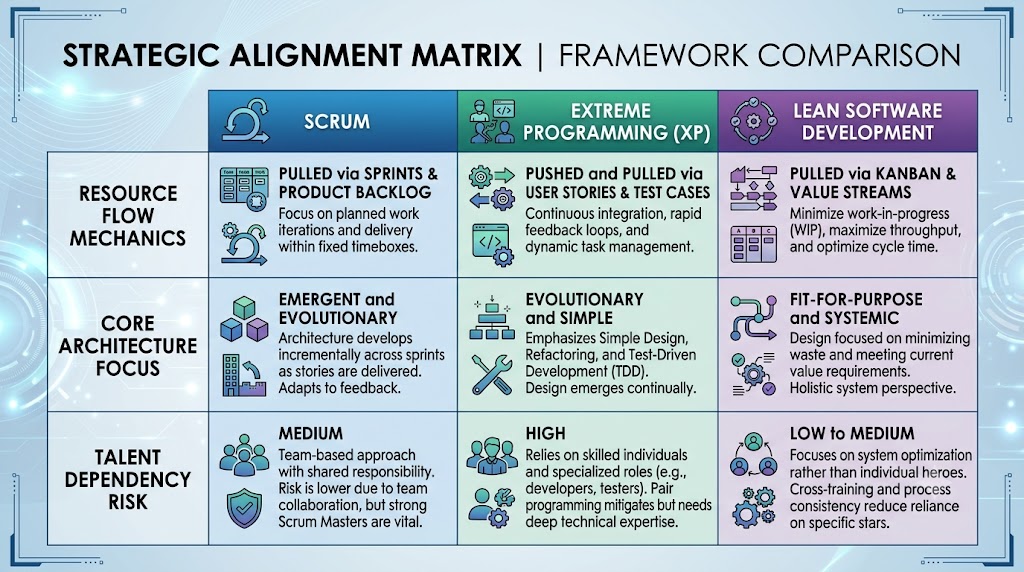
When managing complex B2B initiatives, your execution framework dictates your resource pool strategy:
The Scrum Delivery Blueprint: Centered around time-boxed predictability, this framework relies on cross-functional development teams capable of managing a highly structured product backlog. Resource allocation focuses on long-term capacity planning across fixed windows, requiring predictable full-stack capability to sustain velocity.
The Extreme Programming (XP) Paradigm: Positioned as a technical framework focused heavily on software engineering quality, XP demands unique talent mechanics. Core practices like pair programming create a “maker-checker” dynamic that doubles your resource requirement for critical engineering tracks. Combined with test-driven development, this framework necessitates highly specialized engineers, shifting the resource strategy toward dedicated, high-capability assignments.
The Lean Optimization Engine: Rooted in continuous value flow and waste elimination, Lean views the engineering pool through the lens of capacity maximization. By prioritizing concepts like Just-in-Time resource utilization, Lean structures resource pools to minimize idle bench time, using cross-functional elasticity to deploy specialists exactly when value stream metrics demand them.
The Step-by-Step Technology Stack and Resource Synchronization Framework
Transitioning from operational chaos to predictable delivery requires a repeatable blueprint. This five-stage framework enables project managers to partner effectively with system architects and optimize cross-functional resource allocation.
Step 1: Establish the Architectural Runway with System Architects
Before opening a single resource requisition, the project manager must host collaborative architectural workshops with system architects. The system architects serve as the ultimate owners of the technical vision, defining the technology stack limitations, infrastructure dependencies, and development parameters. The goal of this phase is to translate technical blueprints into an accurate profile of required engineering skills, outlining the full-stack, backend, middleware, or frontend capabilities needed before execution begins.
Step 2: Map the Global Resource Pool Dynamics
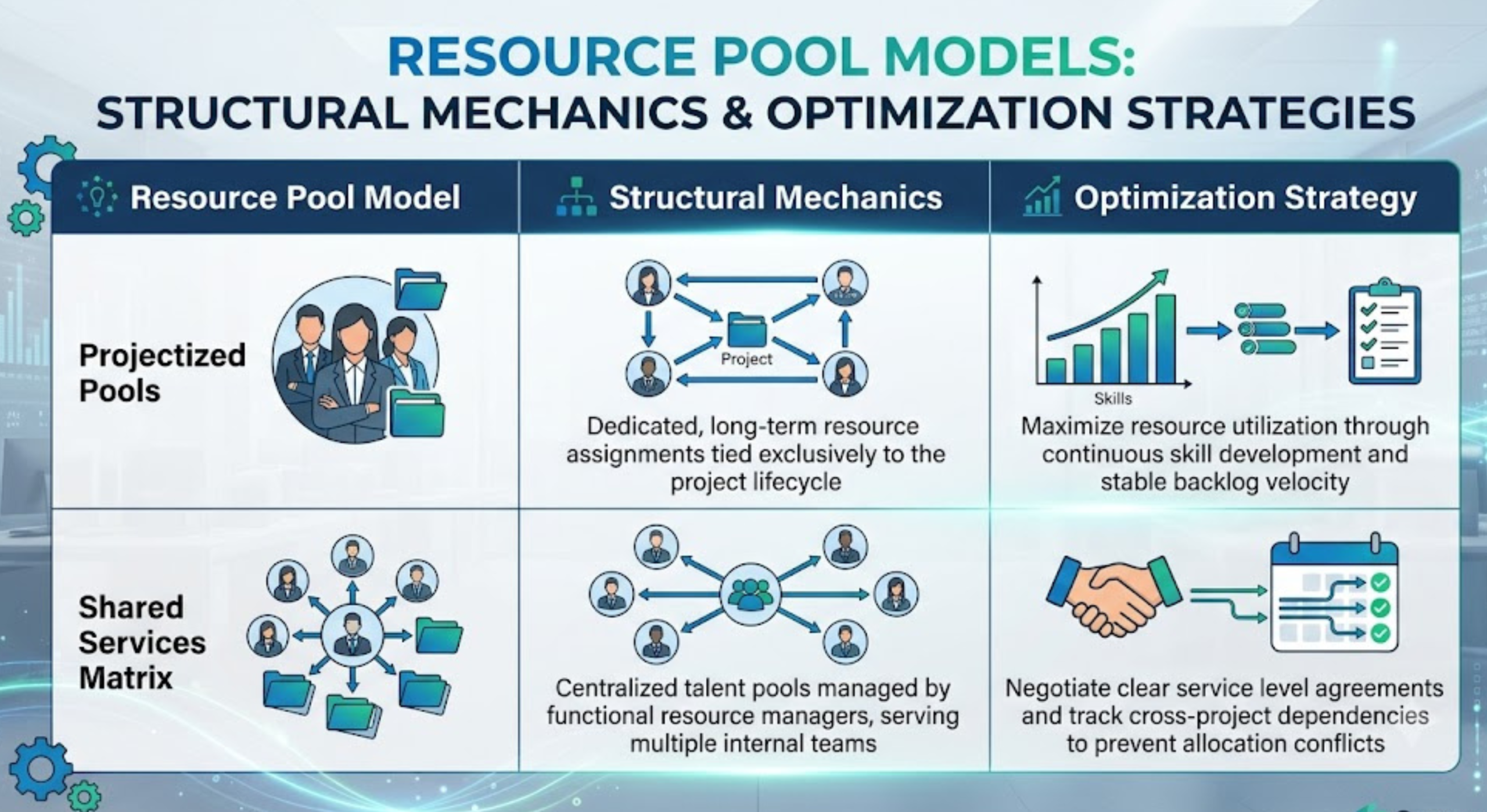
With the skill profile defined, the project manager must audit internal resource structures to choose the best sourcing model. Organizations generally operate under two distinct pool mechanics:
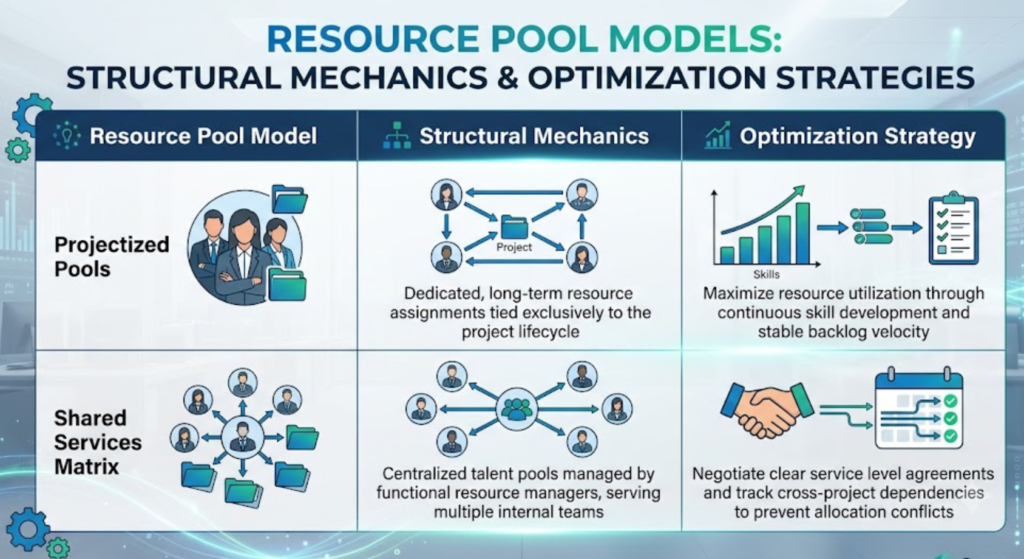
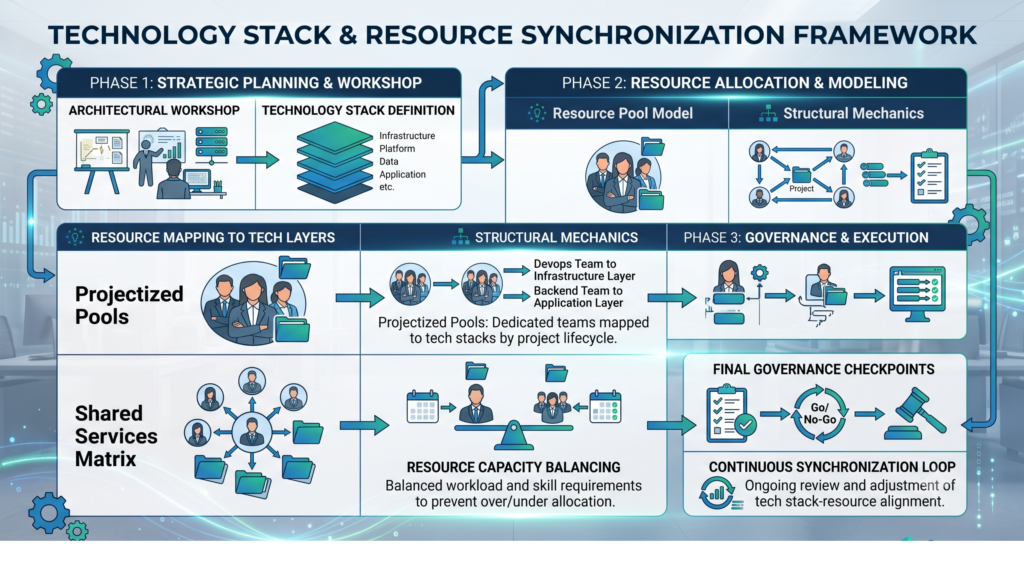
Step 3: Conduct a Value Stream and Capacity Balance
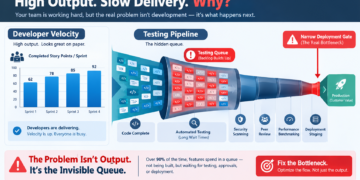
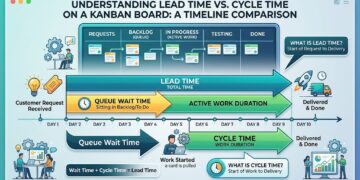
Using value stream mapping, the project manager outlines the delivery lifecycle to identify non-value-add activities and process bottlenecks. By measuring historical effort against actual lead times, leadership can identify talent gaps before they impact delivery. For instance, if an existing system shows extensive wait times during middleware integration, the project manager can preemptively reallocate full-stack or specialized middleware talent to eliminate the bottleneck.
Step 4: Implement Agile Estimation and Time-Boxing
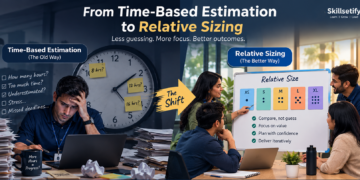
Once the team is assembled, the project manager establishes clear operational boundaries. Through team-driven estimation sessions, the engineering group assigns relative effort metrics to the backlog without top-down pressure. The project manager wraps these requirements in strict time-boxed execution windows, balancing sprint capacity against actual team velocity to maintain high delivery quality without inducing developer burnout.
Step 5: Execute Proactive Quality Safeguards and Feedback Loops
The final step integrates rigorous quality checkpoints directly into the delivery cycle. Borrowing the engineering concept of mistake-proofing, the project manager builds automated safeguards into the development pipeline: code refactoring standards, continuous integration triggers, and clear criteria for when a feature is ready for deployment. This technical governance is matched with structured evaluation loops:
Daily Alignment Sessions: Rapid, self-organized touchpoints strictly capped at fifteen minutes to track daily progress and clear active blockers.
Stakeholder Review Checkpoints: Formal demonstrations where customers and business sponsors evaluate functional iterations against defined acceptance criteria.
Continuous Improvement Retrospectives: Team-led post-mortems designed to surface root causes of process inefficiencies and systematically eliminate delivery defects.
Driving the Corporate Transformation: From Firefighting to Predictive Velocity
When architecture, framework governance, and resource management are fully synchronized, an organization undergoes a profound operational shift. The daily reality transitions away from reactive problem-solving, sudden talent shortages, and developer fatigue. Instead, the enterprise establishes a delivery model characterized by highly predictable velocity, stable project margins, and consistent value creation.
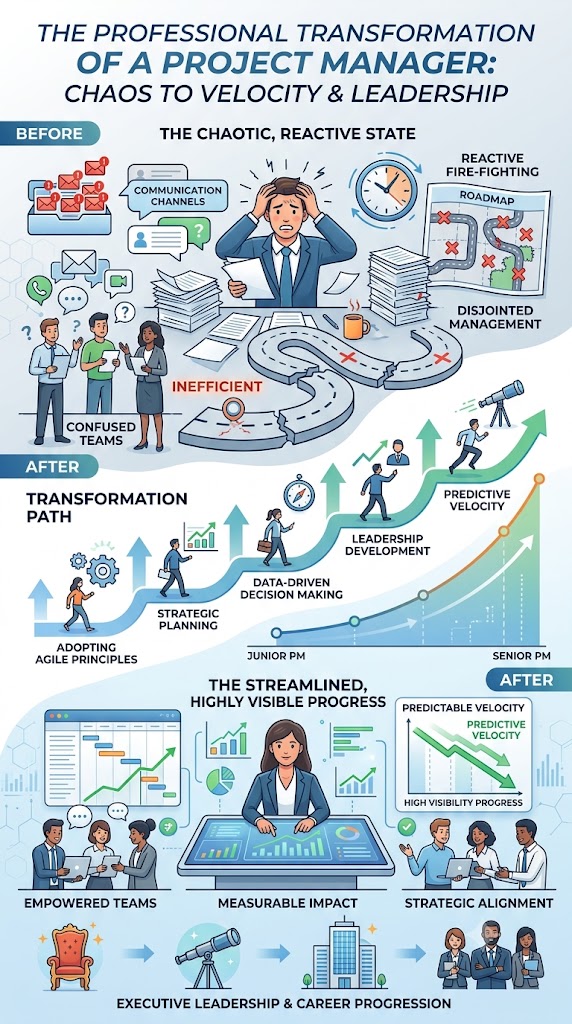
For the ambitious project professional, mastering this operational balance changes their career trajectory. Moving beyond basic certifications, leaders who understand how to connect technical architecture directly to organizational resource dynamics become highly valued strategic assets. These professionals stop managing tasks and start engineering the operational frameworks that power enterprise scale, positioning themselves for executive leadership roles.
The Strategic Path Forward
Optimizing resource pools and technology selection is not a minor adjustment: it is a foundational change in how modern organizations deliver enterprise value. By breaking down the barriers between engineering architecture and talent deployment, project leaders can eliminate costly inefficiencies, protect project margins, and build resilient delivery engines.
If you are ready to stop guessing, move up the corporate ladder, and learn project management the right way, reach out to Skillsetify. We do not just teach frameworks: we show you your exact career growth trajectory.