The Elite Blueprint for Closing Iterations and Securing Backlog Health
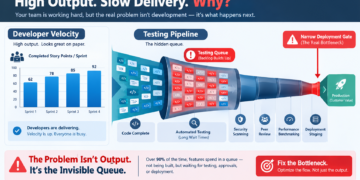
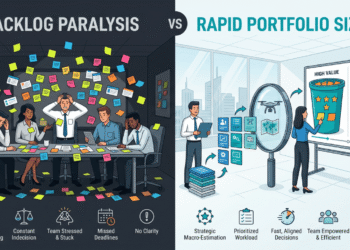
It is 11:45 PM on a Thursday night before a critical enterprise deployment. The engineering team has been building blindly for three consecutive iterations. On paper, your project looks flawless: the Jira board is completely green, your burn-down chart shows a perfect diagonal descent, and every single ticket has been meticulously transitioned to the done column. Yet, when the executive sponsors log into the staging environment for a final preview, the application completely crashes under standard enterprise conditions. The user experience is disjointed, the API payloads are profoundly mismatched, and the primary business value proposition has been lost in translation. The deployment is abruptly halted, costing the organization massive sums in wasted engineering hours and severely fracturing client trust.
The project manager is left staring at the screen, utterly bewildered. How did a technically compliant delivery process yield a fundamentally broken product?
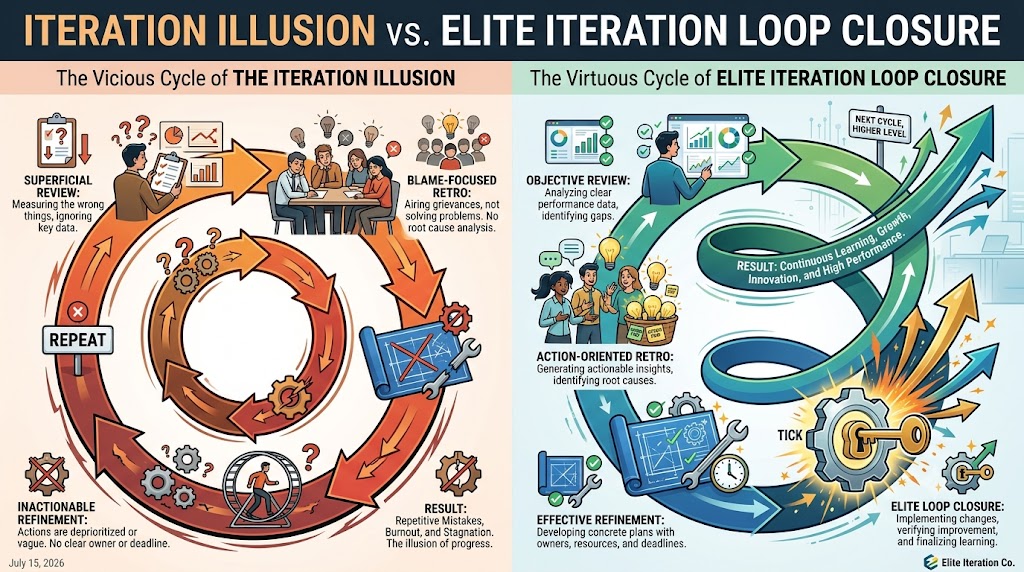
The answer lies in the total collapse of loop closure. Many corporate project leaders suffer from the fatal misconception that velocity is synonymous with value. They falsely assume that as long as developers are writing code and tasks are moving across a digital board, the initiative is inherently healthy. This brings us to a pervasive corporate myth: the belief that sprint reviews are merely celebratory demo theater, retrospectives are soft-tissue venting sessions, and backlog refinement is an administrative chore that can be casually skipped when timelines compress.
In reality, these three ceremonies form the absolute nervous system of elite delivery. When executed with analytical, data-driven rigor, they transform post-sprint feedback loops from passive compliance checks into hyper-efficient mechanisms for capital preservation and scope optimization.
The Three Imperative Feedback Loops of Modern Iteration Health
To dismantle the organizational bottlenecks that lead to late-stage deployment failures, project leaders must master three highly distinct feedback loops: customer-centric validation, internal process optimization, and continuous scope readiness.
Loop 1: The Functional Product Increment Review
The sprint review is not a status report: it is a hard operational gate. Its singular objective is the empirical validation of a functional product increment against real-world customer utility. Elite project managers completely ban static slideshow presentations detailing what the team attempted to build. Instead, they require working software running in a live, staging environment that mirrors the complexities of production.
The core mechanics of an elite product increment review demand absolute adherence to three principles:
Active Stakeholder Calibration: You must bring the true commercial buyers, end-users, and product champions into the room. Without their direct interaction, the review deteriorates into an internal echo chamber.
Empirical Edge-Case Exploration: Avoid the temptation to show a highly orchestrated, idealized path through the system. Instead, guide stakeholders through real-world workflows where system friction is most likely to occur.
Acceptance Criteria Verification: Every developed increment must be systematically checked against the initial requirements to secure formal, legally binding stakeholder sign-off.
When customers interact directly with a functional increment, they expose hidden structural flaws before the code hardens into immutable technical debt. A rejection during a sprint review is a controlled, highly manageable pivot: a rejection at a release boundary is a catastrophic operational crisis.
Loop 2: Localized Team Retrospectives
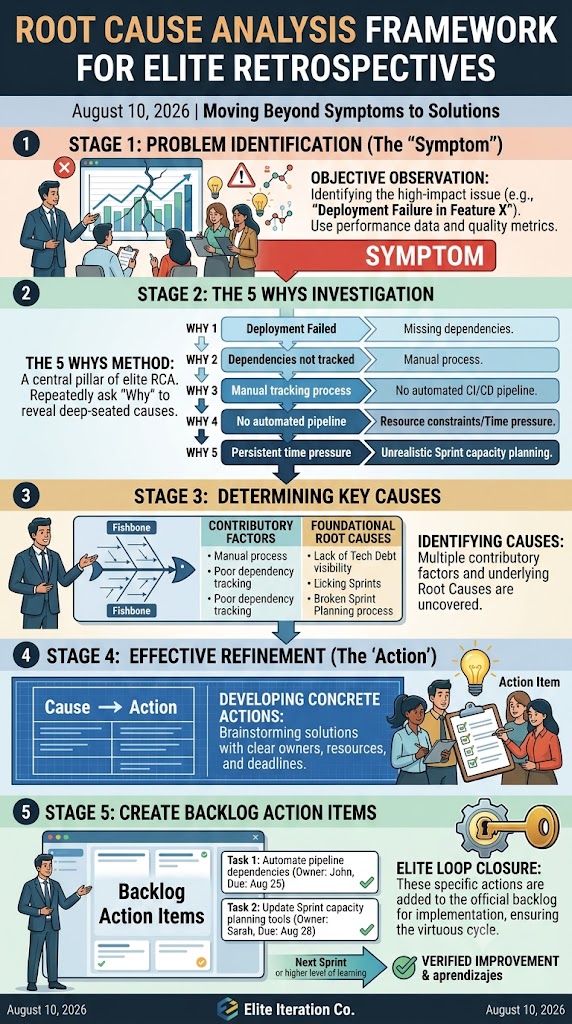
If the sprint review establishes whether you built the right thing, the localized retrospective determines whether you built it the right way. The primary antipattern of this ceremony is allowing it to degrade into a corporate group therapy clinic, where team members list generic grievances without tracking them to root causes.
Elite project leaders shield their delivery teams from broader organizational noise to cultivate deep psychological safety. Within this operational container, the team must cross-reference their human experiences with hard performance data: iteration velocity variance, escape defect rates, and systemic blockages.
The output of an elite retrospective is never a list of vague promises to communicate better. It must yield highly localized, deeply specific action items. These items must be assigned explicit owners, quantified using clear performance metrics, and injected directly into the upcoming iteration backlog as non-negotiable process improvements.
Loop 3: Mid-Sprint Backlog Refinement
Backlog health is the premier leading indicator of future delivery velocity. A degraded, unrefined backlog guarantees that subsequent iterations will suffer from extensive scope creep, mid-sprint engineering blocks, and cognitive fatigue. Backlog refinement is the continuous, proactive architecture of upcoming scope, executed cleanly midway through the current cycle.
To ensure your backlog remains in a state of premium health, every upcoming requirement must clear the classic DEEP criteria:
Detailed Appropriately: High-priority items must possess granular detail, while lower-priority elements remain conceptual.
Estimated: The delivery team must collectively quantify the effort required, exposing hidden architectural complexities early.
Emergent: The backlog must organically evolve based on the immediate feedback gathered in your sprint reviews.
Prioritized: Every item must be ranked strictly by its capacity to drive corporate revenue or reduce operational risk.
By engaging in structured mid-sprint refinement, the project manager entirely eliminates the traditional planning bottleneck: the exhausted, multi-hour session on the first morning of a new cycle where developers are forced to estimate complex work under duress.
The Elite Step-by-Step Implementation Framework
To translate these high-level principles into immediate corporate execution, project managers can seamlessly deploy this step-by-step framework within their respective product organizations.
Step 1: Establish Strict Contractual Gates (DoR and DoD)
Before your team writes a single line of code for a new iteration, you must codify your Definition of Ready (DoR) and Definition of Done (DoD). The DoR acts as a defensive shield for your engineering team: no user story is permitted to enter an iteration unless it features explicit acceptance criteria, clear data contract definitions, and fully resolved external dependencies.
Conversely, the DoD acts as an uncompromising quality shield for your business: no product increment can be demonstrated to a customer during a sprint review unless it has cleared automated testing suites, undergone peer code review, and satisfied all baseline security compliance protocols.
Step 2: Orchestrate the Mid-Sprint Refinement Cadence
Establish a mandatory, non-negotiable 60-minute session precisely at the midpoint of your two-week iteration cycle. The project leader must facilitate this meeting with a strictly defensive posture. The structural agenda must follow a rigid path:
Analyze the top 15% of the upcoming product backlog entries.
Deconstruct large, complex epics into highly isolated user stories.
Utilize collaborative estimation techniques to uncover developer misalignment regarding technical complexity.
Sanitize every upcoming item against your strict DoR parameters.
Step 3: Run the Structured Feedback Matrix
At the conclusion of the iteration, host the formal validation session. The project manager acts as the master facilitator, while the delivery team remains positioned as technical experts demonstrating live software. The validation process must conform directly to this structured feedback matrix:
| Phase | Core Objective | Key Participants | Final Outcome |
| Increment Validation | Demonstrate live, fully compiled functionality matching the core sprint goals. | Developers, Product Owners, Enterprise Clients | Formal acceptance or structured, documented rejection of specific user stories. |
| Market Calibration | Evaluate the functional increment against shifting competitor realities and macroeconomic pressures. | Product Leadership, Commercial Stakeholders | Immediate realignment of the broader corporate product roadmap. |
| Backlog Realignment | Inject newly discovered stakeholder requirements directly into the primary product backlog pool. | Project Manager, Product Owner | Dynamic prioritization and sequencing of newly uncovered feature requests. |
Step 4: Execute the Metric-Driven Retrospective
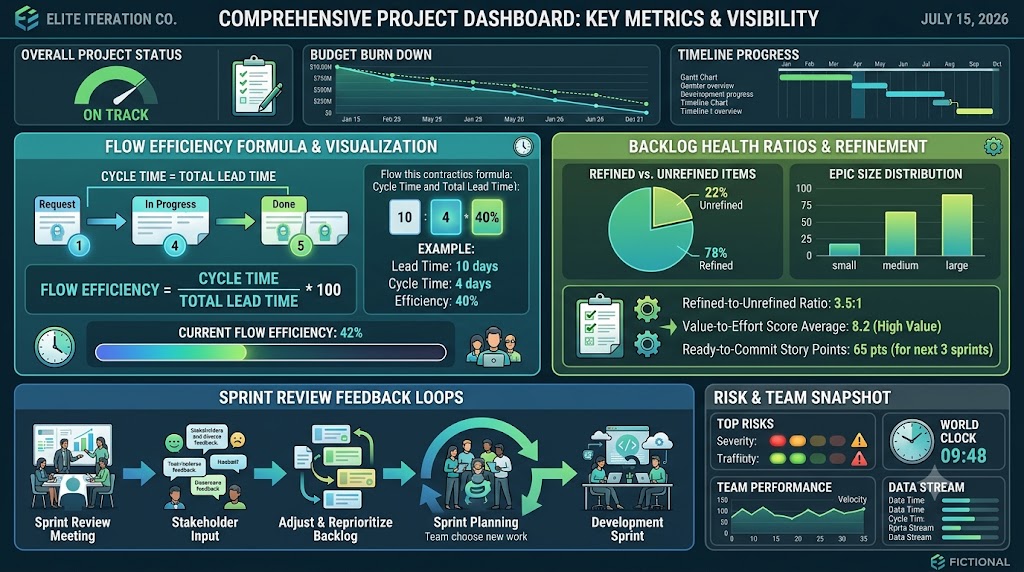
Immediately following the customer review, convene the delivery team for the localized retrospective. Utilize empirical metrics to calculate the team's structural development efficiency. Rather than relying on subjective opinions, calculate the iteration's actual Flow Efficiency variable using the following equation:
If your flow efficiency drops below a certain threshold, utilize deep root cause analysis to isolate the process breakdown. Limit the team to a maximum of two systemic process fixes per iteration. This guarantees that improvements are fully institutionalized before the team attempts to resolve secondary operational vulnerabilities.
The Professional Transformation: Shifting from Chaos to Elite Delivery
Imagine a corporate reality where the midnight deployment crisis is completely erased from your calendar. Picture your product organization operating like a beautifully engineered machine: an environment where every single sprint review concludes with enthusiastic stakeholder validation, every retrospective eliminates a quantifiable operational bottleneck, and every refinement session leaves your engineering team with a crystal-clear, highly optimized roadmap for the upcoming fourteen days. Scope creep is systematically arrested before it impacts your capital reserves, team burnout is prevented through structured workload management, and your delivery predictability climbs to elite global standards.
This is not a theoretical agile utopia: it is the standard operating reality for professionals who choose to learn project management the right way.
When you transition from a passive task-tracker who blindly moves tickets across a digital board to a high-value strategic leader who actively engineers delivery systems, your organizational currency skyrockets. Executives do not promote managers who simply preside over corporate firefighting: they promote the leaders who design predictable, scalable systems of value delivery. Mastering the intersection of iteration loop closure and backlog health is your direct path to commanding true authority, driving massive corporate impact, and securing your seat at the executive leadership table.
The Skillsetify Masterclass Close
Effectively closing iterations and maintaining a pristine, metric-driven backlog is the fundamental boundary that separates average project coordinators from elite, high-value business leaders. By demystifying the operational loops of functional product increment reviews, localized team retrospectives, and mid-sprint refinement sessions, you completely eliminate systemic delivery risk and position your enterprise for unparalleled market velocity.
If you are ready to stop guessing, move up the corporate ladder, and learn project management the right way, reach out to Skillsetify. We do not just teach frameworks: we show you your exact career growth trajectory. Through deeply operationalized, industry-backed methodologies and executive mentorship explicitly engineered for ambitious professionals, we provide the precise tactical tools you need to master elite enterprise delivery and fundamentally accelerate your professional advancement.