Why the Proof of Concept (POC) Is Your Ultimate Strategic Risk Shield
It is 8:45 AM on a Monday morning. The Chief Technology Officer, Chief Product Officer, and VP of Engineering walk into the executive boardroom. Three months ago, your project team was given the green light to integrate a cutting-edge, real-time AI engine into your enterprise software suite. Millions of dollars in capital expenditure and thousands of engineering hours have been invested. Today is the scheduled executive demo.
The lead software architect presses enter. The screen freezes. The latency spikes to 14 seconds per query, crashing the primary database connection. As it turns out, the core legacy architecture simply cannot handle the data ingestion payload required by the new algorithm under production load.
Silence fills the room. The launch deadline is missed, $2 million in development capital is burned, and team morale collapses.
What caused this enterprise disaster? It was not bad coding, weak leadership, or insufficient funding. It was a single, catastrophic oversight: assuming that because an innovative idea sounds viable on paper, it will automatically work in execution.
The Common Corporate Myth: “Proofs of Concept are slow, bureaucratic overhead that delay time-to-market. Modern Agile teams should skip the POC and jump straight into building a Prototype or Minimum Viable Product (MVP).”
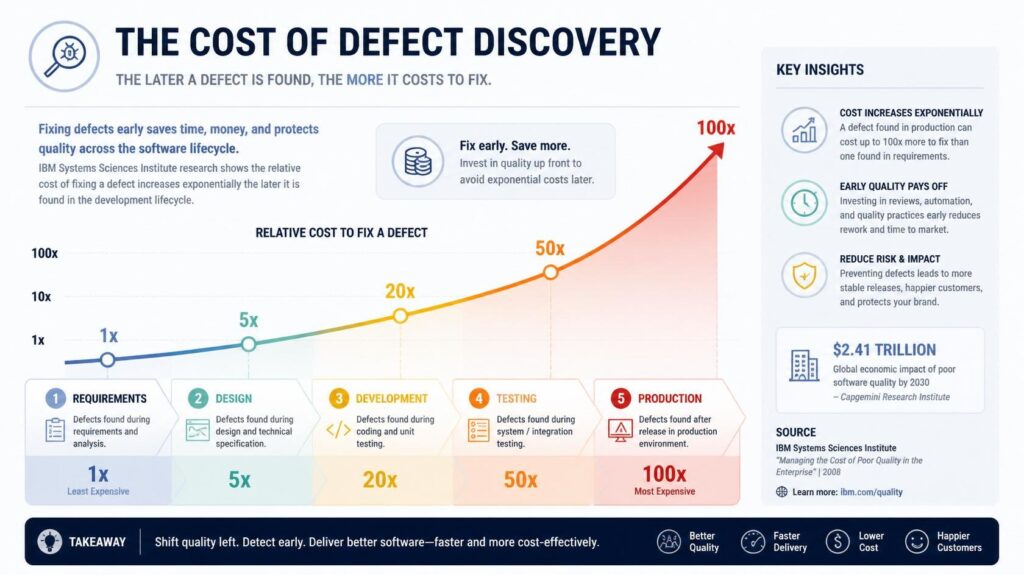
This myth costs enterprise organizations billions of dollars annually. Skipping early-stage technical validation does not accelerate speed-to-market. It merely delays the discovery of fatal architectural flaws until they are exponentially more expensive and damaging to fix.
The Deep-Dive & Core Education
What Is a Proof of Concept (POC)? Core Mechanics & Strategic Value
In the broader scope of the Product Life Cycle, a Proof of Concept (POC) is a small-scale, mini lab test used to quickly reduce risk by validating if a complex or cutting-edge concept can actually work.
Unlike consumer-facing releases, a POC is not built for end-user interaction, visual beauty, or immediate monetization. It is an internal research experiment designed specifically for technical leads, project managers, and project sponsors. It addresses one fundamental question: “Is this concept technically feasible within our constraints?”
When exploring unfamiliar technologies, complex API integrations, or unproven algorithms, a POC serves as a low-cost experiment. Operating in a isolated sandbox environment, it isolates core assumptions so your organization can fail fast, fail cheap, or confirm technical feasibility before committing major capital.
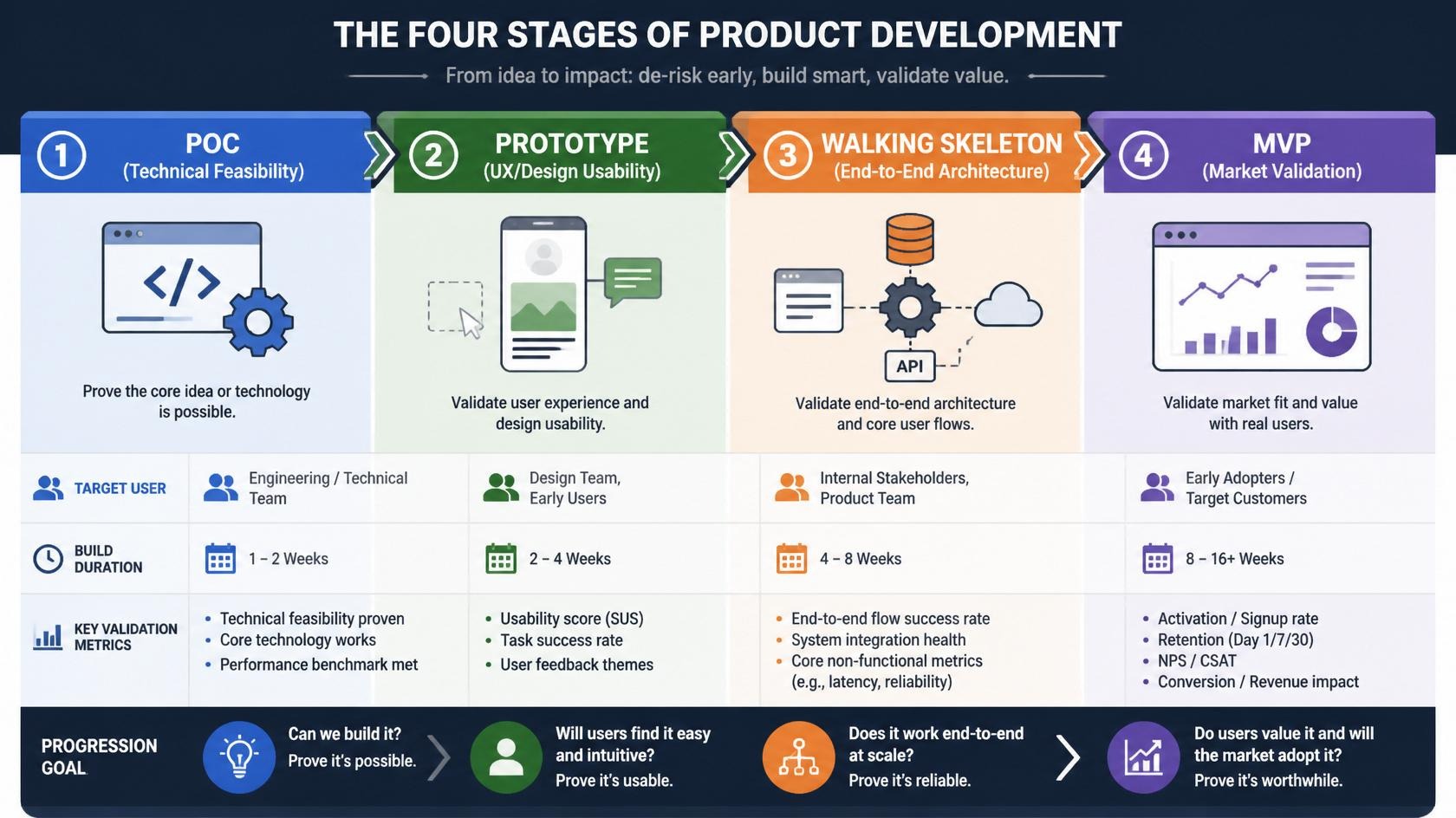
The Product Lifecycle Matrix: POC vs. Prototype vs. Walking Skeleton vs. MVP
A major source of inefficiency in project management is confusing a POC with subsequent development artifacts. Conflating these terms leads to bloated scopes, misaligned stakeholder expectations, and budget overruns.
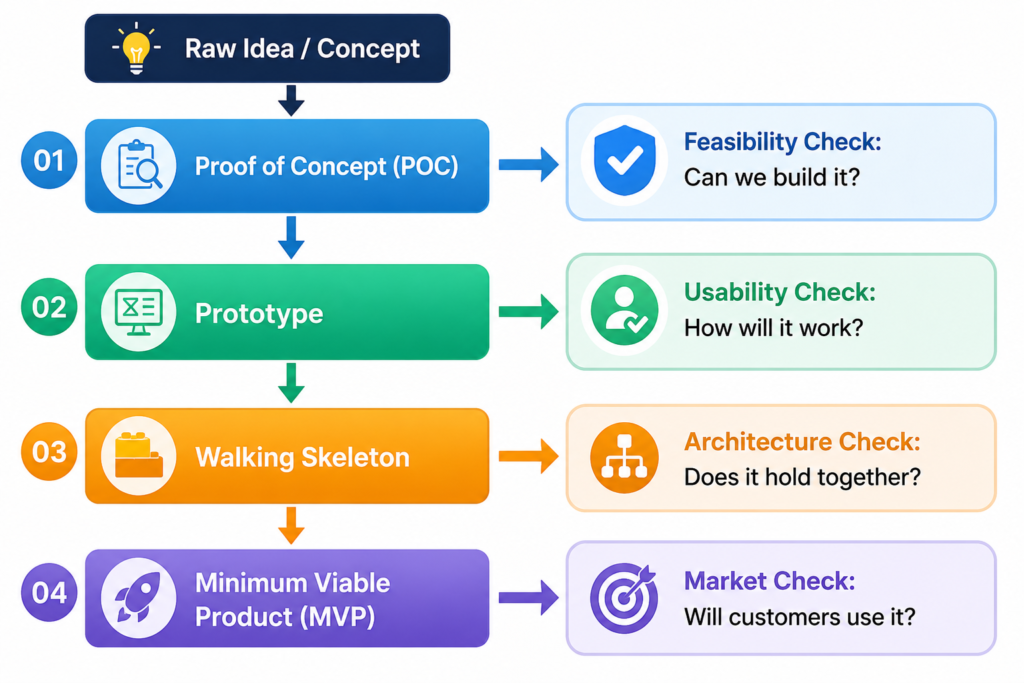
To lead projects effectively, every Project Manager must understand how these artifacts differ across the development continuum:
| Development Stage | Primary Objective | Target Audience | Code & Visual Polish | Core Question Answered |
| Proof of Concept (POC) | Technical Feasibility | Internal Architects & Sponsors | None (Backend/Scripting) | Is it technically possible to build? |
| Prototype | Design & Flow Validation | Stakeholders & Focus Groups | High Visual / Low Backend | How will the user interact with it? |
| Walking Skeleton | Architectural Integrity | Engineering & DevOps Teams | Minimal / Bare Bones | Does the end-to-end system connect? |
| Minimum Viable Product (MVP) | Market Fit & Value | Early Adopters / Real Market | Functional & Production-Ready | Will the market buy or use this solution? |
Proof of Concept (POC): Focuses exclusively on validating a high-risk technical variable. It strips away user interfaces, security frameworks, and refined styling to test raw feasibility.
Prototype: Brings the concept to life visually. It tests user experience (UX), interface ergonomics, and navigation flows through clickable mockups or visual wireframes.
Walking Skeleton: A tiny, end-to-end implementation of the system architecture. It links all primary layers (e.g., database, backend server, basic UI) to confirm the system operates as a cohesive unit.
Minimum Viable Product (MVP): A functional product containing only core features released to early real-world users to validate market demand and gather empirical feedback.
The 5-Step Enterprise POC Implementation Framework
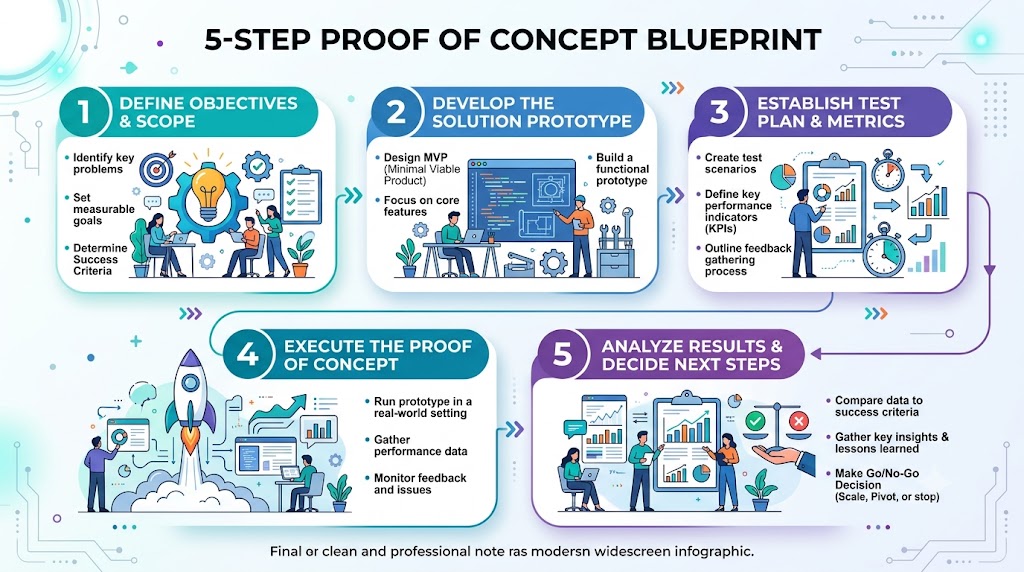
To execute a structured Proof of Concept that delivers clear, objective data, Project Managers need a repeatable framework. Here is a step-by-step blueprint you can copy and implement immediately:
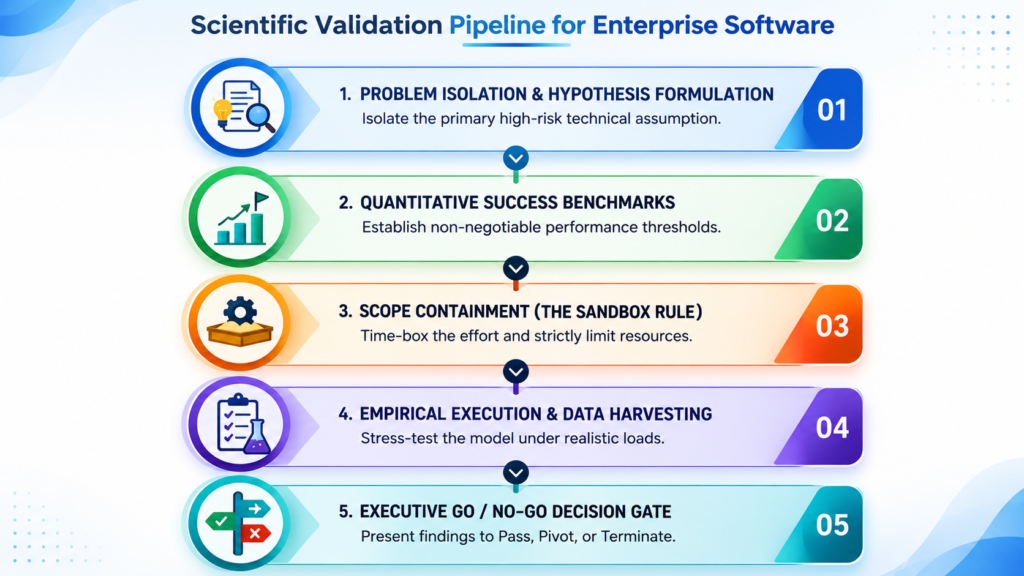
Step 1: Problem Isolation & Hypothesis Formulation
Never attempt to test an entire product vision in a single POC. Narrow down your focus to the single most critical, unproven technical assumption.
Formulate a precise hypothesis: State exactly what technical assertion you are testing (e.g., “Our legacy database can ingest 10,000 real-time telemetry events per second via WebSockets without exceeding a 200ms latency threshold”).
Define clear boundaries: Explicitly eliminate secondary features, visual designs, and non-critical integrations from the scope.
Step 2: Establish Quantitative Success Benchmarks
A POC executed without measurable benchmarks results in subjective debate during executive reviews. Before writing any code, establish concrete thresholds.
Technical performance metrics: Define exact metrics such as query response times, CPU utilization, throughput limits, or memory consumption.
Financial constraints: Set strict caps on API call costs, server consumption, or software licensing during the trial.
Go / No-Go thresholds: Document the exact pass/fail criteria that will dictate whether the concept moves forward or is canceled.
Step 3: Scope Containment (The Sandbox Rule)
Create an isolated environment that mirrors production data structures without touching live infrastructure.
Time-box the duration: Keep execution short, ideally between 3 days and 3 weeks. If a POC takes months, it has morphed into a full project.
Keep the team lean: Assign only essential personnel, such as a lead architect, a data engineer, and a governing Project Manager.
Step 4: Empirical Execution & Data Harvesting
Subject the test environment to real-world scenarios and stress testing. Gather objective metrics rather than qualitative opinions.
Stress testing: Push the proof of concept beyond normal expectations to locate breaking points and architectural limits.
Log data systematically: Record latency, error rates, system behavior, and integration bottlenecks.
Step 5: Executive Go / No-Go Decision Gate
Translate raw technical findings into executive-level business impacts for project sponsors and steering committees.
Translate metrics into business impact: Explain how performance findings affect the overall budget, delivery schedule, and risk profile.
Enforce the decision outcome: Conclude with one of three clear recommendations:
Pass: The concept is feasible; advance to Prototype/Walking Skeleton stages.
Pivot: Feasible with modifications; re-architect and execute a focused follow-up test.
Kill: The concept is unfeasible; terminate the effort to protect capital and reallocate resources.
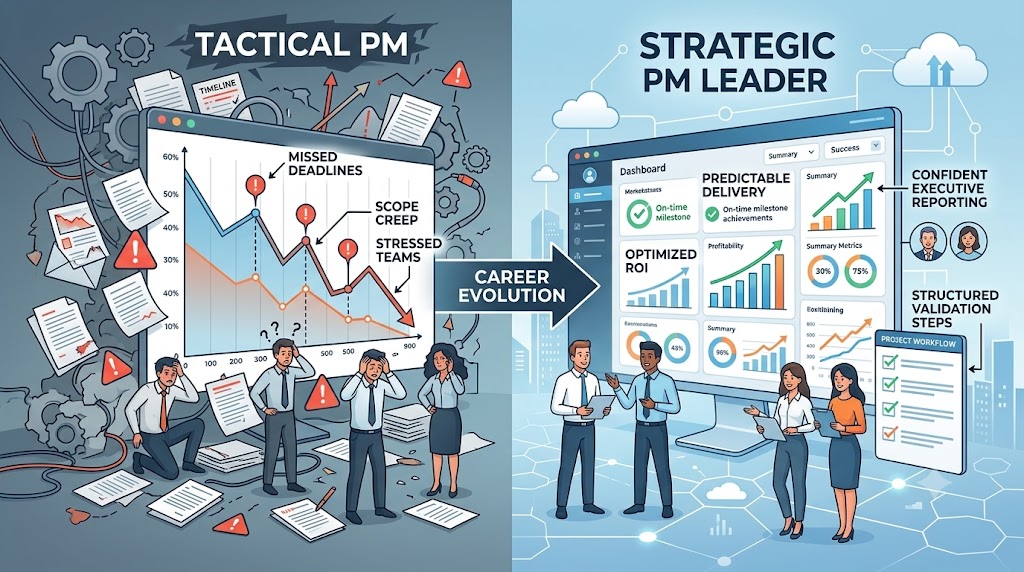
The Professional Transformation
Moving From Project Chaos to Strategic Career Mastery
Moving From Project Chaos to Strategic Career Mastery
When you master early-stage risk reduction through structured Proofs of Concept, your standing as a project professional transforms.
You step away from reactive firefighting: constantly explaining to executives why a project is delayed, over budget, or struggling with unexpected architectural blocks. Instead, you operate as a strategic risk controller. You build a track record of protecting company capital, conserving engineering bandwidth, and ensuring that only viable, high-impact initiatives proceed to full development.
• Manages budget overruns & delays
• Focuses solely on task completion
• Fires off unplanned emergency fixes
• Protects capital & prevents waste
• Aligns execution with business goals
• Leads structured decision gates
Executive teams do not promote managers who simply log tasks and schedule meetings. They promote strategic leaders who exercise sound business and technical judgment. By establishing rigorous POC decision gates, you demonstrate a clear understanding of financial risk, technical feasibility, and portfolio resource management. You transition from a tactical coordinator into a strategic partner who turns uncertainty into predictable execution.
Taking Your Next Strategic Step
A Proof of Concept is not an unnecessary project delay: it is your strongest tool against multi-million dollar implementation failures. By testing technical feasibility in isolation before committing capital and engineering resources, forward-thinking Project Managers protect their organizations from avoidable risk and lay the groundwork for long-term product success.
Understanding how to position POCs within the broader product life cycle, manage cross-functional expectations, and lead data-driven decision gates is what sets elite project leaders apart from average coordinators.
If you are ready to stop guessing, move up the corporate ladder, and learn project management the right way, reach out to Skillsetify. We do not just teach frameworks: we show you your exact career growth trajectory.