Why Mixing Up Problem Analysis and Solution Design is Killing Your Product Velocity
The engineering team is celebratory. They have spent the last three weeks meticulously aligning code with a stunning set of high-fidelity user interface wireframes. Every button is pixel-perfect, every drop-down transitions seamlessly, and the color palette perfectly matches the branding guidelines. The product manager is confident, the stakeholders are placated, and the sprint metrics are glowing green.
Then comes the 4:00 AM production deployment.
Within minutes of hitting the live server, the user feedback loops turn into an absolute nightmare. Customers are churning, critical transactions are failing, and the core processing engine is throwing unhandled exceptions. As the executive emergency bridge assembles, a sobering reality sets in. The engineering team built the wireframes perfectly, but the system completely ignores core business requirements.
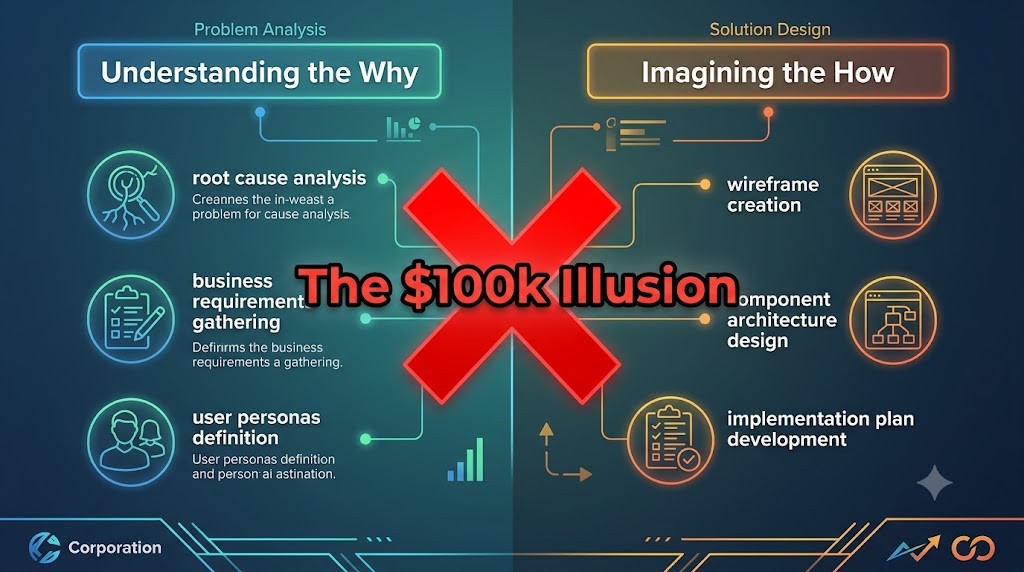
This is the $100k Illusion: the catastrophic corporate belief that problem analysis and solution design are the exact same thing.
A dangerous corporate myth dictates that if a product manager can sketch a beautiful interface or detail “how” a feature might look, they have successfully captured “why” the feature needs to exist. This logical leap routinely cost software projects hundreds of thousands of dollars in wasted engineering cycles. To break free from this cycle of development rework and predictable delivery failure, product leaders must master the art of structured requirement hierarchies and baseline backlog tier classifications.
Deconstructing the Backlog Tier Classification
To prevent development teams from building beautifully designed features that solve the entirely wrong business problem, elite operational organizations enforce a strict requirement hierarchy. This framework splits high-level corporate strategies into microscopic, testable engineering tasks. It forces teams to separate the fundamental business intent from the tactical implementation steps.
The master requirement hierarchy is classified into five distinct layers.
Layer 1: Strategic Themes
Themes represent the macro business goals or strategic directions of the entire organization. They are the ultimate buckets used to group related business goals, operational requirements, and technical strategies. For instance, an enterprise organization might establish an overarching strategic theme dedicated entirely to stabilizing partner performance or reducing third-party operational risk. Themes do not contain technical parameters: they focus exclusively on long-term corporate health and strategic market positioning.
Layer 2: Epics
An epic is a substantial, distinct block of business value that directly supports a strategic theme but is far too massive to be delivered in a single development sprint. Epics capture the major operational challenges or distinct functional blocks within a theme. For example, under a theme of vendor performance stabilization, an organization might identify individual epics such as “Automated Compliance Reporting” or “Real-Time System Health Auditing.” Epics are tracked at the programmatic or departmental leadership level to monitor overall macro progress.
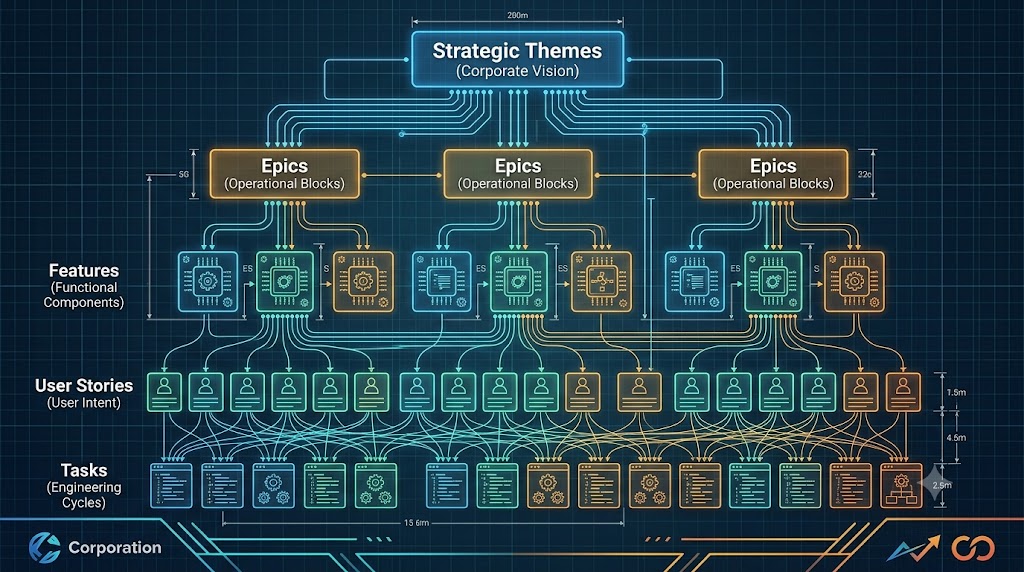
Layer 3: Features
Features are specific functional components or clear engineering capabilities that provide a measurable value directly to the end user. A single epic is broken down into a handful of distinct features. In our automated compliance reporting example, a necessary feature would be the ability to execute a multi-format data export module or a localized system logging conduit. Features provide the logical bridge between conceptual business requirements and literal code development.
Layer 4: User Stories
A user story is a small, granular description of a specific software requirement written from the absolute perspective of the person utilizing the system. User stories are the atomic units of delivery within an agile sprint. They are intentionally stripped of technical jargon to keep engineering eyes locked onto true human value. A premium user story must never be written from the developer perspective or the product manager perspective: it belongs entirely to the end user persona.
Layer 5: Tasks
Tasks represent the microscopic, highly technical implementation steps required to turn a user story into live, working software code. Tasks include specific activities such as writing individual database queries, configuring secure cookie session tokens, spinning up test environments, or setting up automated testing pipelines. Tasks are owned entirely by the engineering team and are tracked on a day-to-day basis within the sprint.
Imagining the How: The Strategic Mapping Framework
Once the problem analysis phase has accurately defined the underlying “why” through strategic themes and epics, the product team can systematically transition into solution design. This phase focuses entirely on imagining how something will work once it is fully built. This process relies on low-fidelity wireframes, visual story mapping, and structured validation techniques to turn abstract requirements into predictable software releases.
To implement this model effectively, project leaders should follow this tactical, step-by-step blueprint framework.
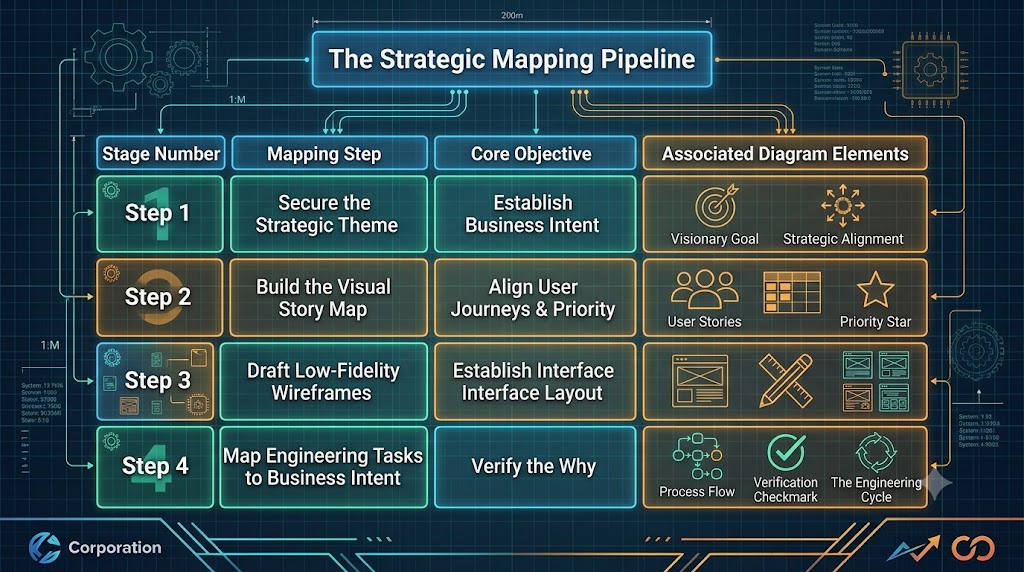
Step 1: Secure the Strategic Theme First
Before a single line of code is written or an interface layout is considered, the product leader must explicitly document the overarching strategic theme. This involves interviewing global business users, evaluating baseline metrics, and pinpointing core pain barriers. If the business intent cannot be stated in a clear, single sentence, stop immediately. You cannot design a solution for a problem you do not understand.
Step 2: Build the Visual Story Map
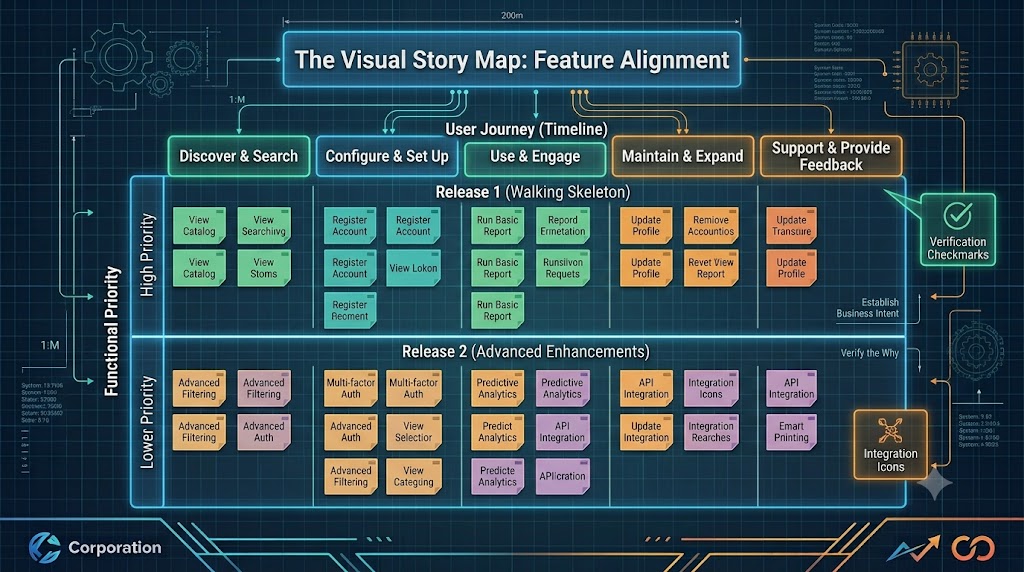
With the business intent secured, construct a visual story map to systematically organize user journeys, functional priorities, and planned feature releases.
The Horizontal Backbone: Map out the horizontal user journey across the X-axis from left to right. This documents the exact chronological flow of how an end-user persona interacts with the software system.
The Vertical Priority Conduit: Arrange the corresponding user stories vertically along the Y-axis based on direct execution priority. High-priority stories sit at the top, forming the essential backbone of the system.
The Release Line Slices: Draw distinct horizontal release lines across the map. This allows product owners to cluster stories into manageable release backlogs, ensuring that early milestones contain zero unnecessary functional bloat.
Step 3: Draft Low-Fidelity Wireframes
Now, you can begin visualizing the interface layout. Draft low-fidelity wireframes that function exclusively as the structural skeleton of the user interface. Use placeholder text, simple lines, and basic boxes. Eliminate all custom fonts, corporate colors, and design flourishes.
The goal of a wireframe is to validate the layout structure, information hierarchy, and user interaction conduits. Stripping away aesthetic elements forces stakeholders and developers to focus on the logical mechanics of the application rather than getting distracted by the visual style.
Step 4: Map Engineering Tasks to Business Intent
The final step is the most critical: validation. Run a systematic traceability check to map every technical engineering task directly back to an established user story, feature, and epic. If an engineer proposes a task that does not clearly align with a documented business requirement, remove it from the backlog. This step prevents developers from building features in a vacuum, completely neutralizing the threat of technical scope creep.
From Chaos to Pinpoint Predictability
When an organization successfully enforces this requirement hierarchy and clearly separates problem analysis from solution design, a profound structural transformation occurs across the entire operation.
Project environments once characterized by unpredictable delivery timelines, constant engineering burnout, and massive development rework quickly stabilize into engines of high-velocity output. The immediate operational benefits are unmistakable.
Scope Creep Vanishes Permanently
When every single technical task must be explicitly traced back to an overarching business epic and feature requirement, unapproved features simply cannot sneak into the development pipeline. Product owners no longer fight endless battles against gold-plating or pet-feature additions: the structural framework automatically filters out everything that fails to align with core corporate strategies.
Development Rework is Eliminated
Engineering teams stop wasting weeks building high-fidelity components that ultimately fail user acceptance testing. Because the visual story map and low-fidelity wireframes are rigorously validated against the strategic theme before development begins, engineers code with absolute confidence. They build the system right the first time because the underlying requirements are ironclad.
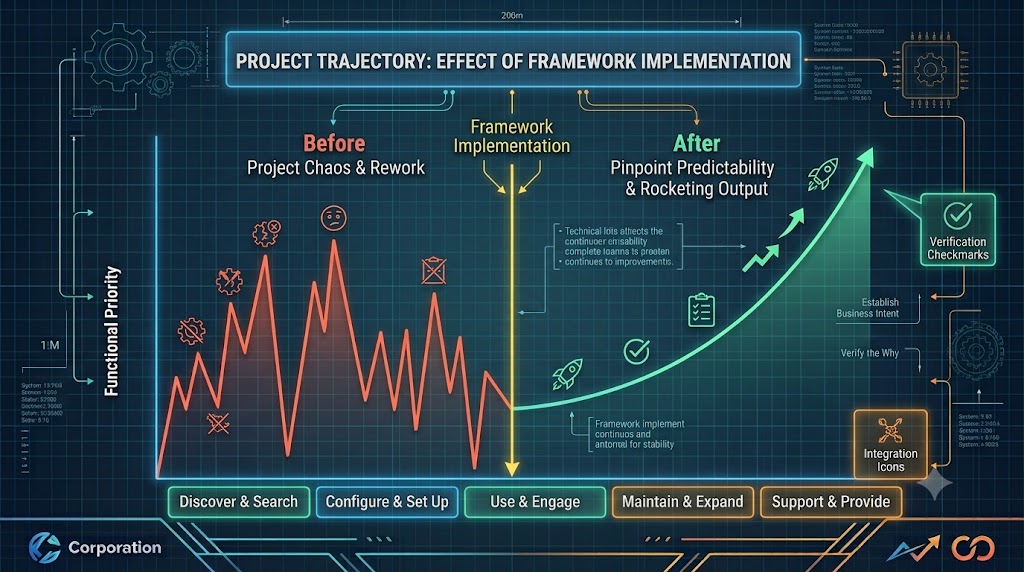
Velocity Scales Predictably
With ambiguity completely removed from the product backlog, estimation deficits shrink dramatically. Development velocity shifts from an unpredictable guess game to a repeatable mathematical formula. Leadership teams gain the precise operational visibility needed to forecast accurate release roadmaps, secure client trust, and drive continuous performance improvement.
This operational shift does not just save software projects: it actively accelerates professional careers. The transition from a passive task-tracker who simply logs tickets to an elite operational leader who understands how to systematically trace technical execution back to strategic corporate value is the defining step for moving up the corporate ladder.
Step Into Elite Project Leadership
Managing an engineering backlog by simply writing unstructured tickets and hoping for the best is a guaranteed recipe for deployment failures, wasted budgets, and career stagnation. Stop guessing. Stop firefighting production crashes at 2:00 AM. It is time to learn project management and product delivery the right way.
At Skillsetify, we do not just teach you to read textbook frameworks or copy generic agile buzzwords. We provide the rigorous, deep-dive methodology details, step-by-step corporate execution blueprints, and real-world system tracking strategies needed to turn you into a highly authoritative operational powerhouse.
We show you how to command complex stakeholders, neutralize scope creep before it begins, and engineer flawless delivery pipelines that consistently drive true business value for your organization. More importantly, we do not just teach: we map out your exact professional growth trajectory, equipping you with the precise leadership skills required to confidently claim your seat at the executive table.
Move beyond the clerical task-tracker mindset. Step into elite operational leadership today.
👉 Ready to transform your delivery models and rapidly accelerate your corporate trajectory? Reach out to Skillsetify now, and let’s structure your exact path to career mastery.