How Vaporware Strategy Can Either Freeze Your Competitors or Burn Your Career
It is 8:00 AM on a Monday, and your inbox is exploding. Two hours ago, your Executive Vice President of Product took the main stage at an industry keynote and unveiled “Aegis AI,” a revolutionary automated risk-scoring engine. The slides were gorgeous, the live demo video was slick, and press releases are already trending across tech media.
There is just one problem: Aegis AI does not exist.
Not a single line of backend code has been written. The mockups shown on stage were static wireframes rendered late Friday night. As a Senior Project Manager, your phone is now ringing off the hook with sales reps trying to book customer demos, engineers panicking over impossible delivery dates, and enterprise clients asking when they can sign early-access contracts.
Welcome to the high-stakes, nerve-wracking reality of the Vaporware Strategy.
In corporate management circles, a persistent myth remains that vaporware is simply a fraudulent tactic used by scam artists or dysfunctional tech startups. Many project managers believe that any pre-announcement without working software is inherently unethical, reckless, or doomed to fail.
The reality is far more strategic. When deployed systematically within the Product Life Cycle (PLC), vaporware is a calculated, double-edged maneuver. Major enterprise players and agile disruptors alike intentionally leverage vaporware to test market waters, validate real buyer demand, and stall competitor momentum. However, when executed without strict project governance and feasibility gates, it turns into an operational nightmare that burns out engineering teams, destroys brand equity, and induces catastrophic market backlash.
Decoding Vaporware: Mechanics, Motives, and Market Dynamics
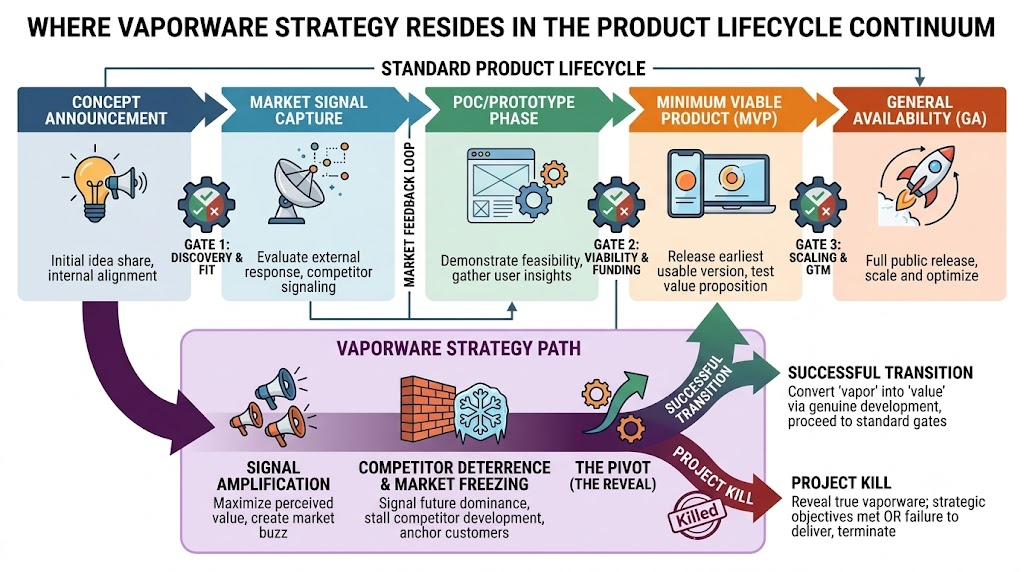
To understand how vaporware fits into the product life cycle and development stages, you must look past the slick pitch decks and analyze the underlying strategic intent. Vaporware sits at the absolute genesis of product creation, often occurring even before a Proof of Concept (POC) or Minimum Viable Product (MVP) receives formal funding.
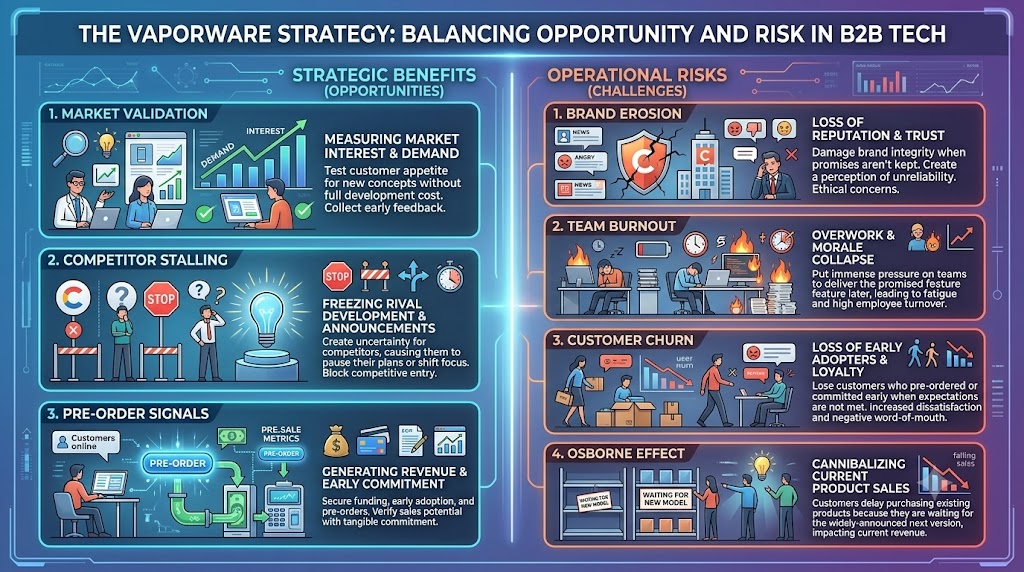
1. Market Demand Validation (Testing the Waters)
Building enterprise software or complex hardware products costs millions of dollars and thousands of engineering hours. The traditional product management lifecycle dictates moving sequentially from Idea to Proof of Concept, Prototype, Walking Skeleton, MVP, and finally Full Feature Release.
However, a intentional vaporware strategy flips this sequence. By pre-announcing a product concept before code is written, leadership measures authentic buyer intent. High landing-page conversion rates, pre-orders, inbound sales inquiries, and media coverage serve as definitive validation signals. If the market reacts with apathy, the company quietly pivots or cancels the project before sinking heavy capital into development.
2. Strategic Competitor Stalling (Freezing the Market)
In hyper-competitive B2B markets, timing determines market share. If a key rival is preparing to launch a game-changing tool, buyers may flock to them and lock into multi-year vendor contracts.
By announcing a superior forthcoming alternative, a company can induce buyer paralysis. Enterprise prospects decide to pause their purchasing decisions, waiting instead for the hyped announcement. This buys the announcing company precious months to catch up, build the actual solution, or re-evaluate their roadmap while starving the competitor of immediate revenue momentum.
3. Capital Allocation and Resource Justification
Securing executive buy-in or venture funding for unproven technical initiatives is notoriously difficult. Vaporware campaigns generate hard, quantifiable market interest metrics that convert subjective product theories into compelling business cases.
The Dark Side: When Strategic Hype Becomes Operational Chaos
While the strategic rationale sounds clean in executive boardrooms, the execution phase frequently falls apart in the project management trenches. Mismanaging a phantom release creates severe systemic risks:
The Osborne Effect: Announcing a future product too early can accidentally kill sales of your current, revenue-generating products. Customers stop buying existing solutions while waiting for the next-generation option.
Engineering Burnout and Technical Debt: When executive hype forces teams to build complex software against artificial, publicly announced dates, project managers are forced to compress schedules. Quality drops, architectural shortcuts proliferate, and team morale collapses.
Trust Erosion: Repeatedly pushing back release dates or delivering a stripped-down, glitchy version of what was promised severely damages credibility with enterprise clients, partners, and industry analysts.
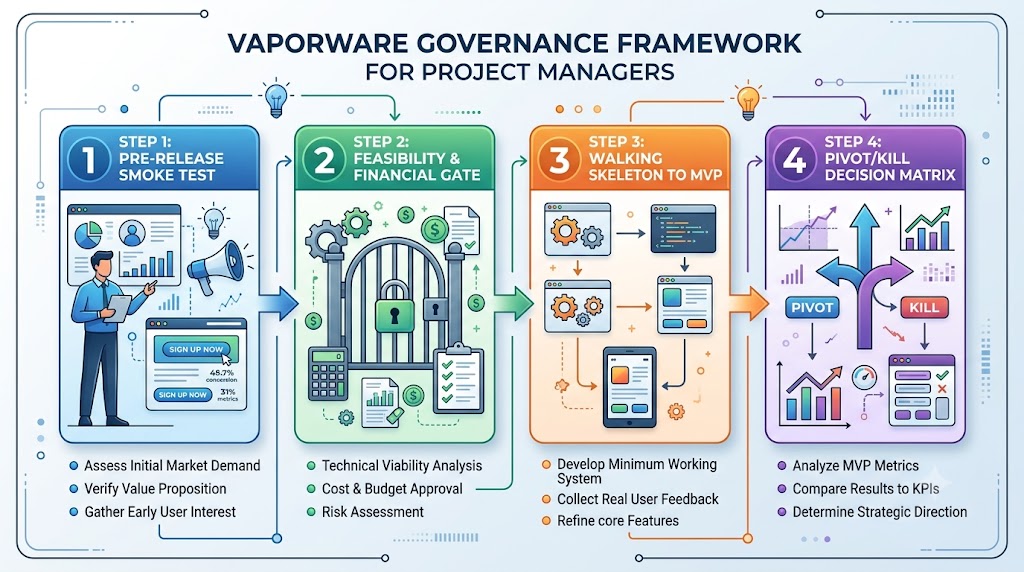
The PM Implementation Framework: Executing Vaporware Governance
If your executive team decides to leverage a vaporware strategy to test market waters or stall competitors, you cannot treat it like standard project delivery. You must apply a rigorous governance framework to protect operational integrity while gathering market intelligence.
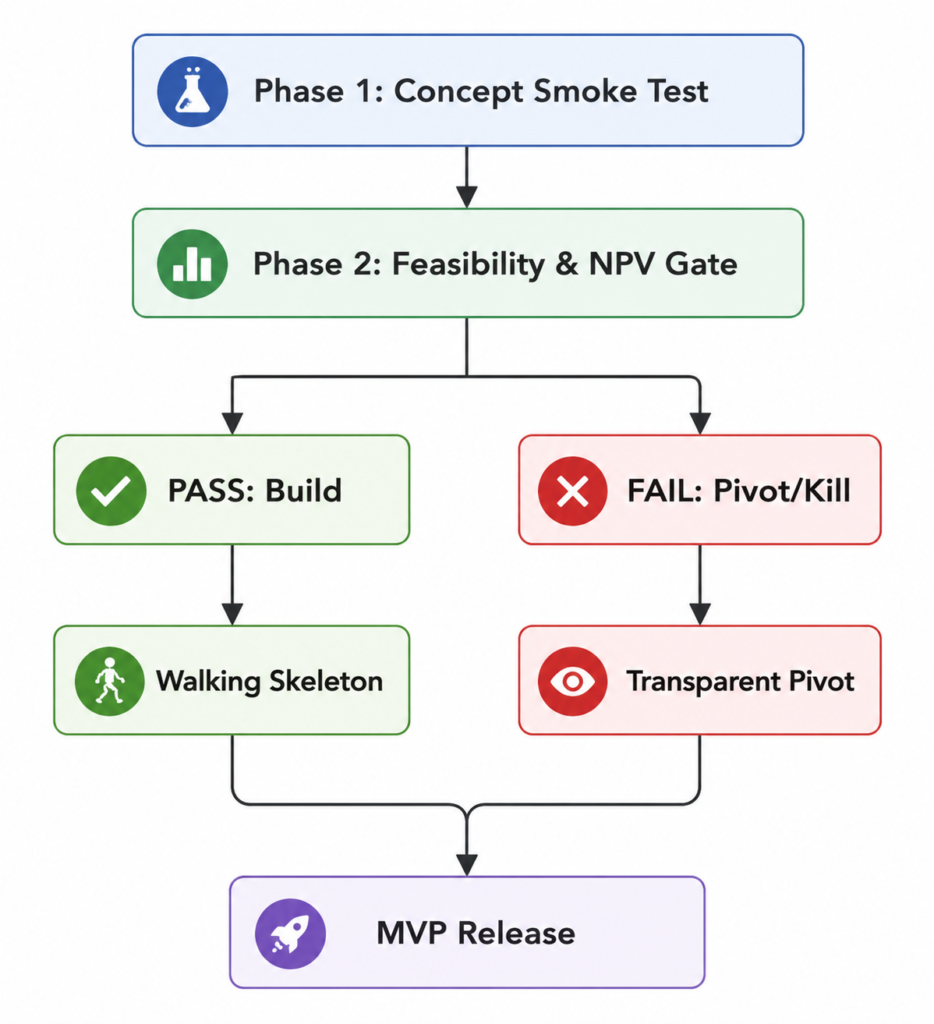
Phase 1: Establish the Pre-Release Smoke Test (Concept Gate)
Before any public announcement or pre-pitch, clearly define the hypothesis you are testing.
Scope Boundaries: Utilize landing pages, conceptual video walkthroughs, or interactive prototypes rather than making overreaching functional promises.
Signal Metrics: Track quantifiable engagement data such as conversion rates on pricing buttons, contact request volume, and demo sign-ups.
Time-Boxing: Set a strict evaluation window (typically 30 to 60 days) to gather market signals.
Phase 2: Technical Feasibility and Capital Budgeting Gate
Once market interest passes your predetermined threshold, evaluate the actual business case before writing production code:
Technical Feasibility: Conduct a rapid Proof of Concept (POC) with core architects to confirm the product can be built within technical and regulatory constraints.
Financial Viability: Apply capital budgeting techniques (such as Net Present Value and Payback Period) to confirm that projected customer lifetime value exceeds full development costs.
Phase 3: Implement the Walking Skeleton & MVP Progression
Once the project receives formal greenlight, transition immediately into structured, agile product delivery:
Walking Skeleton: Build a bare-bones, end-to-end system that proves core system mechanics function from start to finish, ignoring UI polish and secondary features.
Minimum Viable Product (MVP): Add primary functional features and release to a closed group of beta users to gather real-world feedback and refine customer workflows.
Phase 4: Define Hard Pivot & Termination Gateways
A professional project manager always builds an exit ramp. If initial hype fails to convert into real sales pipeline, or if technical feasibility hits an unscalable wall, execute a structured pivot. Be transparent with early registrants, adjust the product roadmap, and reallocate engineering capacity to higher-ROI initiatives before severe reputation damage occurs.
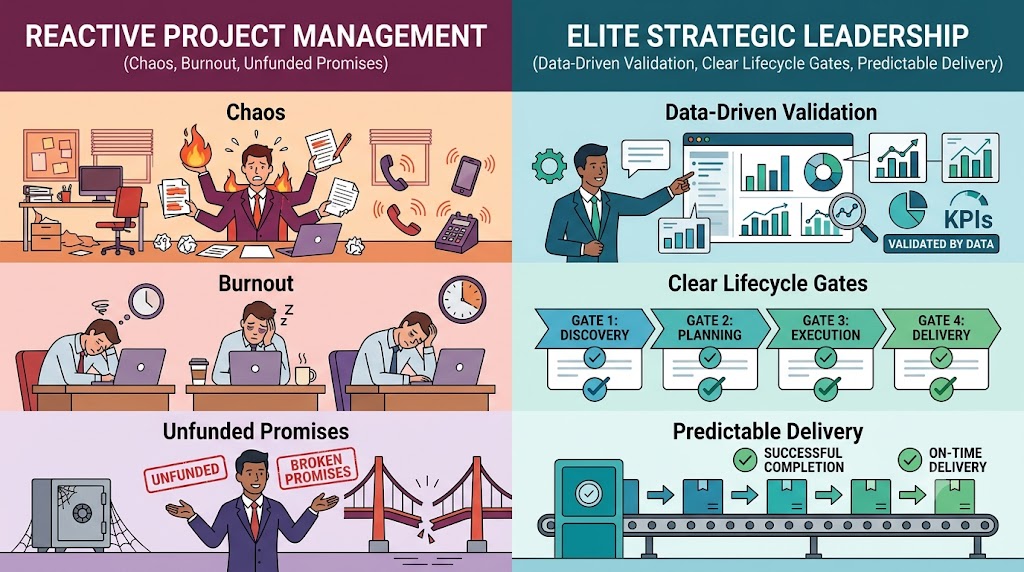
From Fire-Fighting Phantom Releases to Elite Strategic Delivery
Think about how project management usually feels when executive promises outpace technical reality. You are trapped in endless crisis meetings, mediating friction between sales reps making unfulfillable commitments and engineers pushing back on impossible deadlines. Scope creep runs wild, delivery dates slip continuously, and your team is perpetually on the brink of exhaustion.
Now picture the alternative.
When you master product lifecycle strategy and vaporware governance, you transform from a passive task tracker into an indispensable strategic operator. You no longer react to executive announcements with panic. Instead, you guide leadership through structured validation cycles, establishing clear feasibility checkpoints before a single dollar of engineering capital is squandered.
You become the calm, authoritative leader in the room who can take high-level market experiments, apply disciplined agile planning, and translate executive vision into predictable, high-impact delivery. This level of strategic execution is what separates mid-level project coordinators from elite, executive-track B2B leaders.
Master Strategic Product Management with Skillsetify
Navigating complex product lifecycles, competitive positioning, and high-risk development frameworks requires more than memorizing basic terminology. It demands a deep, practical mastery of enterprise strategy, financial modeling, and disciplined project execution.
If you are ready to stop guessing, move up the corporate ladder, and learn project management the right way, reach out to Skillsetify. We do not just teach frameworks: we show you your exact career growth trajectory.
Whether you are seeking to elevate your current team’s delivery capability or accelerate your personal executive trajectory, Skillsetify provides the deeply researched methodologies, real-world case studies, and practical toolkits needed to turn complex corporate challenges into career-defining wins.