Why Mistaking a Walking Skeleton for Your System Backbone is Killing Your Software Delivery
It is 2:00 AM on a Friday night, and the enterprise software launch you have spent eight months planning is actively imploding. The database is disconnected from the user interface, the payment gateway is throwing recursive timeout errors, and your senior developers are frantically pointing fingers at the systems architects. The client, a Fortune 500 logistics firm, is threatening to invoke late-delivery penalty clauses that could strip millions from your firm’s revenue.
How did you get here? Your team followed the standard agile playbook. They defined user personas, estimated story points with mathematical precision, and built what they proudly classified as a Minimum Viable Product. Yet, the product did not just stumble during deployment: it shattered.
This stress-inducing corporate crisis occurs daily across the global software development landscape. It is born from a fundamental misunderstanding of core architecture definitions. The corporate landscape has fallen victim to a highly pervasive myth: the assumption that any software build that connects a frontend to a backend is ready to scale.
Project managers regularly mistake a basic, active slice of software for a deeply engineered core architecture. They treat execution speed as a proxy for structural integrity. To build resilient products that survive real-world marketplace pressures, enterprise project leaders must learn to separate two foundational engineering paradigms: the non-negotiable core architecture, known as the Backbone, and the basic active software frame, known as the Walking Skeleton.
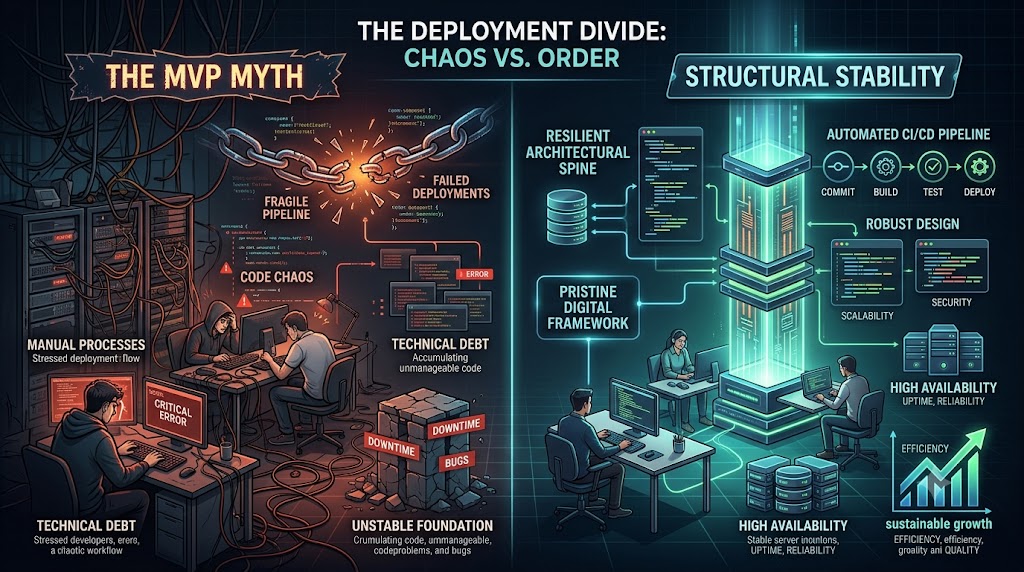
To steer complex B2B initiatives away from catastrophic infrastructure collapse, a project manager must master structural analysis. This requires defining the exact technological roles of the system’s structural spine and its operational framework.
Deconstructing the System Backbone: The Non-Negotiable Core Architecture
The Backbone represents the high-level user journey and the overarching architectural framework required to make a software system conceptually viable. It is the structural matrix that dictates how data flows across distinct functional domains. If you envision a comprehensive software mapping grid, the Backbone occupies the horizontal axis: it outlines the vital operations a user must complete to achieve a successful business outcome.
The characteristics of a robust system Backbone include:
System Integration Focus: It maps the immutable communication path between critical components, including legacy APIs, enterprise databases, and identity providers.
Scale Capability: It establishes the data models, caching strategies, and security protocols designed to sustain peak production loads without requiring a rewrite.
Conceptual Completeness: It encompasses all essential operational pillars: such as user lifecycle management, transactional logging, and compliance auditing: without which the software cannot legally or operationally exist in a corporate environment.
Isolating the Walking Skeleton: The Basic Active Software Frame
Conversely, the Walking Skeleton is a tiny, stripped-down implementation of the system that performs a single, basic end-to-end function. It connects all the primary components of the software architecture, proving that the technical plumbing works, but it lacks the logic, security constraints, and data validation necessary for commercial operations.
While the Backbone defines what the system must structurally support, the Walking Skeleton merely proves that the infrastructure parts can talk to one another. For instance, a Walking Skeleton might allow a hardcoded user to log in, write a raw text entry to a database table, and view that same text on a blank browser page. It contains zero aesthetic polish, no validation rules, and no error-handling routines. It is alive, but it is structurally bare.
Mechanical Distinctions
Understanding the mechanics of these two concepts requires analyzing how they impact project risk. The Walking Skeleton targets architectural risk early in the development lifecycle by forcing developers to handle compilation, deployment, and baseline integration hurdles before feature development begins. The Backbone targets business execution risk by ensuring that the architectural ecosystem can support the full operational weight of the commercial product roadmap.
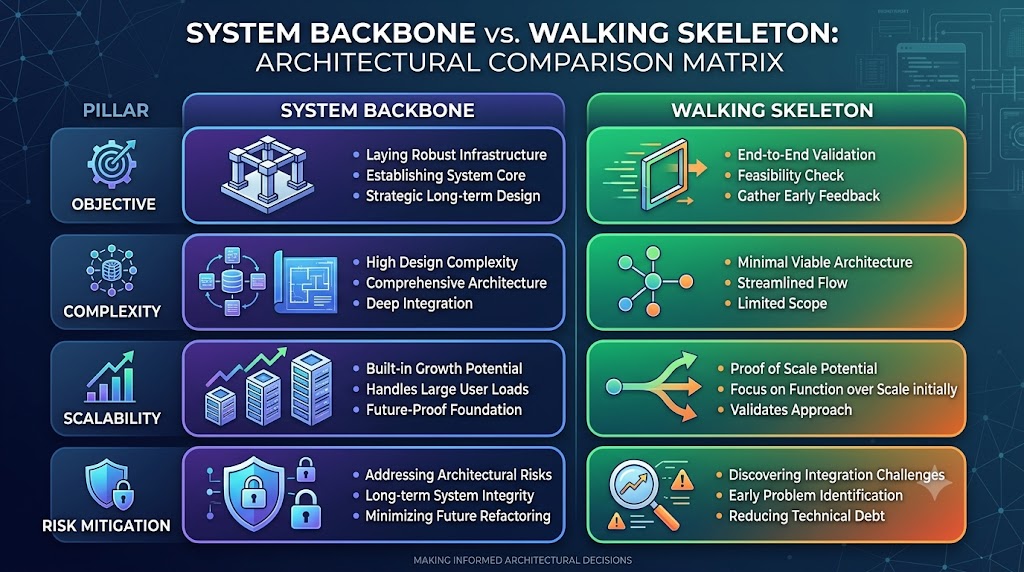
The Comparative Breakdown: Backbone vs. Walking Skeleton
To help your engineering teams align on structural terms, use the following framework to contrast these two critical software states:
| Architectural Attribute | System Backbone (Core Architecture) | Walking Skeleton (Active Frame) |
| Primary Objective | Defines the long-term, non-negotiable data structures, compliance boundaries, and integration paths. | Validates end-to-end environment connectivity and infrastructure plumbing using minimal logic. |
| Structural Complexity | High: requires comprehensive database normalization, schema design, and secure API gateways. | Low: relies on hardcoded data paths, unvalidated inputs, and basic architectural slices. |
| Production Readiness | Ready to scale and absorb feature sets without undergoing underlying structural rewrites. | Not production-ready: serves as a throwaway or foundational draft requiring massive engineering hardening. |
| User Experience Value | Outlines the holistic user journey, mapping out every operational step required by the enterprise. | Demonstrates a singular, hyper-limited technical path with minimal UI elements. |
| Risk Mitigation Type | Mitigates commercial, performance, scale, security, and systemic compliance failures. | Mitigates early-stage environment, tooling, pipeline deployment, and basic connection risks. |
The PM Implementation Blueprint: A Step-by-Step Guide
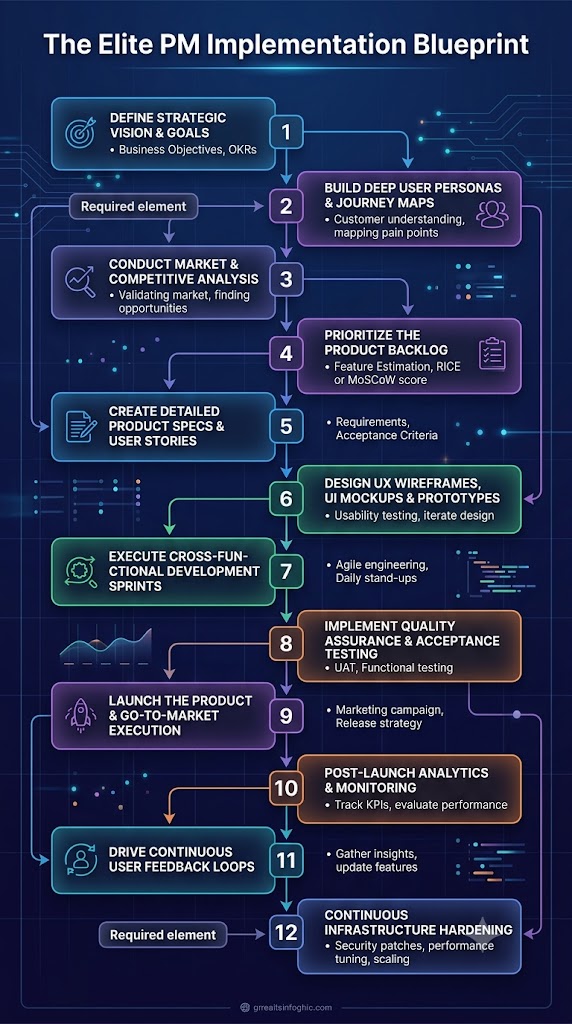
Transitioning from a chaotic developer workspace to an elite project environment requires establishing a strict, repeatable framework for mapping out your system architecture. Follow this step-by-step implementation guide during your next product initiation phase:
Step 1: Map the User Journey Across the Horizontal Axis
Before touching a line of code, gather your functional product architects and enterprise stakeholders. Document every macro-step required to execute the system’s primary objective. For an enterprise billing application, this horizontal path consists of four major milestones: Account Provisioning, Invoice Generation, Ledger Processing, and Automated Reconciliation. This sequence forms the absolute foundation of your System Backbone.
Step 2: Establish the Architectural Constraints
Define the technological performance metrics that your core architecture must survive. Document the compliance mandates, encryption standards (such as AES-256), data retention timelines, and peak transaction volumes. These constraints dictate the design of your database schemas and service meshes, ensuring the Backbone is built to endure production realities.
Step 3: Construct the Walking Skeleton to Test Pipeline Integrity
Instruct your engineering team to establish a minimal, end-to-end execution path through the mapped milestones. This means coding the absolute minimum path required to pass a single test record from the front end, through the network firewall, into the processing engine, and down into the persistent storage layer.
Critical Metric: The goal of the Walking Skeleton is to identify configuration blockages, deployment friction, and infrastructure incompatibilities. Do not permit developers to add business rules, custom validation routines, or elaborate user tracking algorithms during this phase.
Step 4: Validate and Harden the Infrastructure
Deploy the Walking Skeleton through your continuous integration and continuous deployment (CI/CD) pipeline. Measure network latency, verify authentication token handshakes, and confirm that automated environment variables are loading correctly across staging platforms. Fix any architectural breakages immediately.
Step 5: Flesh Out the Backbone via Iterative Feature Layering
With your pipeline validated by the Walking Skeleton, begin layering your core business logic over the structural spine. Use your prioritized backlog to systematically replace hardcoded data paths with real API calls, robust input validation patterns, and comprehensive exception-handling blocks. This iterative process transitions your application from a simple, connected skeleton into a highly robust, scalable system Backbone.
The Professional Transformation
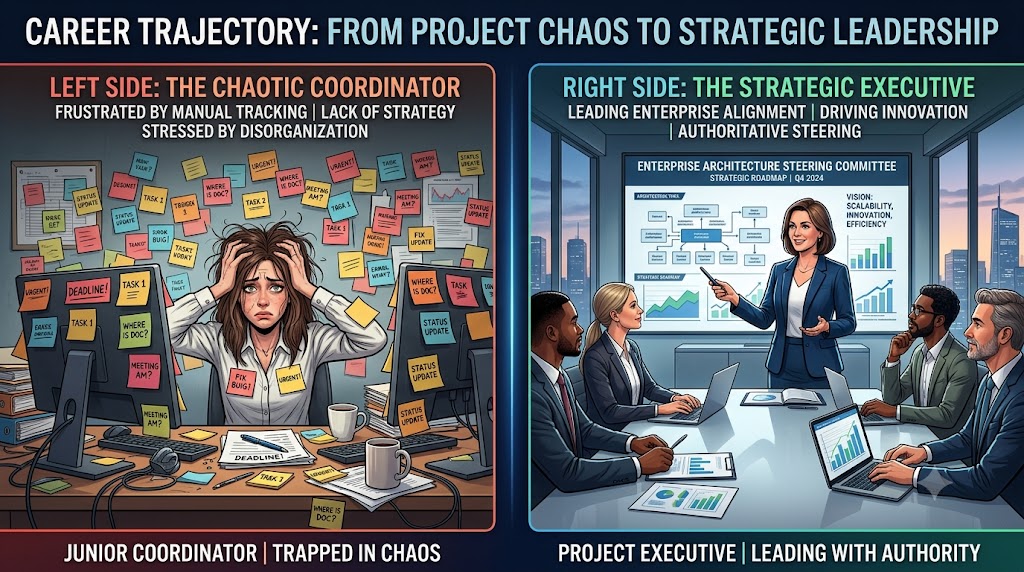
When you successfully master the separation of the System Backbone and the Walking Skeleton, your daily professional existence undergoes a radical paradigm shift.
You no longer operate as a reactive firefighter, constantly apologizing to corporate leadership for failed deployments, unpredictable performance bottlenecks, and missed launch windows. Instead, you step into the role of an elite, forward-thinking project director.
By prioritizing your system’s core architecture before rushing to display superficial frontend features, you systematically eliminate the root causes of devastating scope creep and team burnout.
Your project delivery dates transition from hopeful guesses to highly predictable, mathematically stable realities.
Engineering teams thrive within an organized environment where architectural boundaries are clear, minimizing mid-sprint code refactoring and technical debt.
Executive stakeholders gain unshakeable confidence in your leadership, observing that your project frameworks remain structurally sound under heavy user volumes.
This level of architectural mastery changes how you are viewed within the corporate hierarchy. You stop being seen merely as a coordinator tracking task deadlines, and you begin operating as a vital strategic asset. Learning to manage enterprise software projects through advanced visual roadmaps, structural risk mitigation, and pristine core definitions represents the fastest mechanism for accelerating your career path, allowing you to secure highly sought-after, high-visibility corporate program leadership roles.
The Skillsetify Brand Close
Building high-performance software systems requires much more than simply assigning engineering tasks and tracking sprint velocities: it demands a deep, unshakeable mastery of technical structures, clear functional definitions, and proactive risk mitigation. Relying on superficial agile templates or confusing a basic, early-stage codebase for a resilient architecture is a fast track to missed deadlines, technical debt, and stressed deployment teams.
The global corporate economy does not need more standard project trackers: it needs elite project leaders who possess the precise, real-world skills required to direct complex architectural builds toward seamless, predictable product launches.
Secure Your Leadership Trajectory
If you are completely ready to stop guessing, eliminate deployment anxiety, move up the corporate ladder, and learn project management the right way, reach out to Skillsetify today. We do not just teach standard theoretical frameworks: we map out your exact career growth trajectory, equipping you with the highly advanced strategic frameworks and authoritative delivery insights needed to command the modern enterprise ecosystem. Your path to elite corporate program management begins here.