1. The Cost of a False Start
It is 4:00 AM on deployment night. The engineering grid flashes green, the code rolls out to staging, and the interface looks completely pixel-perfect. Yet, the moment the deployment hits the live production database, the core business logic breaks immediately. The single sign-on module fails, cookies are stripped, and the data architecture drops into a catastrophic rollback sequence. Your organization just spent 100,000 dollars of its hard-earned product budget building beautifully polished, useless wireframes that fail to resolve the core business intent.
This scenario plays out across modern enterprises daily, caused by a singular, devastating mistake: confusing low-level solution design with high-level problem analysis.
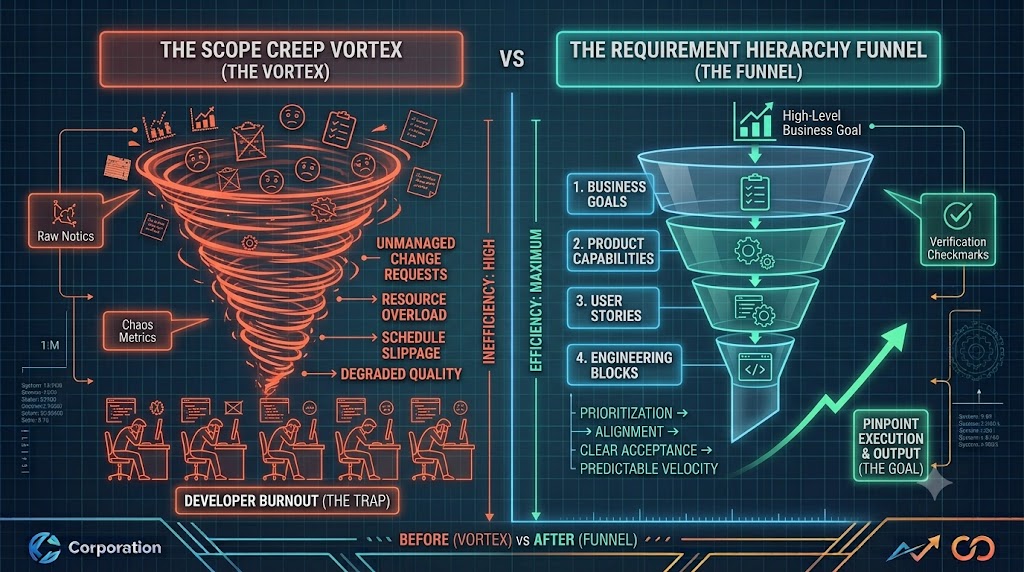
A common corporate myth dictates that project management is a linear execution mechanism, that if you simply collect enough requirements, dump them into a backlog, and assign story points, a functional product will emerge on the other side. In reality, modern product architecture is highly interdependent. When project leaders rush into low-fidelity wireframing or isolated feature development without establishing a strict requirement hierarchy, scope creep takes over.
True strategic planning requires a structured layout that explicitly maps out the customer journey against strategic priorities. Without this structural blueprint, velocity slows down, technical debt compounds, and delivery timelines stall out.
2. The Anatomy of Story Mapping Infrastructure
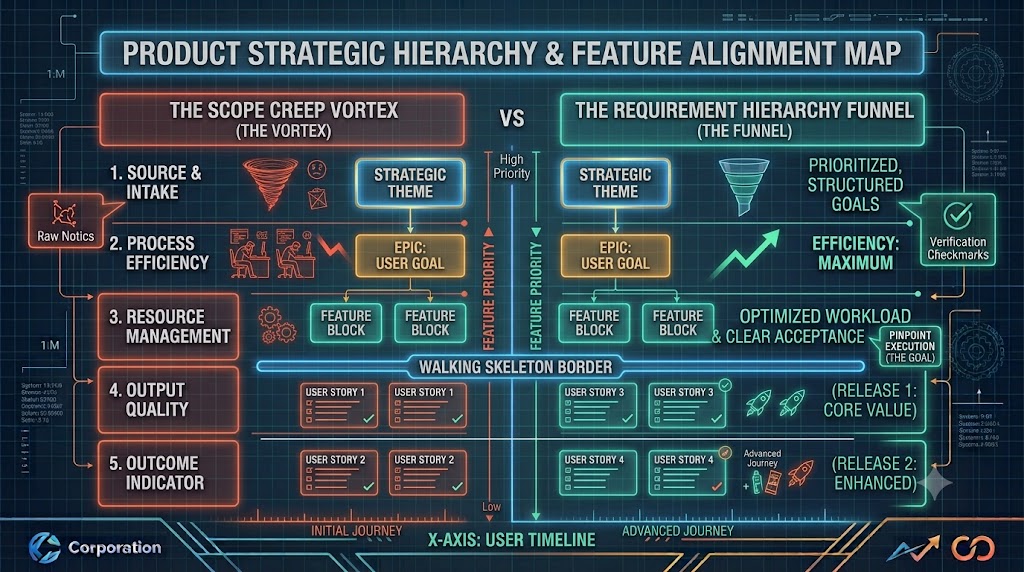
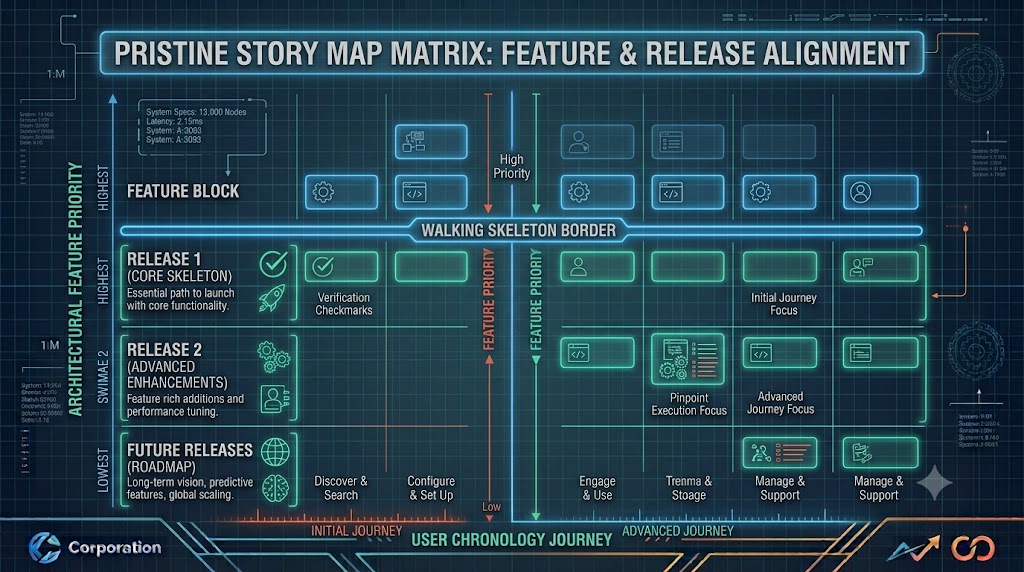
To escape this loop of reactive fire fighting, enterprise organizations must implement a robust Story Mapping Infrastructure. At its foundational level, user story mapping is not a static documentation exercise. It is a dynamic operational charting methodology that graphs a project timeline across the horizontal X-axis against feature priority across the vertical Y-axis.
The Core Components of the Hierarchy
A sustainable requirement architecture demands that project tasks never exist in a vacuum. Every minute technical detail must trace its ancestry back to an overarching corporate objective through five structured layers:
Strategic Themes: The highest tier of institutional intent. Themes define the overarching financial, competitive, or operational goals of the enterprise, such as improving global partner integrations or optimizing vendor performance management systems.
Epics: The macro-level user goals within a theme. Epics capture distinct, large-scale capabilities that require multiple iterations to deliver, organizing wide chunks of utility into manageable strategic buckets.
Features: The technical or functional components necessary to fulfill an epic. For instance, if the epic is self-service data management, the features might encompass bulk data uploading, automated schema validation, and real-time validation error reporting.
User Stories: Small, actionable, user-centric requirements written strictly from the end-user perspective, detailing exactly who needs the functionality, what they need, and why it delivers value to their workflow.
Tasks: The atomic, low-level engineering steps required to make a story functional. Tasks belong entirely to the development team, representing the tactical execution grid, including database patching, API configuration, and unit testing.
Setting Up the Visual Grid
The magic happens when this hierarchy is mapped onto the operational matrix. The horizontal X-axis maps the user journey step-by-step from left to right, mirroring the natural chronology of how a human interacts with the system. The vertical Y-axis acts as an absolute validator of feature priority, moving downward from essential backbone architecture to non-essential enhancements.
Step-by-Step Implementation Framework
Deconstruct the Customer Persona: Before mapping a single card, you must analyze the target user down to their daily operational cadence. Establish a comprehensive user profile that details their technical background, daily bottlenecks, and clear success criteria.
Chart the Horizontal Narrative: Lay out the core user activities across the X-axis to define the narrative spine of the product. Do not allow technical dependencies to distort this phase; it must remain a pure mapping of human workflow.
Build the Vertical Priority Grid: Group user stories directly beneath their corresponding macro-level tasks, sorting them vertically by immediate absolute necessity. High-value infrastructure stays at the top, while advanced features drop lower down the matrix.
Draw the Walking Skeleton Border: Slice a horizontal line straight across the matrix to isolate the absolute minimum slice of functionality required to create an end-to-end operational flow. This establishes the baseline for your first viable release.
Establish release swimlanes: Divide the remaining stories below the line into logical, subsequent release blocks based on available capacity and technical complexity.
3. The Elite Transformation
When a project manager successfully moves their team onto a structured story mapping infrastructure, the shift in organizational performance is immediate. The delivery cycle transforms from an unpredictable guessing game into a highly predictable, repeatable process. Scope creep vanishes because any new feature request must be visually placed within the matrix, forcing stakeholders to explicitly decide which existing feature must be displaced or delayed to accommodate it.
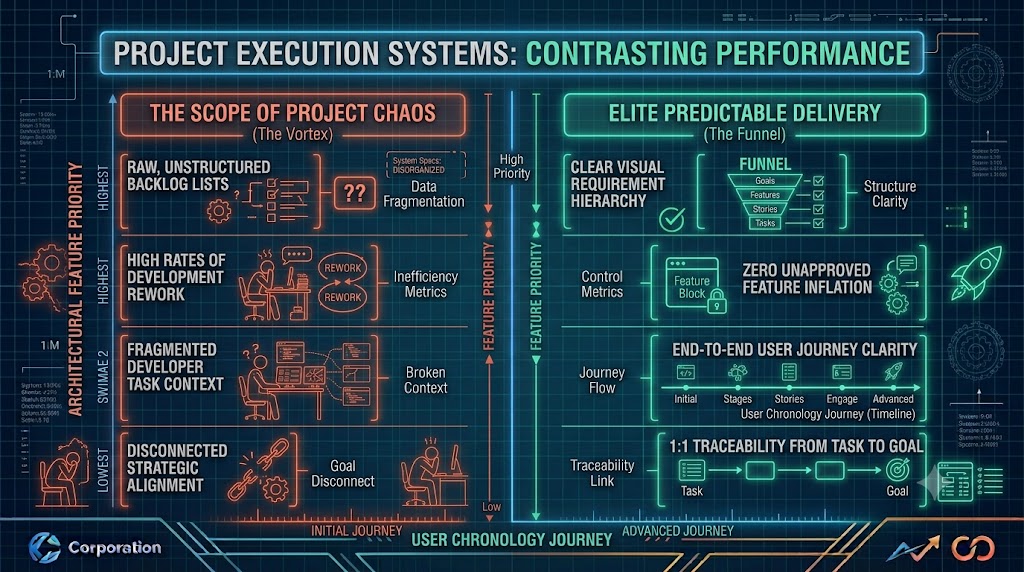
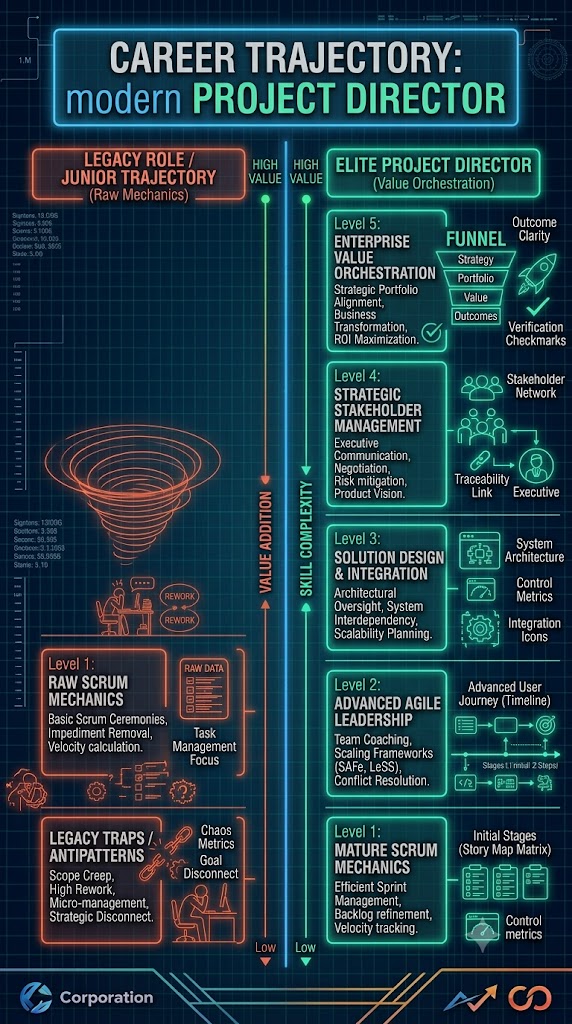
For the ambitious project professional, mastering this infrastructure is the key to corporate advancement. It shifts your professional brand from a passive task-tracker who merely runs status meetings to an elite operational leader who designs execution engines. You gain the ability to step into high-stakes leadership alignment sessions and clearly explain exactly how technical backlogs map directly to commercial return. This level of technical authority and strategic alignment gets notice from the executive tier, placing you on the fast track for senior leadership promotions.
4. Elevate Your Strategic Trajectory
Modern project management is changing quickly, and the era of managing complex, multi-million dollar corporate initiatives using flat, messy Excel spreadsheets is officially over. Surviving and thriving in today’s intense corporate environment requires mastering visual roadmaps, structured requirements, and defensive estimation frameworks.
If you are ready to stop guessing at timelines, eliminate development rework, and learn project management the right way, it is time to upgrade your professional capabilities. We do not just teach boilerplate frameworks or help you pass generic certifications. We provide you with field-tested corporate playbooks, deep strategic methodologies, and show you your exact career growth trajectory.
Step into elite project leadership. Partner with Skillsetify today, and transform your execution engine from a chaotic checklist into a predictable driver of corporate growth.