Differentiating Product Requirements, Release Components, and Sprint Iterations
The Anatomy of Project Deconstruction: When Macro Vision Meets Micro Execution
It is 2:00 AM on a Tuesday. The war room smells of cold coffee and palpable anxiety. The enterprise application release is scheduled for Thursday, yet the engineering team has just flagged a critical blocker: the billing integration architecture is incomplete. The Lead Developer insists that the requirement was never prioritized for this milestone. Conversely, the Product Owner points frantically to a massive, five hundred line spreadsheet of product requirements, claiming it has been there for nine months.
Meanwhile, the stakeholders are furious because the features they were promised in the quarterly showcase are missing entirely. The team is burning out, scope creep is accelerating, and no one can agree on what actually constitutes a finished deliverable.
This stressful, high stakes corporate emergency occurs daily across the global business landscape. It is the direct result of a fundamental breakdown in managing requirement hierarchies.
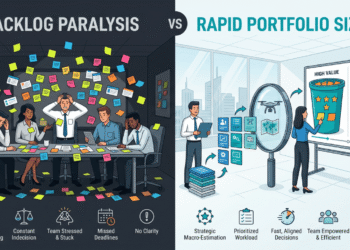
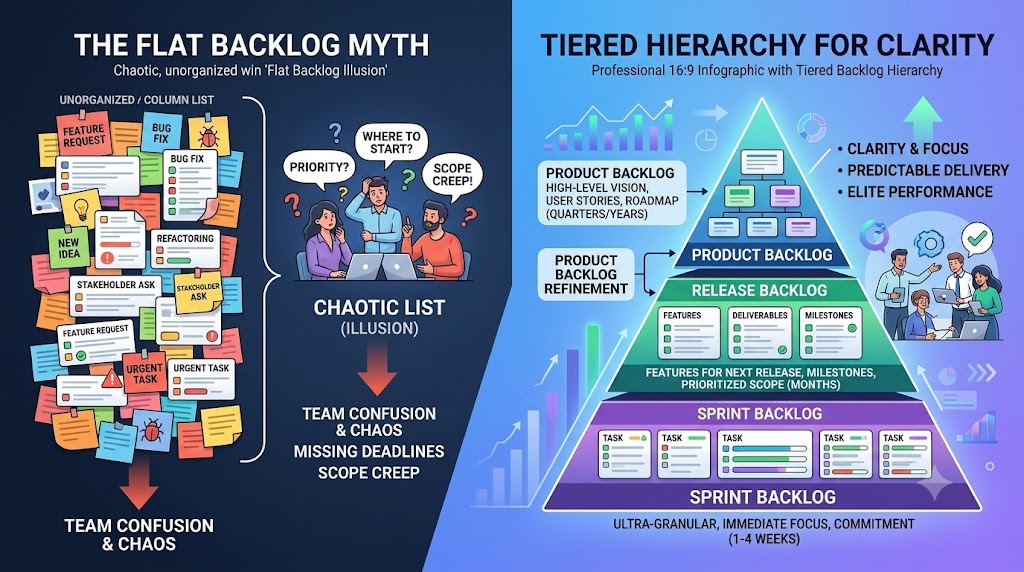
Many corporate training programs spread a dangerous myth: that an Agile backlog is merely a single, linear to-do list where items are simply dragged from top to bottom. This flat backlog illusion is one of the most destructive misunderstandings in modern delivery. A real world corporate initiative cannot survive on a one dimensional list.
Without a structured, multi tiered architecture that separates big picture strategy from immediate execution, large scale software and system engineering efforts inevitably collapse under their own weight. To deliver predictably, an elite Project Manager must master the distinct layers of backlog variations: separating overall product requirements, targeted release components, and immediate sprint iterations.
The Architectural Blueprint: Demystifying the Requirement Hierarchy
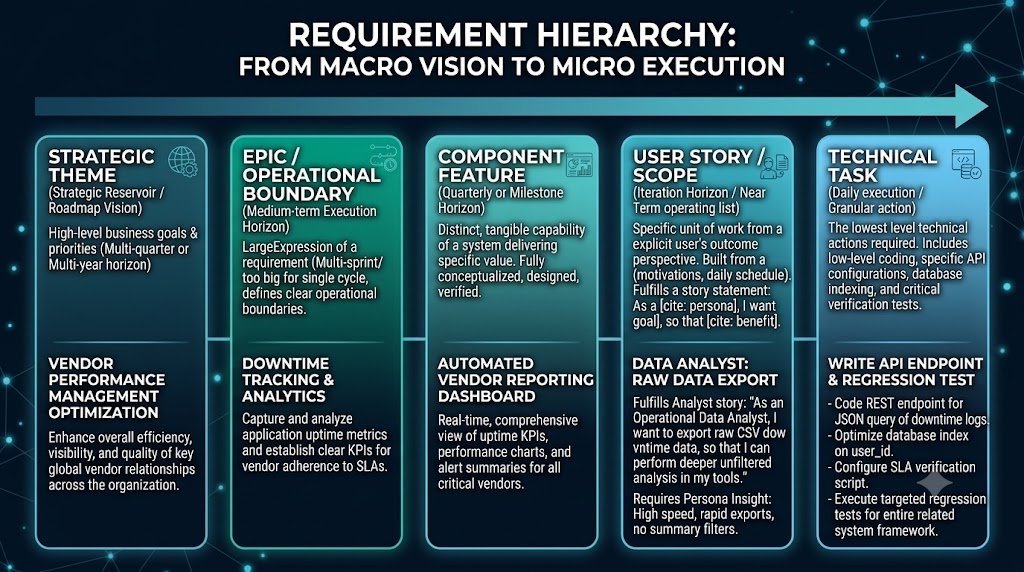
To prevent delivery failure, we must establish a clear hierarchy for deconstructing complex systems. Requirements are not uniform: they exist at varying levels of abstraction, granularity, and operational horizons. Industry consensus dictates that a mature requirement framework spans from long term strategic intent down to day-to-day technical execution.
Strategic Themes
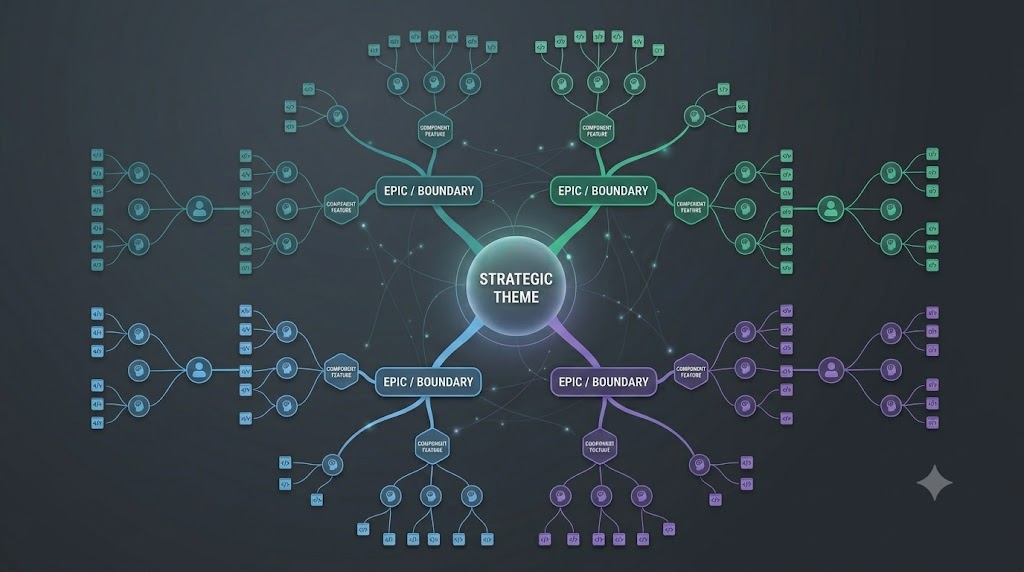
At the absolute apex of the hierarchy sit strategic themes. A theme is not a specific feature or a tangible piece of software. It is a broad organizational focus area, business goal, or market bucket that guides a portfolio over a multi quarter or multi year horizon.
For instance, a global logistics corporation might establish a strategic theme focused entirely on improving vendor performance management. Themes serve as the ultimate prioritization filters: if a proposed requirement does not actively align with an active theme, it should not occupy space in the enterprise portfolio.
Epics and Operational Boundaries
Directly beneath themes are epics. Epics represent large, substantial expressions of functional requirements that are too massive to be delivered within a single delivery cycle. They represent clear operational boundaries within a larger theme.
Using our vendor performance example, an epic might be classified as application downtime tracking or infrastructure diagnostic logging. Epics are critical because they allow project leaders to track progress at a macro level, providing the leadership team with progress metrics without getting lost in granular daily updates.
Component Features
Epics are systematically broken down into component features. A feature is a distinct, tangible capability of a system that delivers explicit value to the end user. It represents a functional unit that can be fully conceptualized, designed, and verified.
If our epic is focused on application downtime tracking, a component feature within that boundary would be an automated downtime reporting dashboard. Features are the currency of corporate steering committees: they define the specific operational upgrades that business units expect to receive.
User Stories and Specific Scope
Features are further deconstructed into user stories. A user story represents an explicit unit of work designed from the specific perspective of the end user. The core focus of a user story must always center on human centric outcomes rather than developer preferences.
To ensure user stories reflect operational reality rather than theoretical assumptions, product owners must build them using a comprehensive user persona. A persona is essentially a targeted mini profile of a typical user, mapping out their daily schedules, motivations, operational environments, and specific pain points.
For example, if we are designing a platform for a high tier data analyst, their persona will reveal that they operate within tight windows and require rapid, unfiltered data exports. Conversely, an executive persona might favor high level visual summaries over raw data. Writing a story without a detailed persona in mind guarantees the delivery of a technically functional product that fails to satisfy the user.
Technical Tasks
At the foundation of the hierarchy are technical tasks. Tasks break down a user story into the precise, low level actions required by the engineering team to implement the scope. Tasks include activities such as writing specific API endpoints, configuring database indexes, or executing regression testing.
Regression testing ensures that when a new patch or feature is introduced, the surrounding, interrelated system components do not break unexpectedly. Tasks are strictly technical, internal items used exclusively by the execution team to self organize their daily labor.
Differentiating the Three Core Backlog Variations
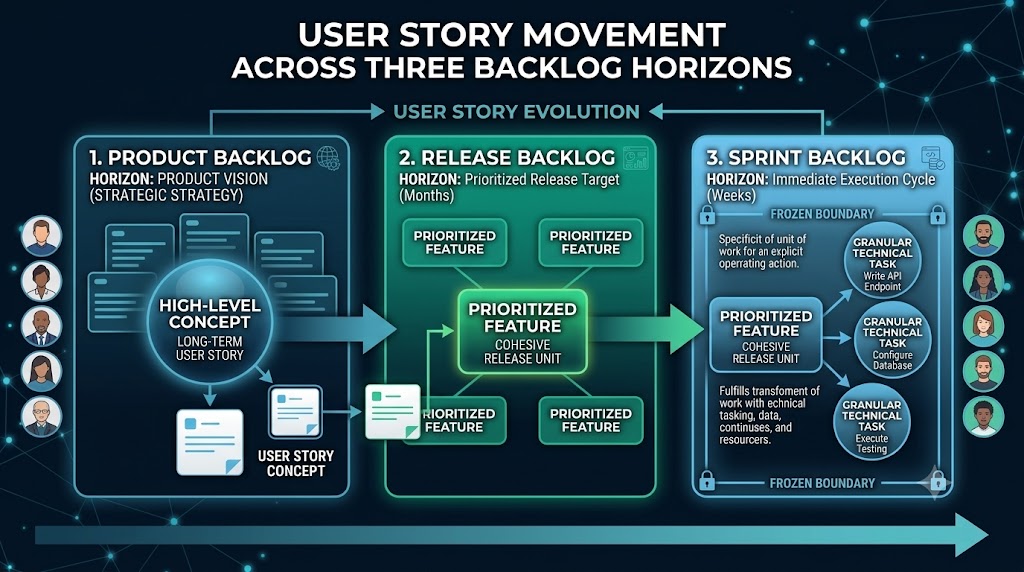
With a rigorous requirement hierarchy in place, project teams must map these tiers across three distinct tracking horizons: the overall Product Backlog, the targeted Release Backlog, and the immediate Sprint Backlog.
| Metric / Dimension | The Product Backlog | The Release Backlog | The Sprint Backlog |
| Operational Horizon | Long Term Strategy (Roadmap Vision) | Medium Term Execution (Quarterly/Milestone) | Short Term Execution (1 to 4 Weeks) |
| Level of Abstraction | High Abstraction (Themes, Epics, Features) | Moderate Abstraction (Features, User Stories) | Ultra Low Abstraction (User Stories, Tasks) |
| Primary Ownership | Product Owner / Product Manager | Product Owner & Project Manager | The Cross Functional Development Team |
| Fluidity & Change | Highly Dynamic (Constantly Groomed) | Moderately Stable (Controlled Changes) | Formally Frozen (No Mid Sprint Additions) |
| Primary Estimation Unit | T-Shirt Sizing / High Level Complexity | Story Points / Relative Sizing | Engineering Hours / Granular Breakdown |
1. The Product Backlog: The Master Strategy Reservoir
The Product Backlog is the comprehensive, living master list of everything that could possibly be required in the product. It captures all long term strategic themes, conceptual epics, and requested features. This artifact is highly dynamic: as market conditions shift and stakeholder feedback arrives, the product backlog is continuously updated, reprioritized, and refined.
Because it contains hundreds or thousands of speculative items, detailed engineering analysis at this stage is an expensive waste of time. Instead, elite project leaders use high level estimation techniques such as affinity estimation or complexity bucketing to sort items quickly.
Affinity estimation allows teams to group large numbers of user stories or epics into relative size categories (such as big versus small) without getting bogged down in story by story debates. This macro view helps establish rough expectations for leadership without forcing premature commitments.
2. The Release Backlog: The Targeted Horizon
The Release Backlog represents a strategic slice of the product backlog allocated to a specific release window, deployment milestone, or quarterly commitment. It bridges long term vision and short term execution by extracting the specific features required to deliver a cohesive, functional upgrade to the market.
While the product backlog focuses on what is possible, the release backlog defines what is promised for a specific deployment version. It is managed collaboratively by product owners and project managers to shield the core engineering team from strategic turbulence while maintaining a predictable deployment cadence.
3. The Sprint Backlog: The Frozen Execution Chamber
The Sprint Backlog is the low abstraction, near term operating list containing the specific user stories and technical tasks committed for completion within an immediate iteration cycle. Once a sprint begins, this backlog variation is formally frozen.
According to strict scrum delivery frameworks, adding new user stories to a sprint backlog mid iteration is prohibited. If an engineering team finishes their committed story points ahead of schedule, standard practice forbids arbitrarily pulling new stories into the active workspace without thorough diagnostic review.
Early completion typically points to a systemic breakdown in estimation accuracy, a trend of developers artificially inflating complexity points, or a product owner failing to clarify requirements upfront. Instead of treating early completion as an excuse to inject unvetted scope, leadership must use the sprint retrospective to run a root cause analysis, optimizing future estimation accuracy.
Step by Step Implementation Framework for Project Leaders
To deploy this requirement hierarchy within an enterprise organization, project leaders can follow this step-by-step framework to establish immediate order and operational control.
Step 1: Establish the Architectural Taxonomy
Define the precise definitions for themes, epics, features, stories, and tasks within your project management tools. Configure your software platforms to enforce parent-child relationships between these layers, ensuring no user story exists without alignment to a component feature and an overarching epic.
Step 2: Run an Aggregation Refinement Session
Extract your disorganized flat backlog and execute an affinity estimation workshop with key technical leads. Force the team to catalog every legacy requirement into defined complexity buckets. Group related requirements under shared functional epics, systematically constructing a structured hierarchy out of the administrative clutter.
Step 3: Map the Strategic User Journey
Build a comprehensive story map to visualize how the product will evolve over time. Plot your user personas across the horizontal axis to chart the logical user journey, and list your functional requirements down the vertical axis to represent priority.
Draw distinct release boundaries across the story map to establish your walking skeleton. A walking skeleton represents a minimal, end to end functional framework of the architecture that contains no stylistic enhancements but actively executes the core workflow. This ensures that your initial release milestone delivers a viable framework rather than a collection of disconnected features.
Step 4: Enforce Governance and Frozen Boundaries
Instill strict operational boundaries between your backlog horizons. Protect the engineering team’s sprint backlog from external interruptions, and channel all shifting stakeholder requirements directly into the master product backlog. Ensure that changes to the active sprint are treated as major deviations requiring a formal review during the retrospective.
The Professional Transformation: Shifting from Chaos to Predictable Elite Delivery
Implementing a structured requirement hierarchy completely changes day-to-day project operations. When you step away from the chaos of a flat backlog, the chronic symptoms of broken project execution disappear. Scope creep loses its ability to hijack your timelines because every new stakeholder request must now prove its alignment with an active strategic theme before it ever nears production.
Team burnout drops significantly as engineering teams shift away from erratic, mid sprint changes to operate within highly stable, predictable sprint backlogs. Project delivery transforms from an unpredictable guessing game into a predictable mechanism that routinely hits milestones.
For an ambitious project manager, mastering these backlog variations serves as a powerful career catalyst. It elevates your professional standing within the organization, transitioning your profile from a tactical task tracker into a strategic leader.
When you demonstrate the ability to articulate how a minor engineering task directly advances a high level corporate objective, corporate leadership begins to view you as an indispensable asset. You stop being the person who simply reminds teams of deadlines, and become the project architect who designs the frameworks that drive organizational growth.
Elevate Your Project Management Mastery with Skillsetify
Navigating the realities of enterprise project delivery requires far more than memorizing theoretical project terms or passing standardized, multiple choice certification exams. True leadership requires mastering real world implementation, managing complex stakeholder networks, and building robust requirement architectures that survive under corporate pressure.
If you are ready to stop guessing, move up the corporate ladder, and learn project management the right way, reach out to Skillsetify. We do not just teach frameworks: we show you your exact career growth trajectory.
Our premium corporate content, expert led strategies, and practical training systems are designed exclusively to transform high potential professionals into elite, strategic project leaders. Visit Skillsetify today to unlock the elite capabilities required to lead large scale initiatives, master enterprise delivery, and command the trajectory of your professional career.